Cyber conflict between states is rarely a single “event.” For IT professionals, it shows up as shifting pressure on the same fundamentals: identity systems, internet-facing infrastructure, third-party exposure, and the ability to keep critical services operating while leaders ask for answers fast. In 2026, the most important change is not a brand-new technique; it’s the speed, scale, and ambiguity of how familiar techniques get applied when geopolitics heats up.
This article is written for defenders and operators: security teams, network and cloud engineers, SOC analysts, incident responders, and IT leaders who have to translate headlines into practical posture decisions. It focuses on what trends are likely to shape risk, what signals to watch, and how to build resilience that holds up whether your organization is a direct target or collateral spillover.
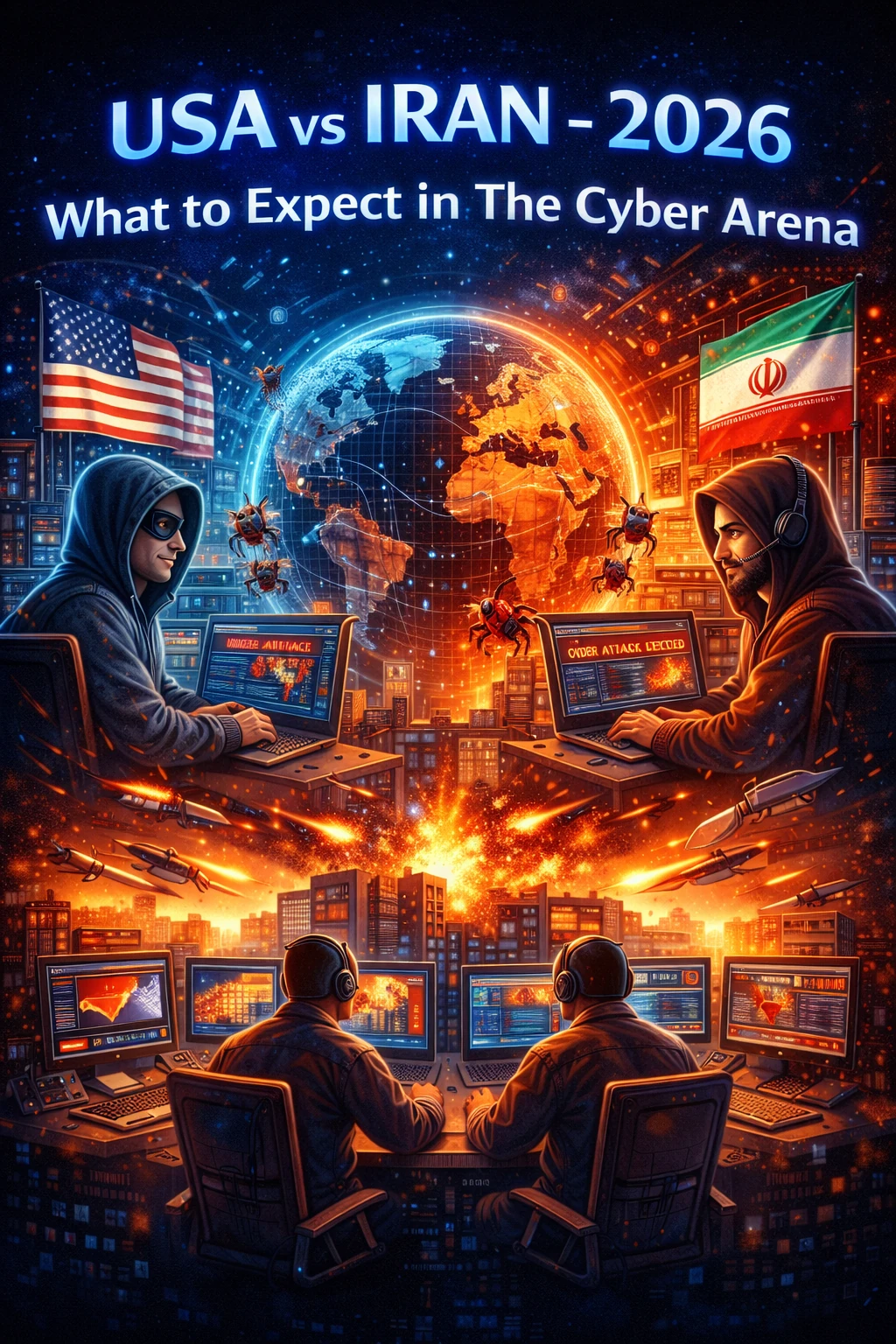
The cyber arena in 2026: friction, not fireworks
When tension rises between major actors, cyber activity typically expands in two directions at once. One direction is “loud” activity designed to disrupt, intimidate, or signal capability. The other is “quiet” activity focused on access: credential theft, persistence, and positioning inside networks that might matter later. Defenders often over-prepare for the loud part and under-prepare for the quiet part because the quiet part looks like routine noise until it suddenly becomes a crisis.
The practical takeaway for 2026 is this: assume you will see more opportunistic targeting that exploits common weaknesses, alongside carefully chosen, higher-effort intrusions aimed at sectors tied to national security, research, sanctions, regional conflict dynamics, and critical services. Many organizations that feel “non-political” can still become relevant through supply chains, shared vendors, shared identity platforms, or simple adjacency to a targeted ecosystem.
What is likely to stay the same
The fundamentals of compromise are stubbornly consistent, even as tooling evolves. In 2026, expect the following patterns to remain persistent:
- Credential-driven intrusion: password spraying, reuse, phishing, token theft, and MFA bypass attempts remain the fastest path to impact when identity systems are not hardened.
- Exploitation of internet-facing edges: VPN gateways, remote access appliances, email infrastructure, and management interfaces continue to be high-value because they bridge the external internet to trusted internal paths.
- Living-off-the-land and stealthy persistence: actors who want staying power will blend into normal admin behavior, leaning on legitimate tools, scheduled tasks, and cloud-native features instead of noisy malware.
- Targeting that follows geopolitics: when diplomatic or military pressure changes, cyber attention often follows organizations that are symbolically or operationally tied to the moment, including vendors, contractors, NGOs, media, and researchers.
- Influence blended with intrusion: data theft, selective leaks, impersonation, and narrative manipulation remain attractive because they can cause outsized real-world effects without needing destructive outcomes.
None of these are new. What changes is the tempo and how quickly routine suspiciousness becomes operational urgency.
What is likely to change in 2026
The biggest shift is not that defenders must learn entirely new categories of attacks. Instead, defenders must assume that familiar tactics will be executed with better targeting, higher throughput, and stronger psychological pressure on staff and leadership.
In 2026, expect more of the following:
- AI-assisted social engineering at scale: more convincing spear-phish, better-written lures, and faster iteration on what “works” against a specific org’s culture and workflows. This is less about sci-fi deepfakes and more about attackers reducing the cost of personalization.
- Cloud identity as the primary battlefield: defenders who still think in terms of “perimeter breach” will be surprised by incidents that start with OAuth consent abuse, session token theft, conditional access gaps, or mis-scoped administrative privileges.
- More pressure on managed providers and shared platforms: MSPs, SaaS admin consoles, CI/CD pipelines, and common IT tooling are attractive when the goal is reach and leverage rather than a single network.
- Disruption as a signaling tool: DDoS and other service-denial patterns can increase when an actor wants to demonstrate capability or create operational distraction while quieter access activity continues elsewhere.
- Faster pivot from access to consequence: once access is obtained, “time-to-impact” shrinks if the actor’s objective is immediate pressure rather than long-term espionage.
How conflict dynamics show up in enterprise telemetry
Most IT organizations will never see a dramatic “nation-state attack” banner. What you will see is telemetry that shifts in volume and intent: more authentication anomalies, a rise in failed logons again
st exposed services, increased probing of remote access infrastructure, and more impersonation attempts against help desks and administrators.If you operate a SOC or run security operations, consider the kinds of operational questions leadership asks during geopolitical spikes: “Are we being targeted?” “Is our industry in the blast radius?” “Could we still deliver our core services if something happens tonight?” Your readiness is measured by how quickly you can answer those questions with evidence and action, not by how many alerts you can generate.
Where defenders should expect pressure
While any organization can be swept up by opportunistic scanning, certain categories consistently draw attention during heightened tension:
- Critical infrastructure and public services: operations where downtime has public impact and response time is constrained.
- Defense-adjacent supply chains: contractors, engineering partners, research labs, and manufacturers whose data has strategic value.
- Energy, industrial, and OT-linked environments: organizations that bridge IT and operational networks, especially with aging equipment or thin segmentation.
- Media, civil society, and academia: targets for data theft, intimidation, or narrative operations.
- Financial services and fintech: targets for disruption, fraud adjacency, and secondary effects through third parties.
Even if your organization is not in these categories, your vendors might be. The spillover path is often indirect.
What to expect from the playbooks
It helps to think in playbooks rather than “tools.” Tools change quickly; playbooks remain recognizable. In 2026, the playbooks defenders should anticipate include:
Access and persistence playbook. The goal is reliable presence inside accounts, endpoints, or cloud tenants, often without triggering obvious malware signatures. Defenders feel this as suspicious sign-ins, unusual admin actions, mailbox rules, token reuse, or stealthy lateral movement.
Disruption and distraction playbook. The goal is service instability, public pressure, or operational distraction. Defenders feel this as traffic floods, application-layer pressure, abuse of exposed services, or attempts to overwhelm monitoring and response capacity.
Data theft and leverage playbook. The goal is to obtain communications, sensitive documents, or identifiable records that can be exploited for influence, embarrassment, negotiation leverage, or downstream targeting. Defenders feel this as unusual bulk access, suspicious exports, suspicious administrative APIs, or abnormal access patterns in collaboration platforms.
Third-party pivot playbook. The goal is reach. Defenders feel this as suspicious activity that originates from “trusted” integrations, shared accounts, vendor access paths, or inherited administrative permissions.
Defensive priorities that matter in 2026
If you do only one thing after reading this, make it this: prioritize controls that reduce the likelihood of credential-driven compromise and shorten the time from detection to containment. Those two goals cover a large percentage of real-world outcomes, including many high-profile incidents.
The following priorities are not exciting, but they are the difference between a tense week and an existential outage:
- Harden identity end-to-end: reduce reliance on legacy authentication, enforce strong MFA where appropriate, tighten conditional access, and treat administrative identities as a separate security tier with stricter controls.
- Make external exposure boring: aggressively manage patching and configuration for internet-facing services, reduce unnecessary exposed management interfaces, and ensure rapid response paths exist for urgent edge vulnerabilities.
- Improve detection fidelity, not alert volume: focus on high-signal detections for identity anomalies, admin privilege changes, suspicious mailbox rules, unusual cloud API usage, and lateral movement patterns that matter.
- Build containment muscle: pre-stage actions such as account lock-down, token revocation, privileged session termination, and rapid network segmentation changes that can be executed under pressure.
- Make backups and recovery real: ensure recovery objectives reflect business reality, test restores, and separate recovery access from everyday credentials.
- Protect the help desk and the human workflow: strengthen identity verification for password resets, admin approvals, and “urgent” requests. In many incidents, the help desk becomes the shortest path to admin access.
- Know your third-party blast radius: inventory critical vendor access, restrict permissions, monitor
Operational technology and critical services: resilience over perfection
For OT and hybrid environments, the goal is not to copy-paste enterprise IT controls. The goal is to design resilience into the workflow: segmentation, strict change control, visibility into remote access, and the ability to keep safety and essential operations stable even if IT is degraded.
In practice, resilience includes simple but disciplined habits: separating administrative paths, limiting remote access to defined choke points, monitoring for configuration drift, and ensuring operational teams know how to run safely during partial outages.
Incident response in 2026: the “business tempo” problem
The technical work of incident response is hard, but in 2026 the harder part is tempo. Leaders will expect faster clarity. Partners and regulators may expect faster notifications. Customers may expect faster reassurance. Attackers may attempt to exploit that tempo with pressure tactics, timed disruptions, or selective data exposure.
IT professionals can reduce chaos by pre-building decision paths:
- Pre-approve containment actions that you can take without a lengthy chain of approvals.
- Define “service priorities” so teams know what must be kept alive first when resources are stretched.
- Establish communication hygiene for internal coordination so rumor does not outpace facts.
- Practice tabletop scenarios that involve not just security staff but also IT operations, legal, communications, and leadership.
What success looks like for defenders
In a cyber environment shaped by geopolitical rivalry, success is not “no one ever tries.” Success looks like:
- suspicious access attempts fail more often than they succeed
- when something succeeds, it is detected quickly with high confidence
- containment is decisive and repeatable under stress
- core services can be restored without improvising identity and access
- leadership receives clear, evidence-based status updates rather than speculation
The uncomfortable truth of 2026 is that you cannot control geopolitical tension. You can control how prepared your environment is for the predictable consequences: increased scanning, higher-pressure identity attacks, more attempts to exploit shared platforms, and more urgency around uptime and trust. The organizations that do best are the ones that make routine hygiene non-negotiable and response actions muscle memory.
Closing perspective for 2026 planning
“USA vs Iran” makes a dramatic headline, but most defenders experience it as a change in risk weather: more storms, faster changes, and less warning. Plan for continuity under stress. Assume your exposure is not only your own network but also your identity layer, your cloud tenant, your vendors, and your downstream dependencies.
If you treat 2026 as an opportunity to simplify, harden, and rehearse, you will be ready for this rivalry’s cyber spillover and for the many other threats that look different on the surface but attack the same underlying weaknesses.

 10448
10448  IT Pro