



- Details
- Geschreven door IT Pro
- Categorie: Windows
- Hits: 5056
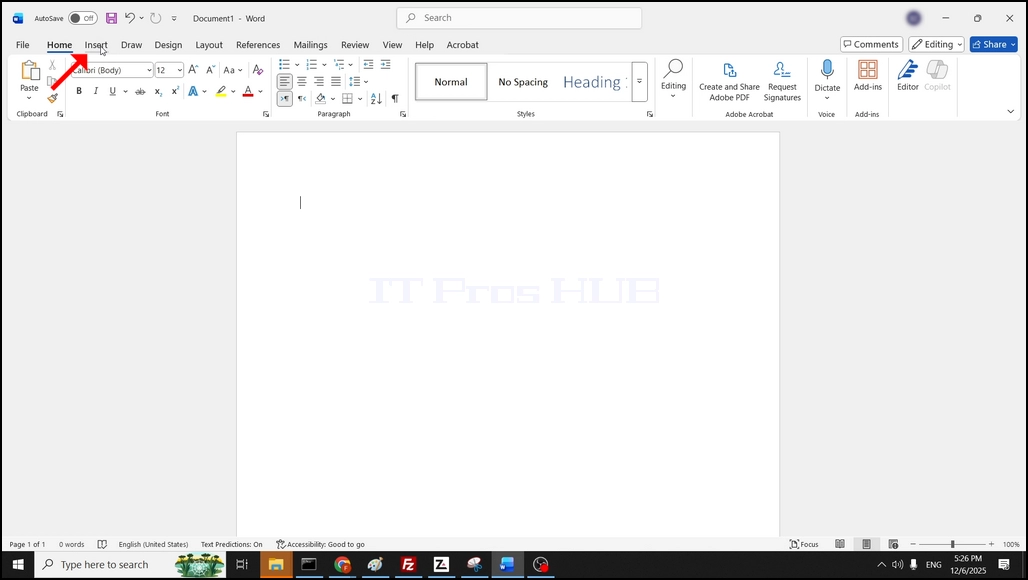
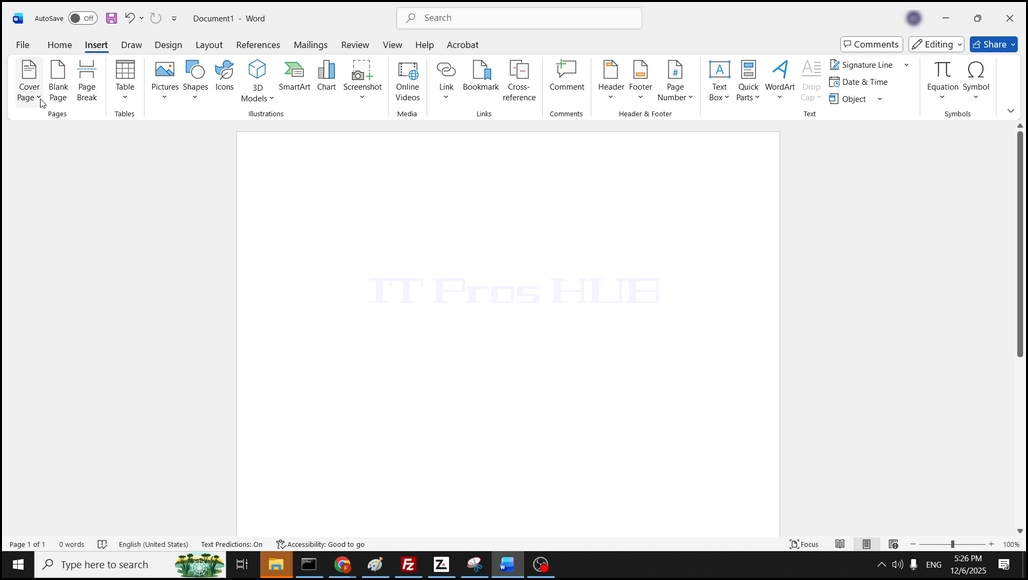
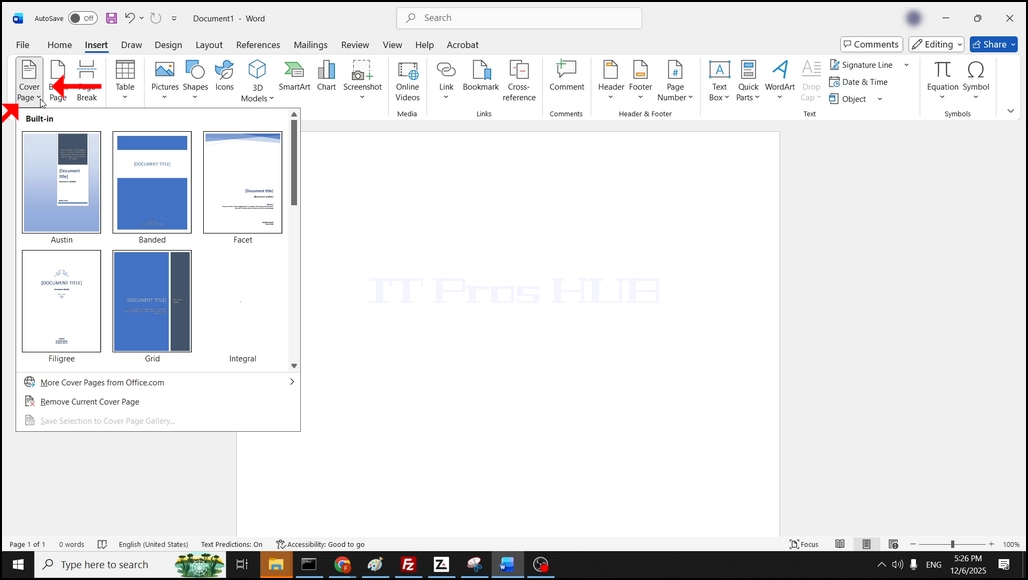
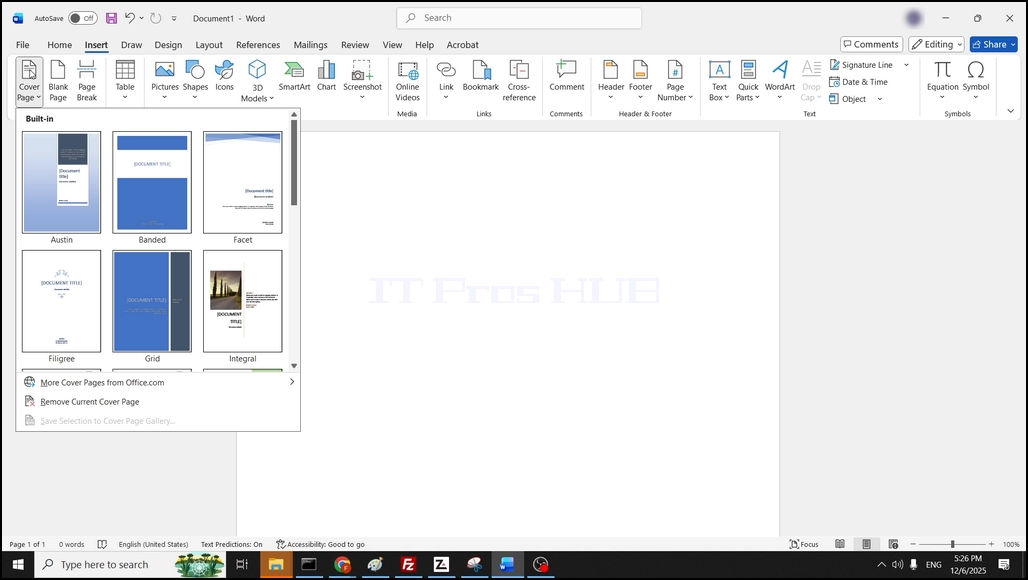
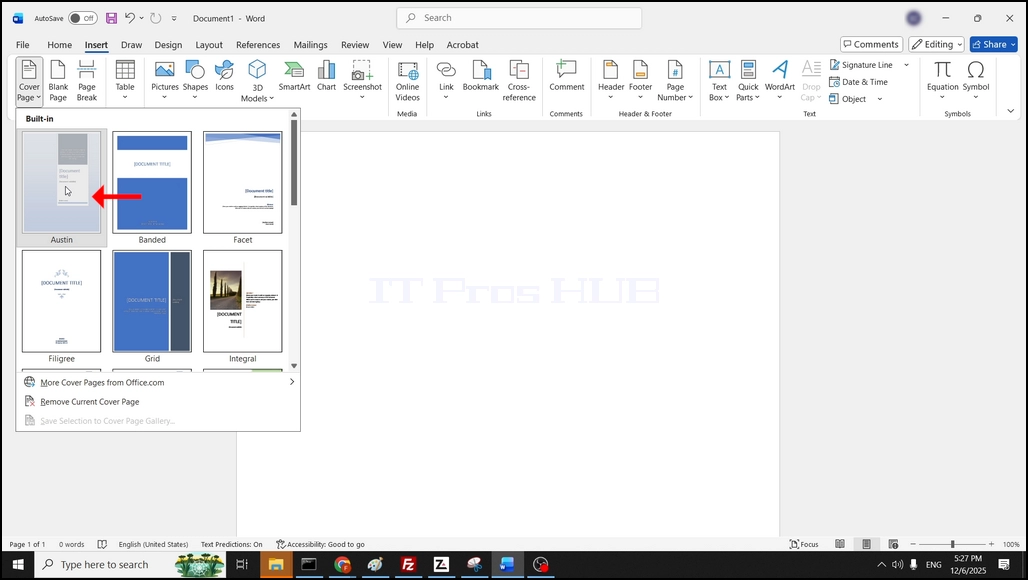
4. In het geval van dit artikel, zullen we kiezen voor de Austin cover pagina door te klikken op het een keer:
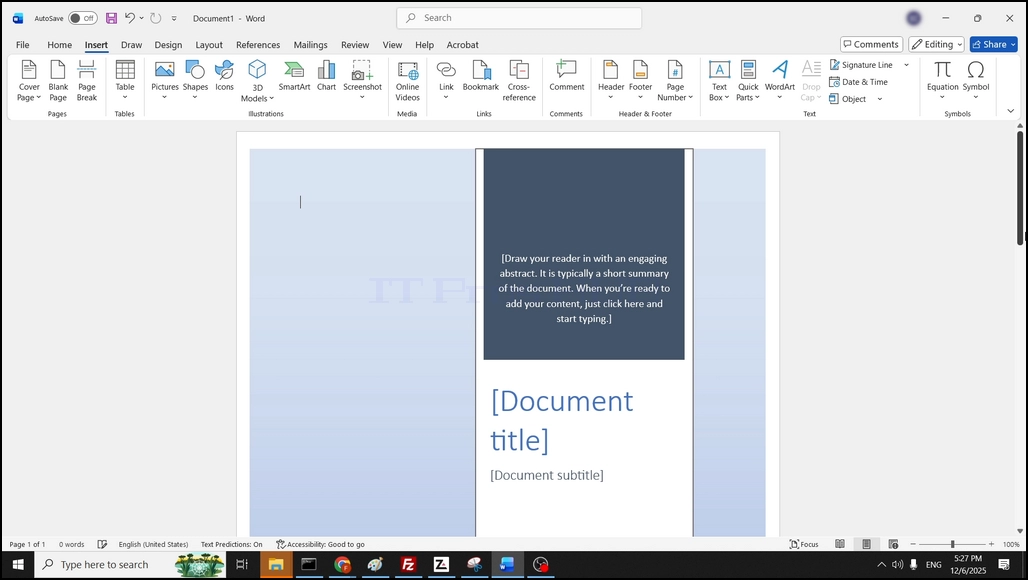
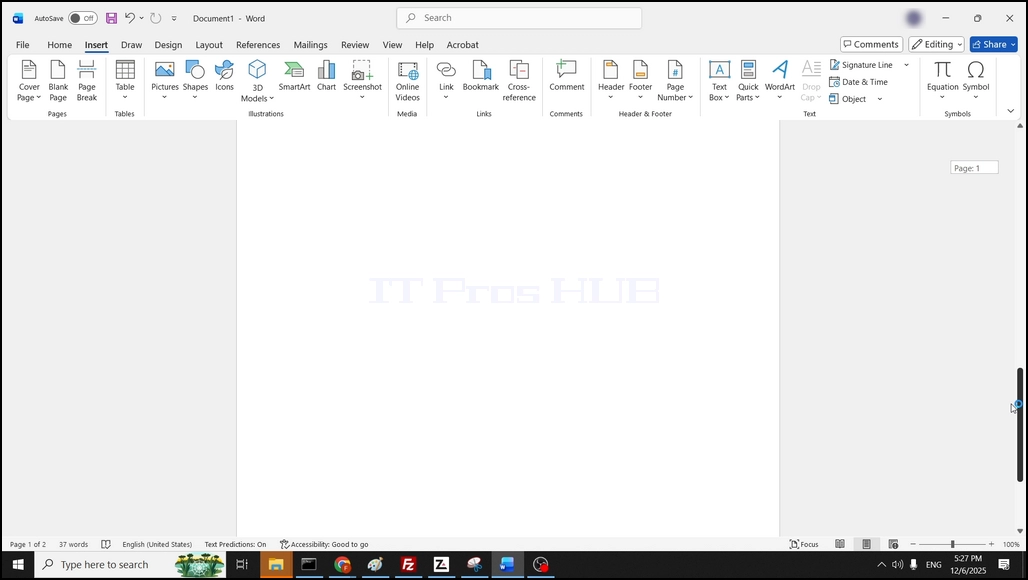
5. Eenmaal geklikt, Word heeft toegevoegd de cover pagina als een aparte pagina voor de eerste pagina van Word dus nu hebben we 2 pagina's - een cover pagina en een lege pagina:
- Details
- Geschreven door IT Pro
- Categorie: Windows
- Hits: 5127
Inleiding:
In dit artikel zullen we onderzoeken of Windows 11 kan draaien op een enkele core cpu gebaseerde computer.
Voor dit doel zullen we gebruik maken van een enkele virtuele machine die aanvankelijk 2 cores heeft, installeren Windows 11 op het en vervolgens verwijderen van een van de cores en zien of Windows 1 nog draait.
1.Installeren van Windows 11 op een 2 core cpu virtuele machine:


2. Een nieuwe kopie van Windows 11 is nu geïnstalleerd.

3. Nu gaan we naar Apparaatbeheer en zie het aantal CPU cores. Het moet twee zijn.

4. Zoals u kunt zien, deze computer heeft 2 AMD Ryzen 7 7435HS processor cores aanwezig:

5. Laten we Windows afsluiten en het aantal kernen wijzigen van 2 naar 1:

6. Let op de enkele kern en merk op dat Windows 11 opgestart zonder problemen:

7. Resolutie:
- Hoewel Microsoft blokkeert Windows 11 wordt geïnstalleerd op een computer met een enkele kern CPU het in geen geval blokkeert het draaien op een als ingezet op een of door een afbeelding of door het klonen van een harde schijf met een vooraf geïnstalleerde versie van Windows 11 en het verbinden met een dergelijke computer.
Windows 11 kan worden uitgevoerd op een computer met een enkele kern, maar niet geïnstalleerd op een.
- Details
- Geschreven door IT Pro
- Categorie: Windows
- Hits: 5646
In dit artikel zullen we ontdekken van het uitvoeren van Windows 11 zonder de map Windows.old is mogelijk of niet.
1. Het instellen van de voorwaarden die een Windows.old map maken.
- We zullen Windows 11 opnieuw installeren met behulp van Microsoft Windows Installatie Assistent. Eerst door het te downloaden:
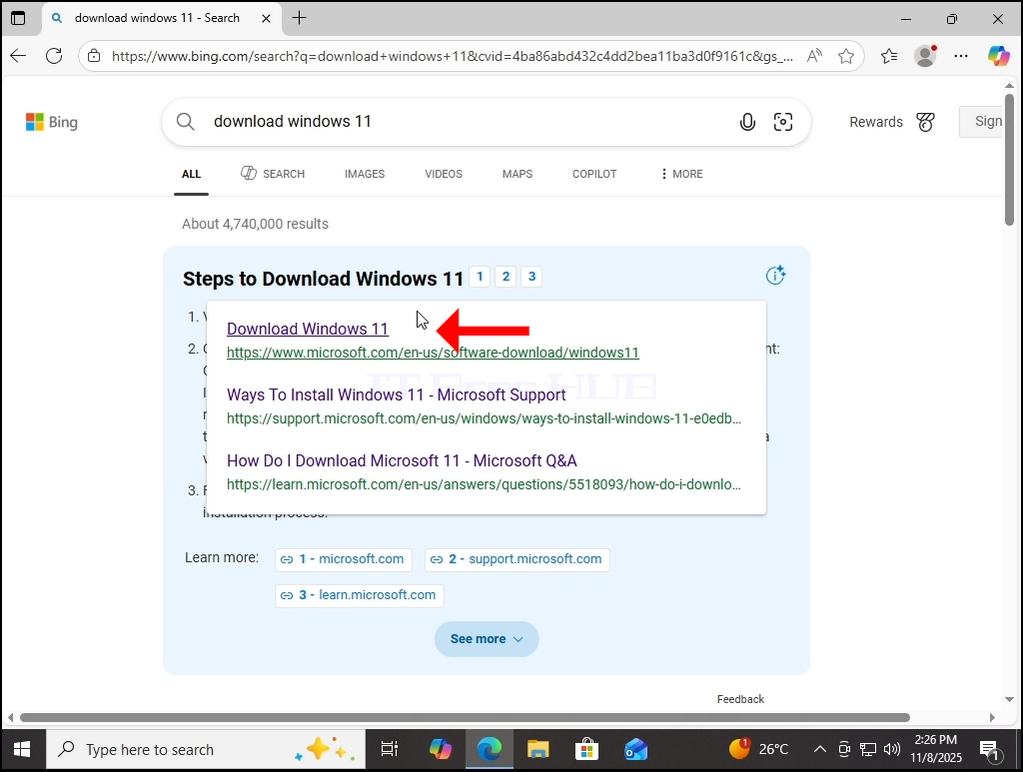
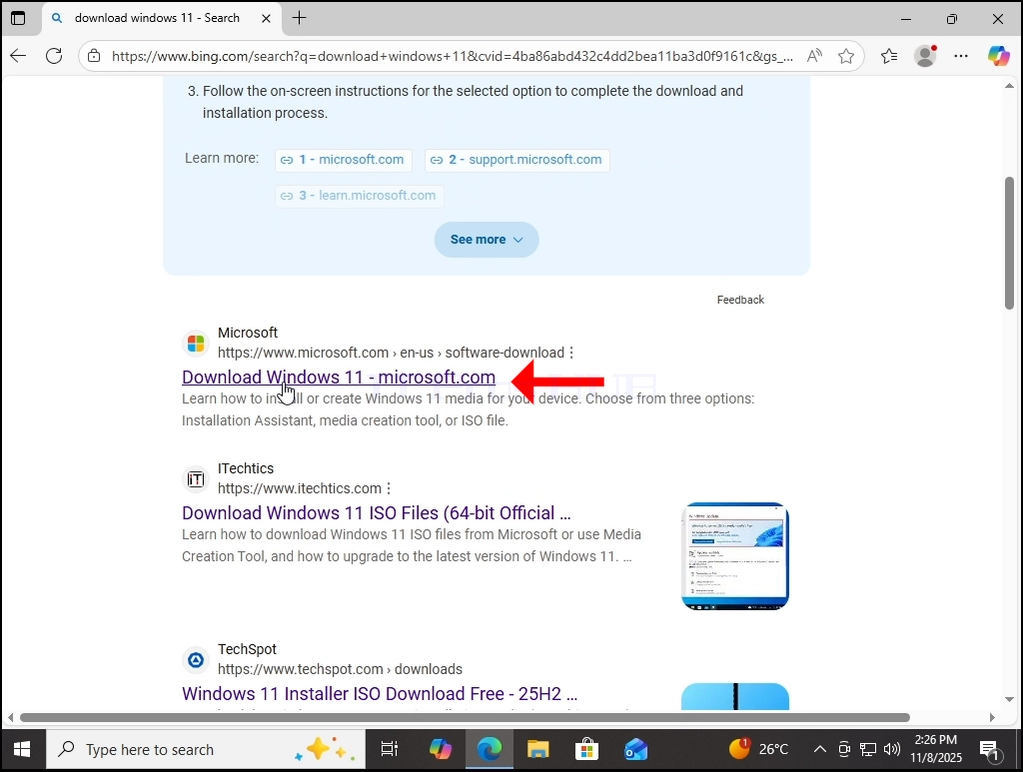
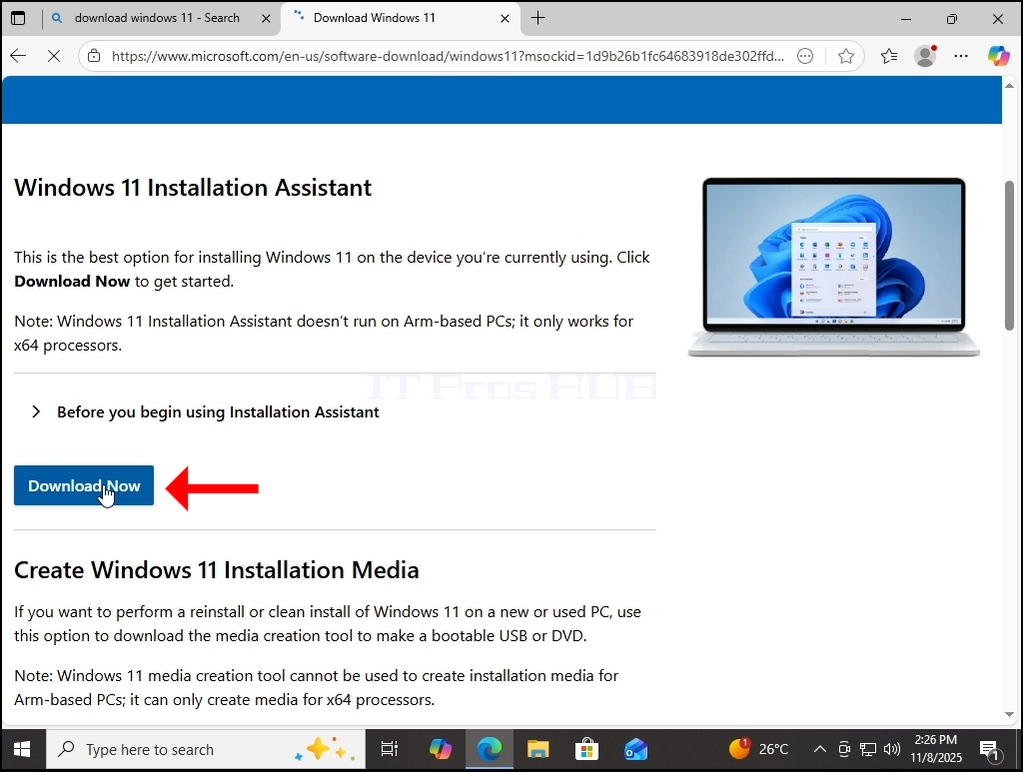
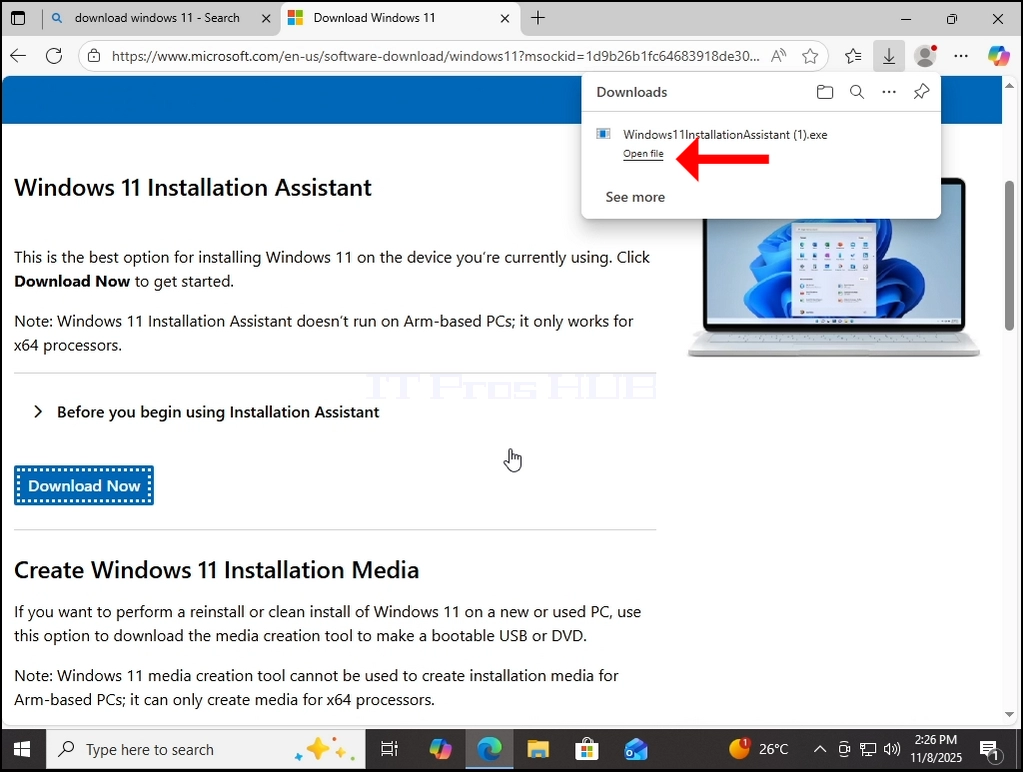
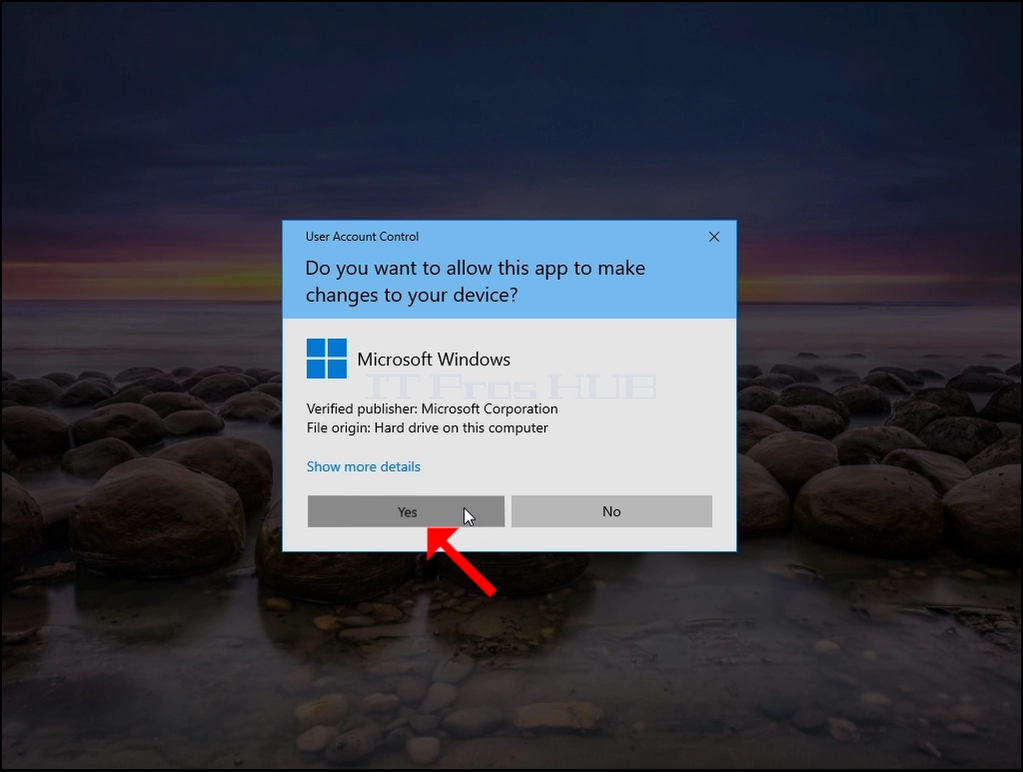
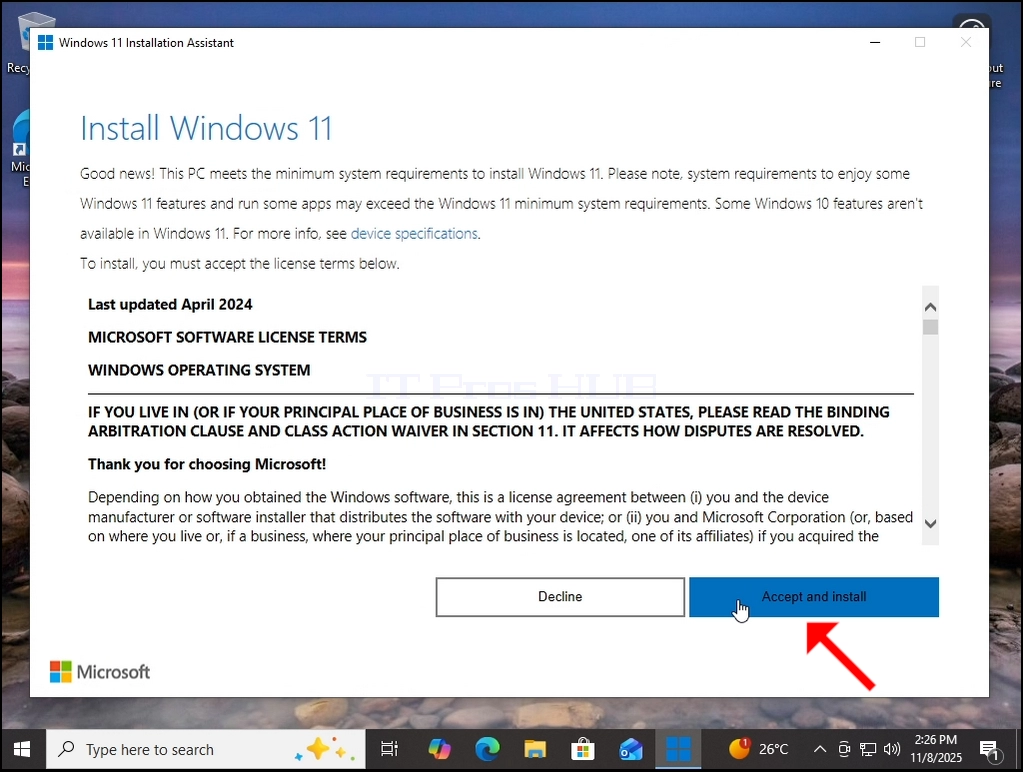

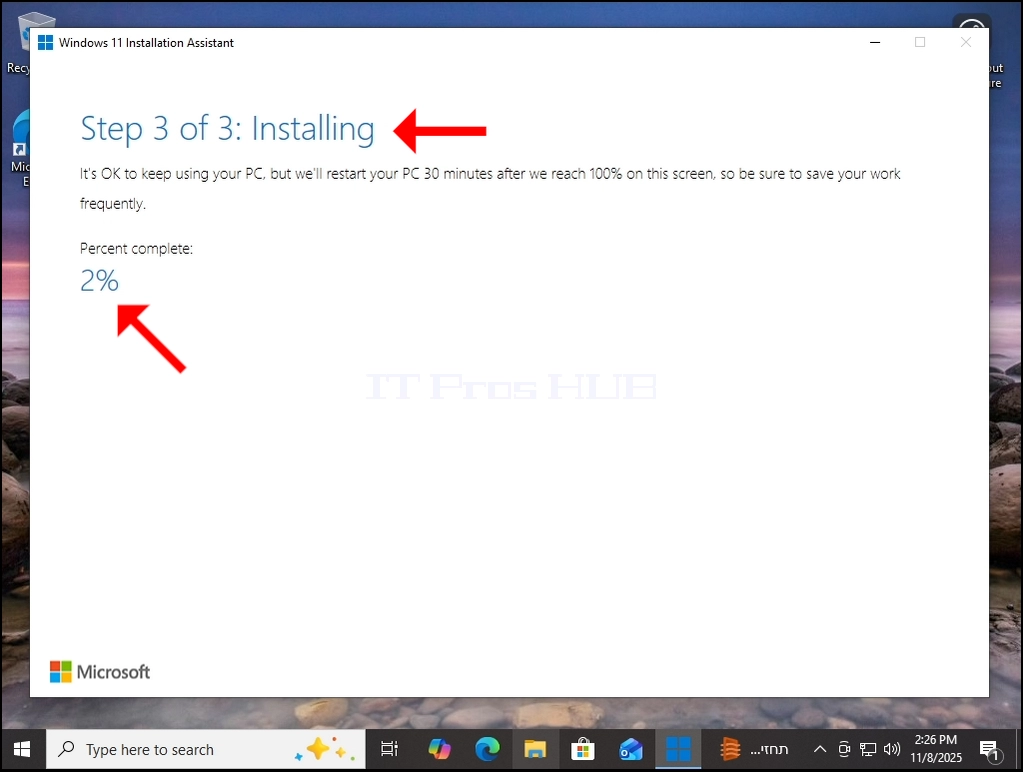
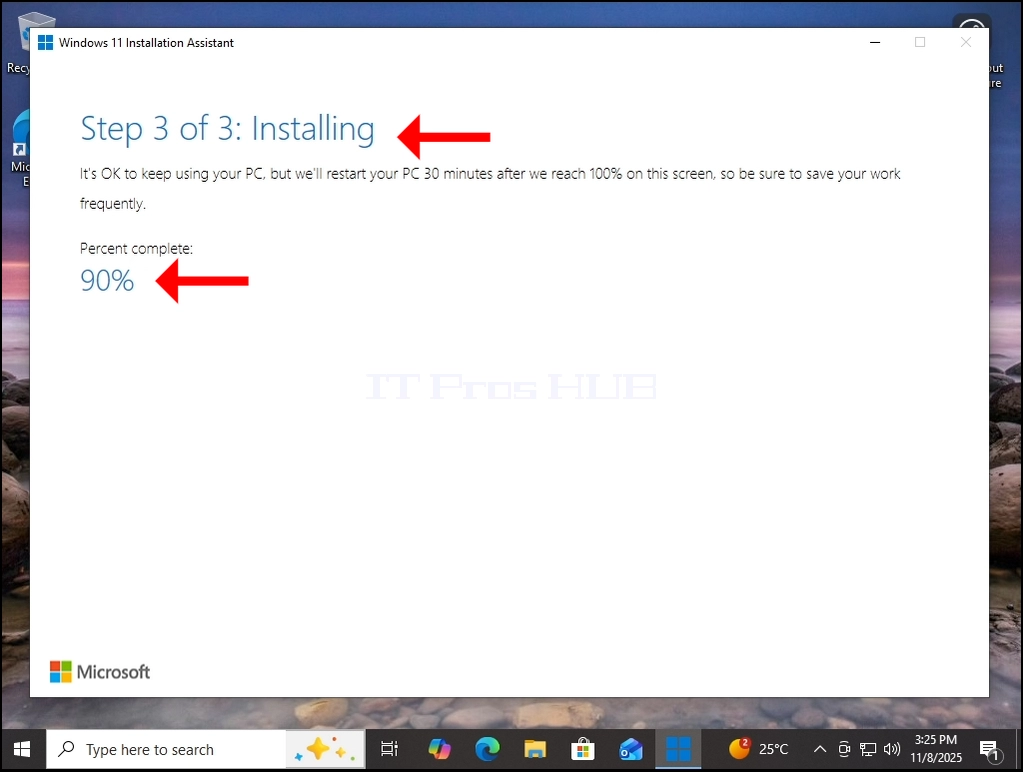
2. Nadat het installatieproces is voltooid - herstart Windows.
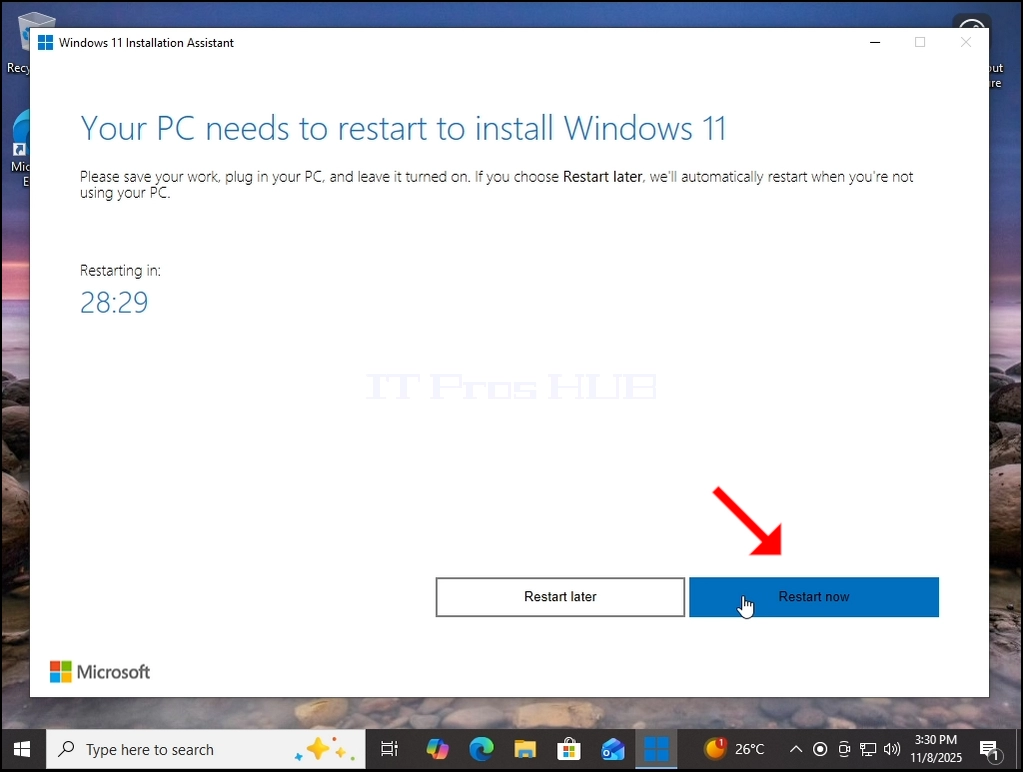
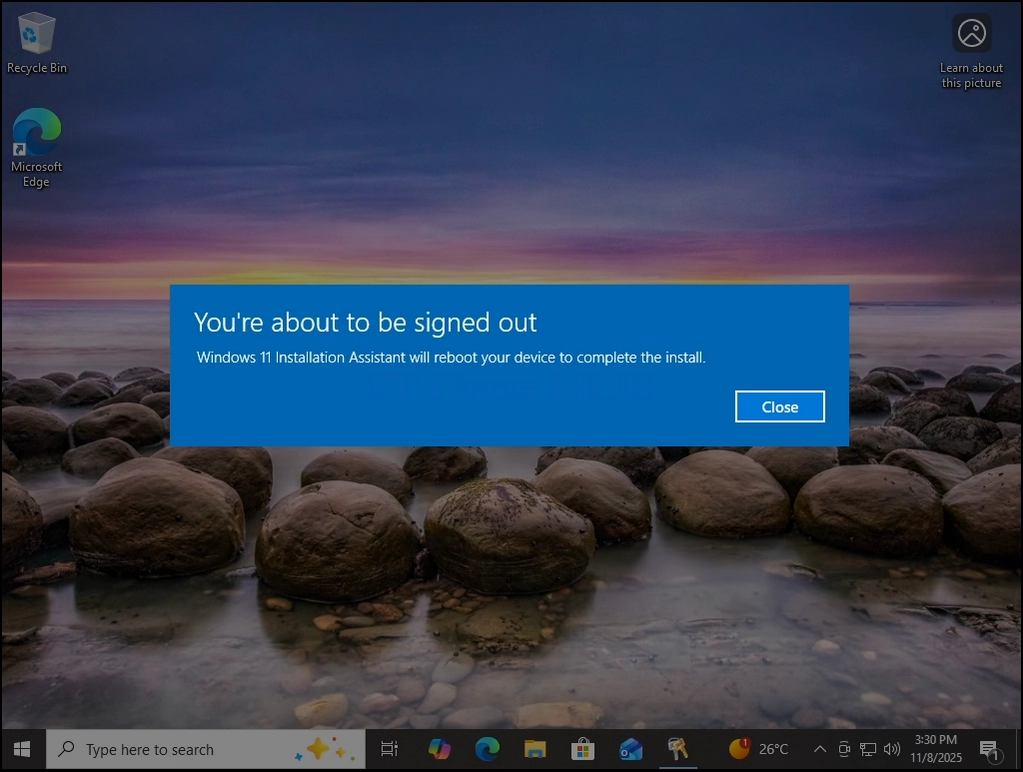
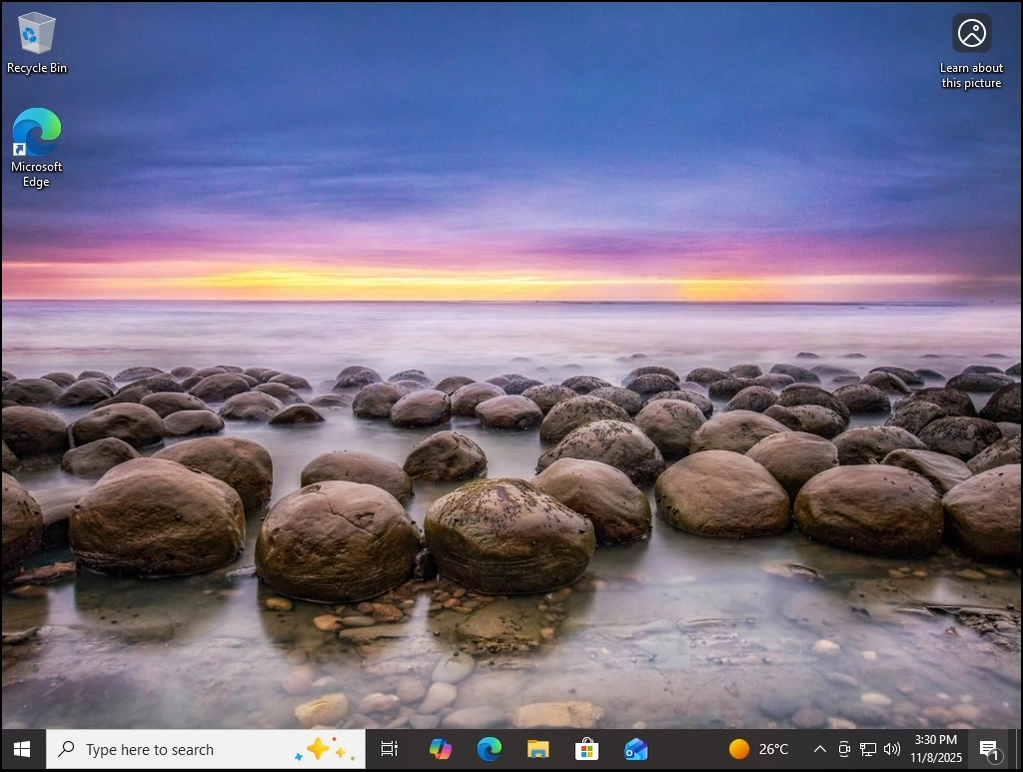
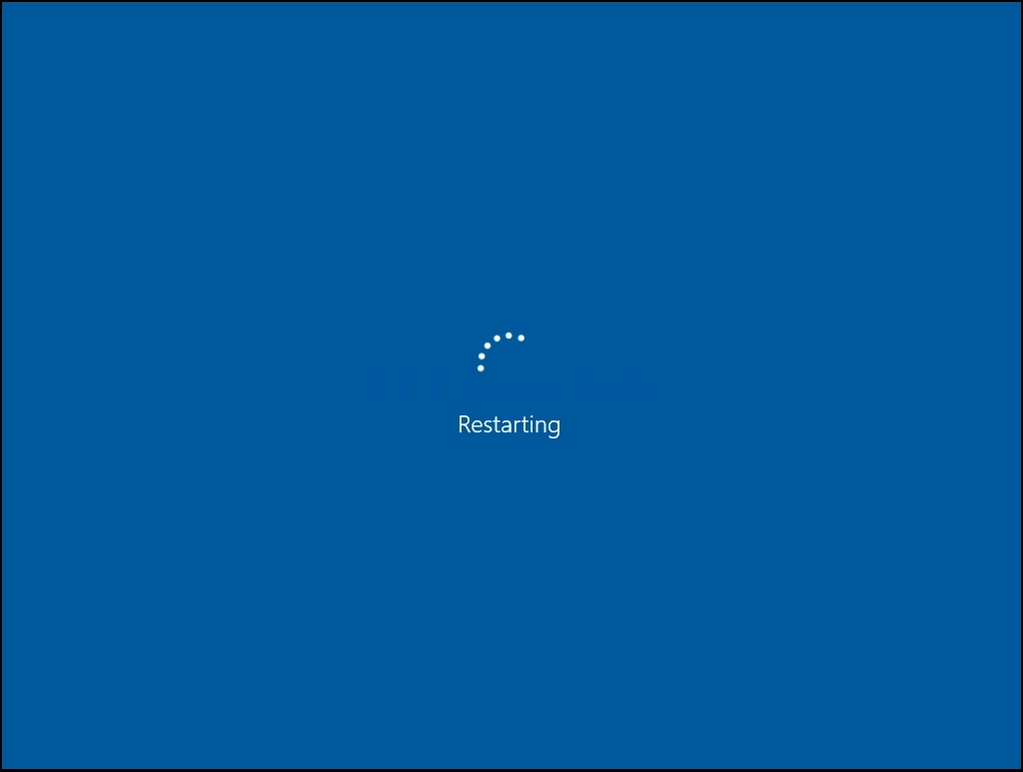
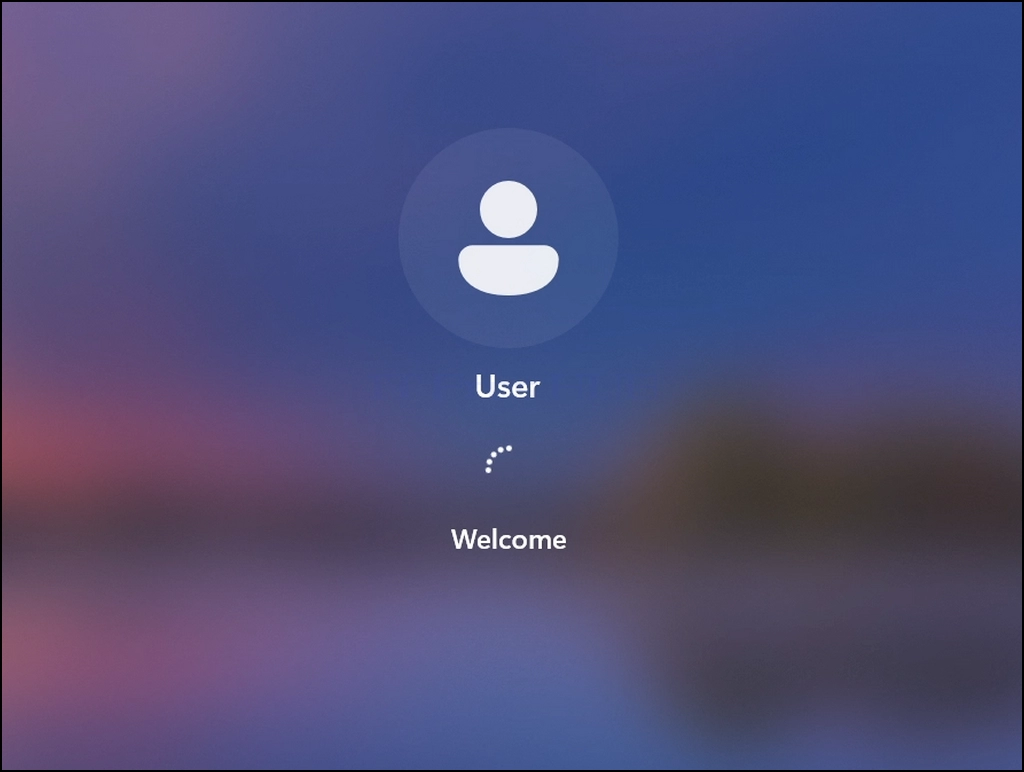

3. Windows is nu opnieuw geïnstalleerd. De vorige versie van Windows wordt nu opgeslagen in de map Windows.old.
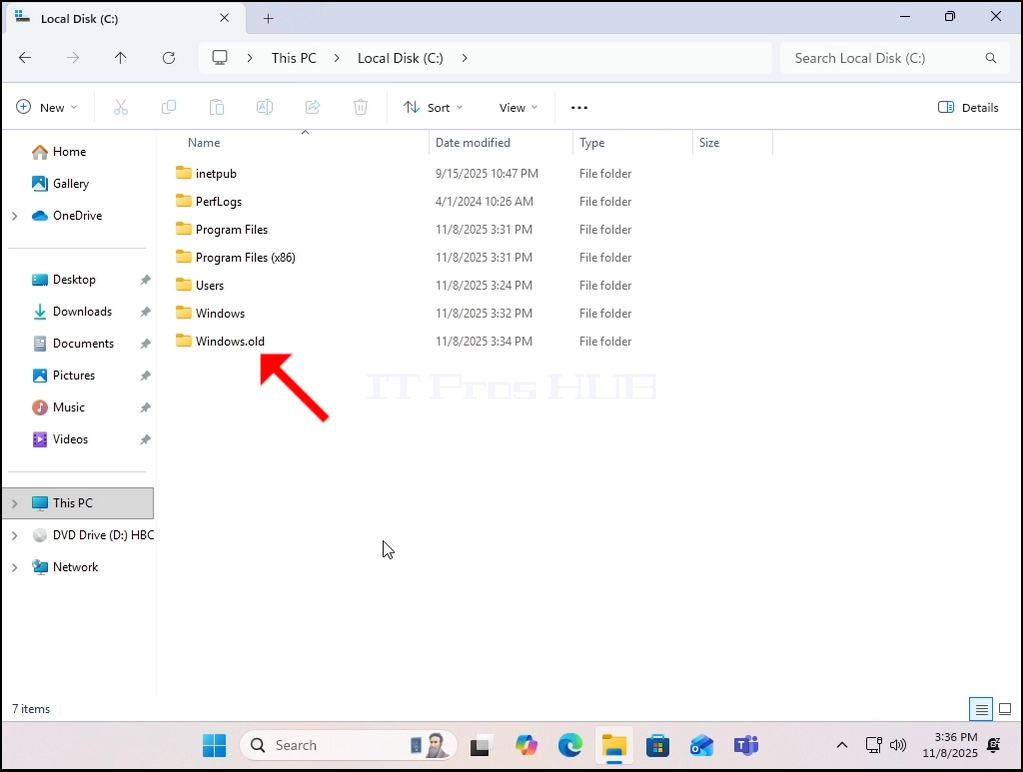
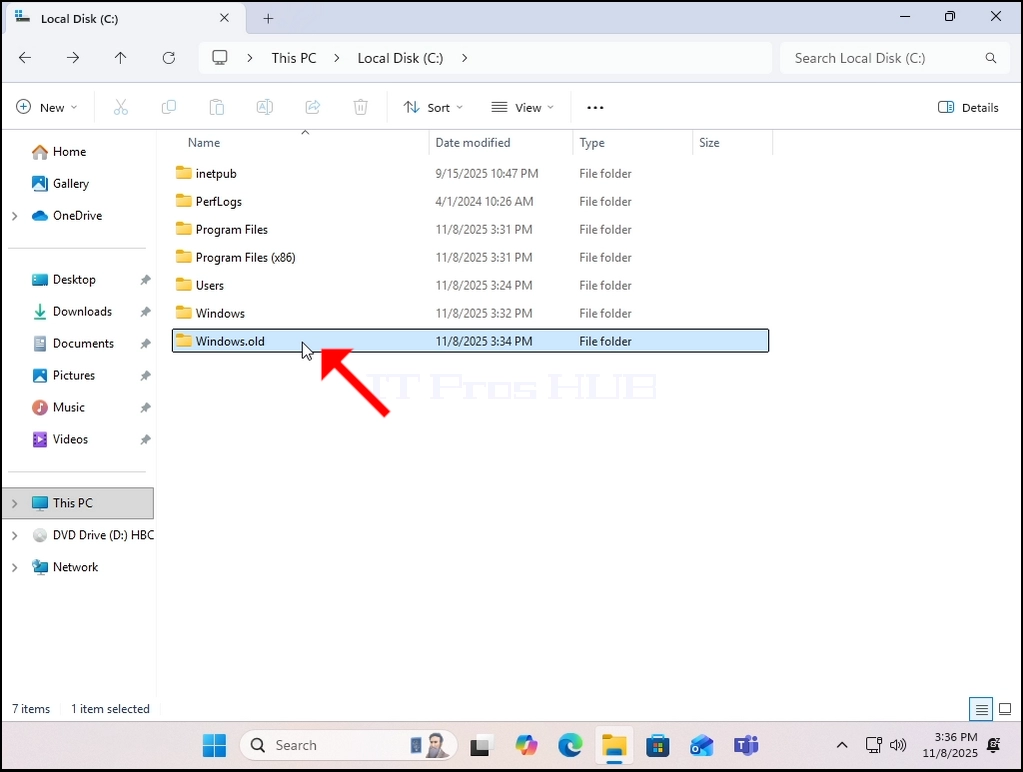
4. Zoals u kunt zien, het verwijderen van Windows. Oude map volledig van witnin Windows is in dit geval niet mogelijk:
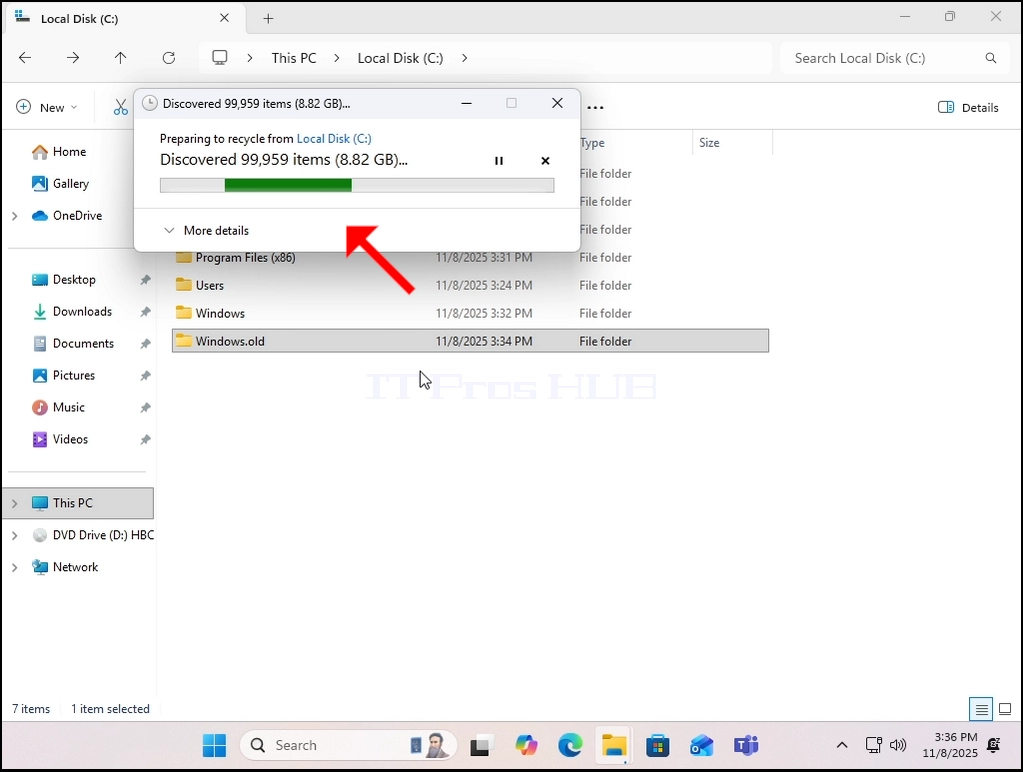
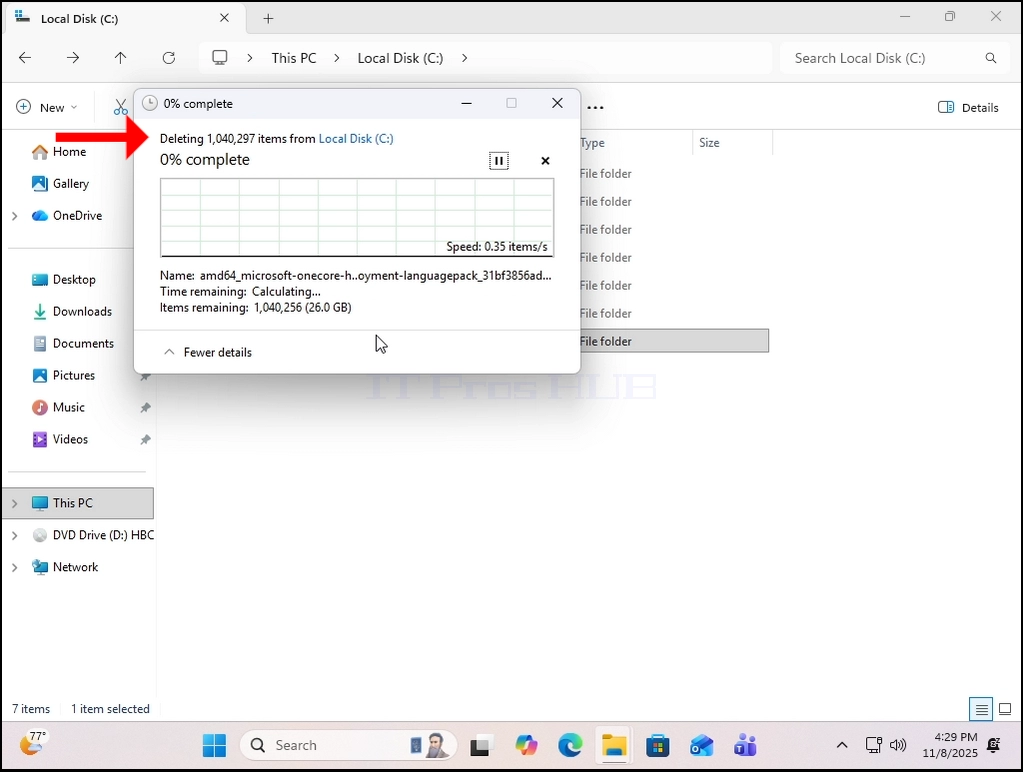

5. Om dat uit te voeren, zullen we een offline versie van Windows genaamd Windows PE genaamd HBCD gebruiken in dit geval.
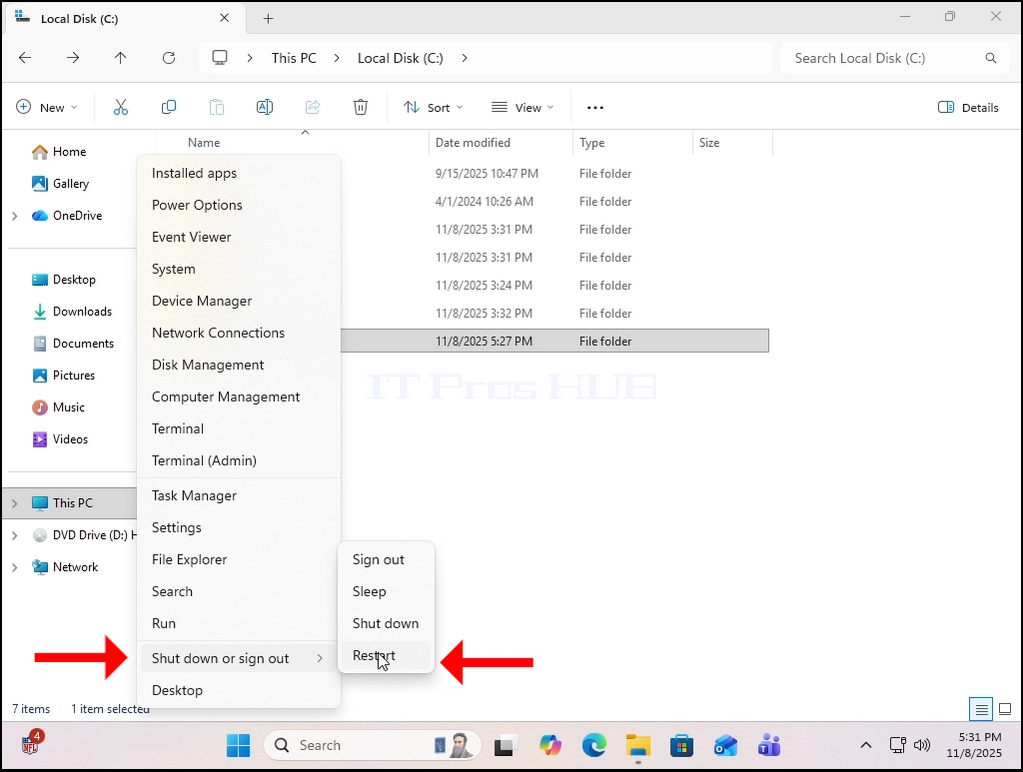
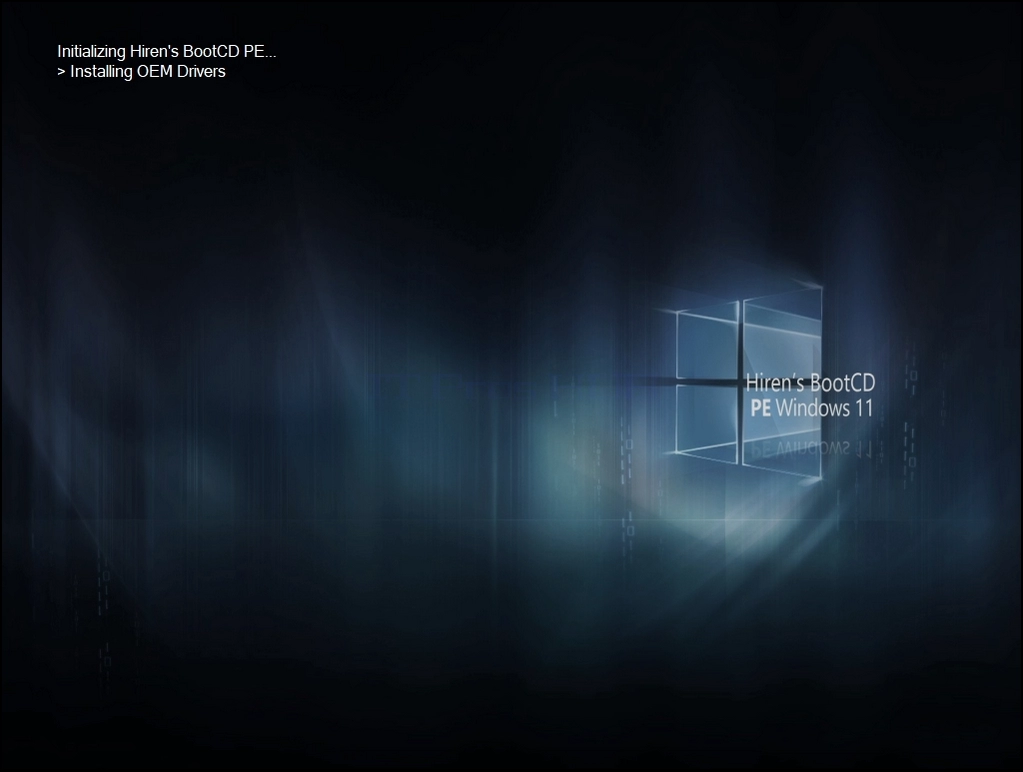
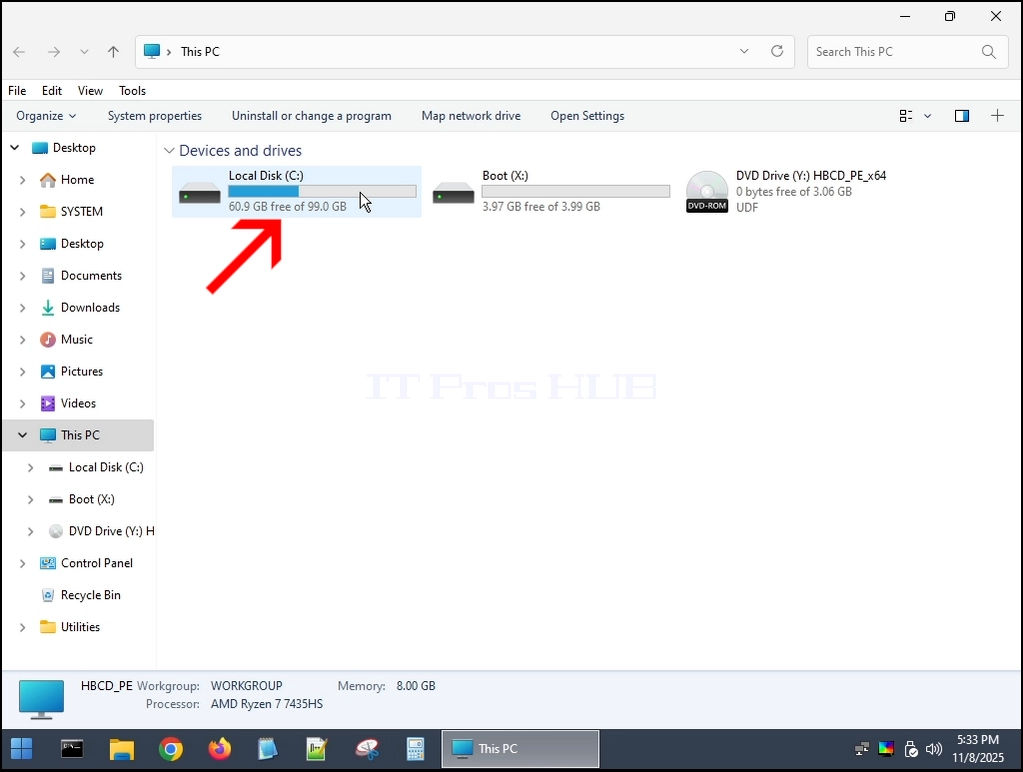
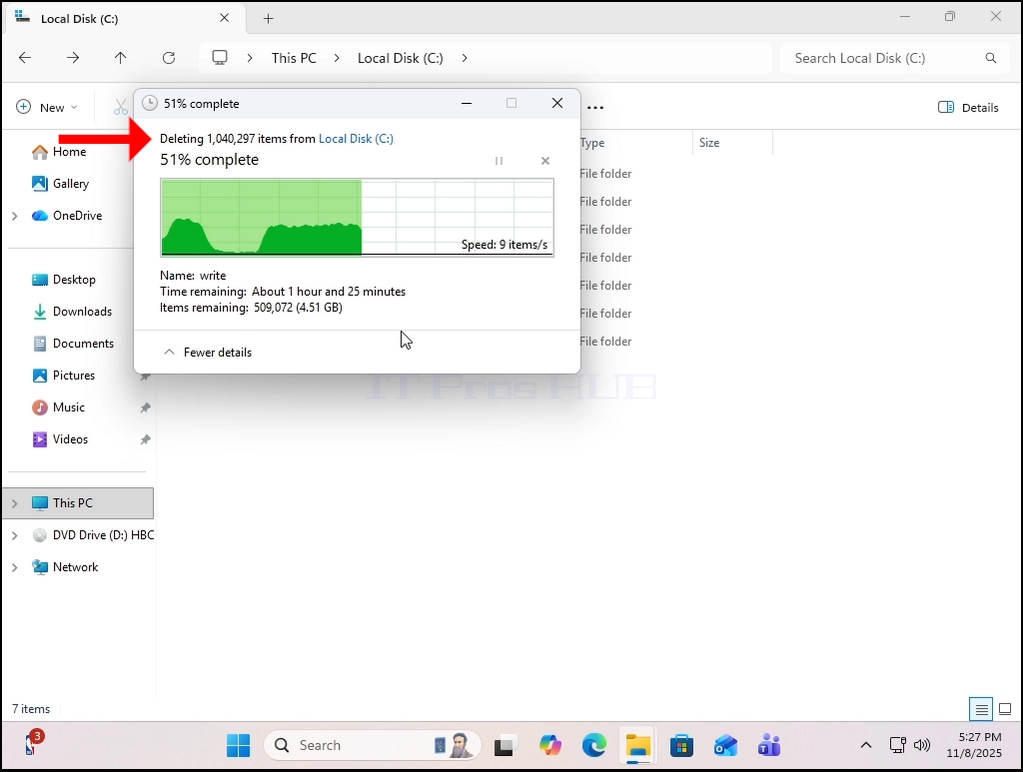
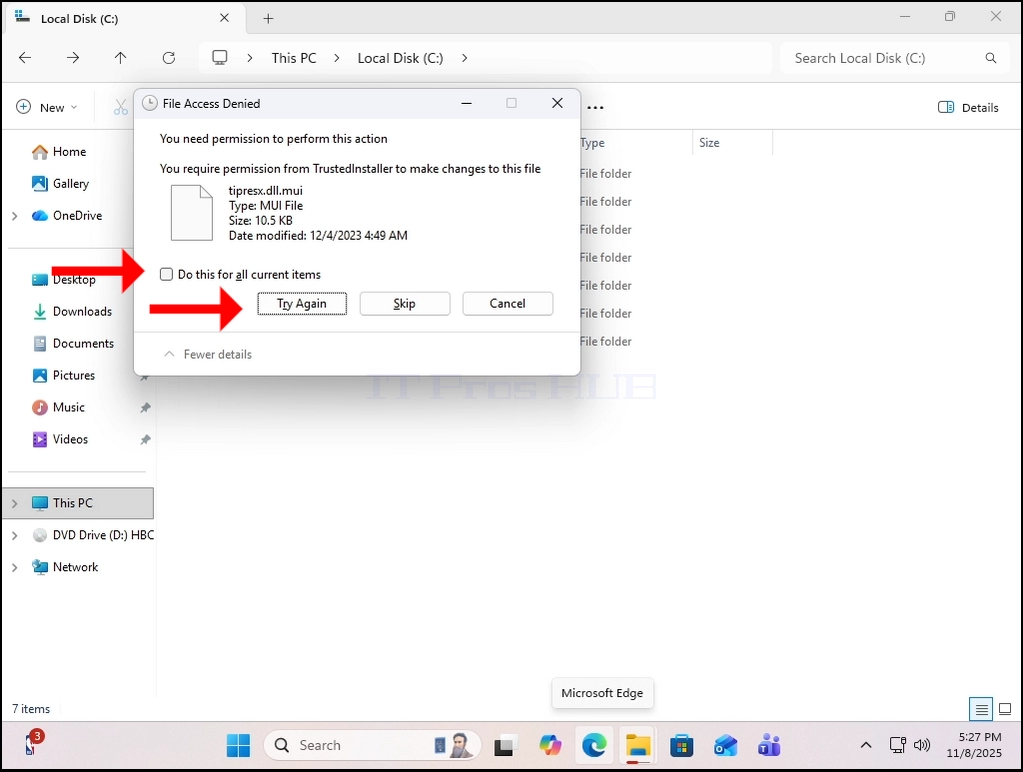
6. We zullen de map Windows.old verwijderen uit Windows PE (HBCD):
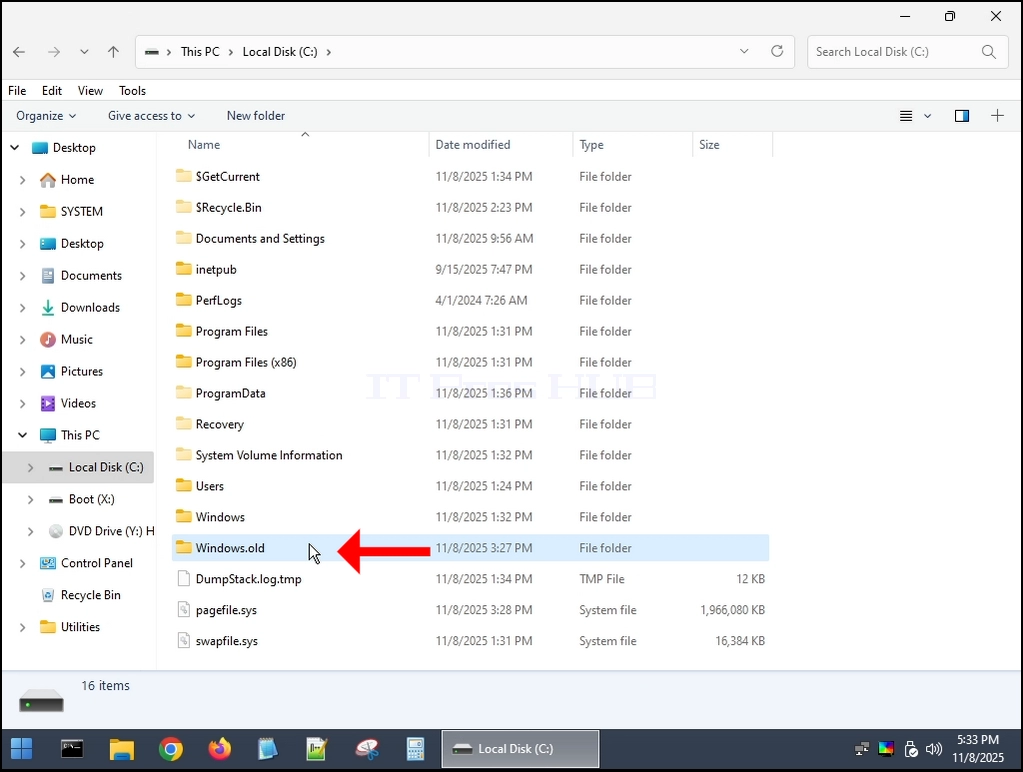
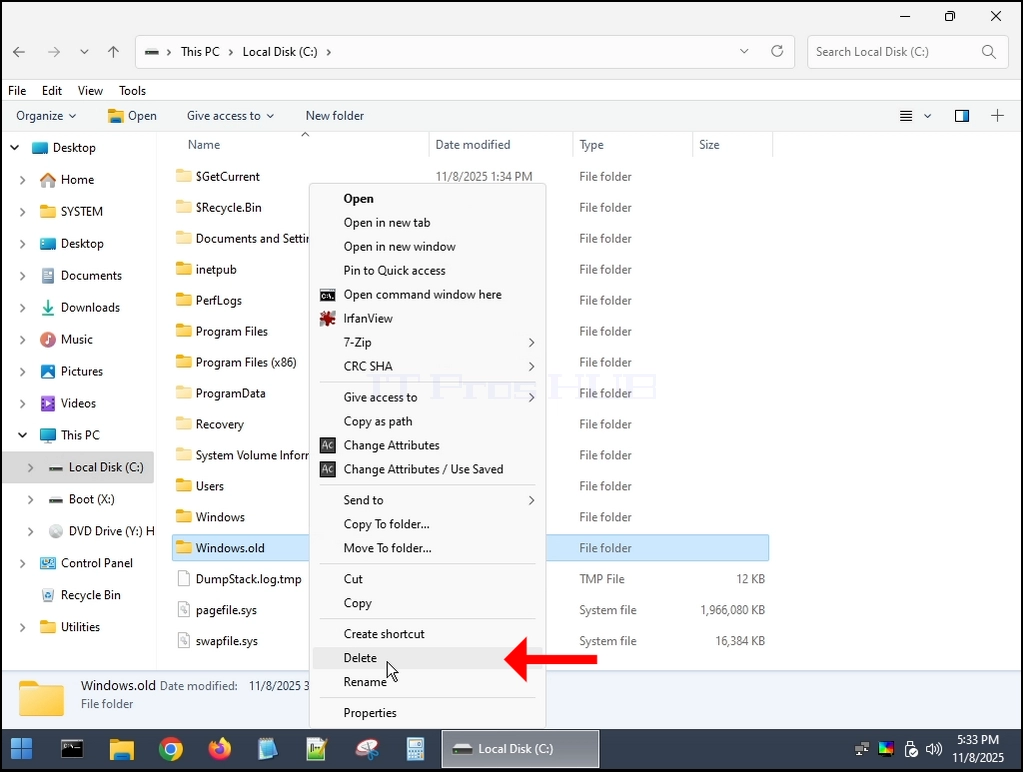
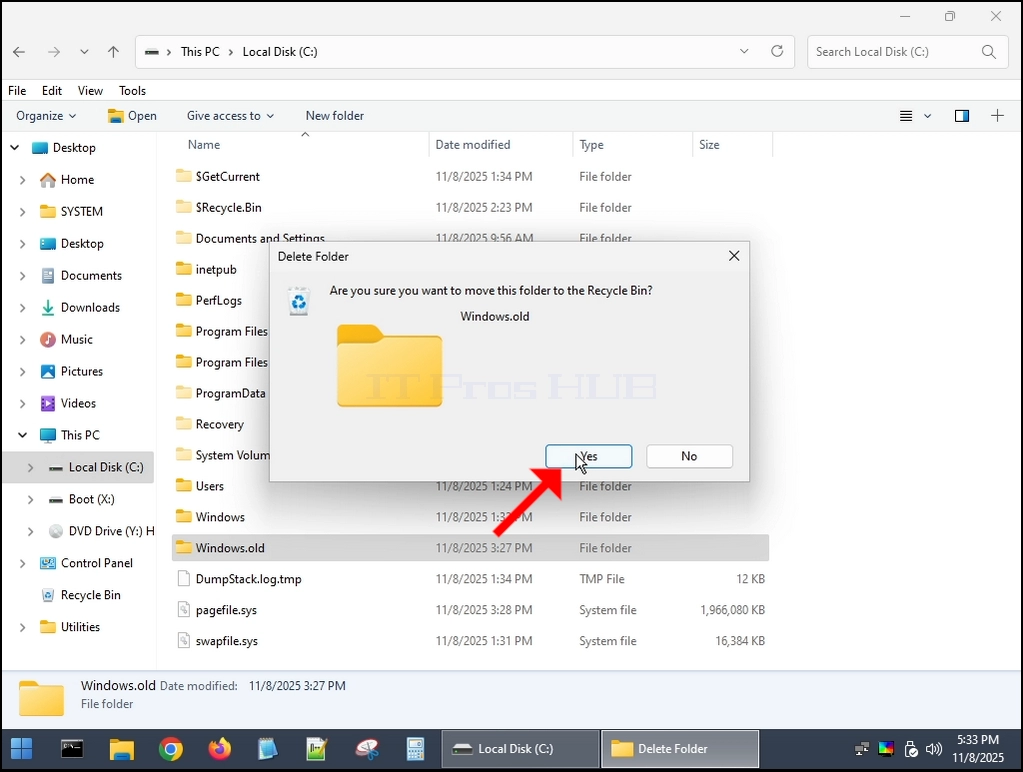
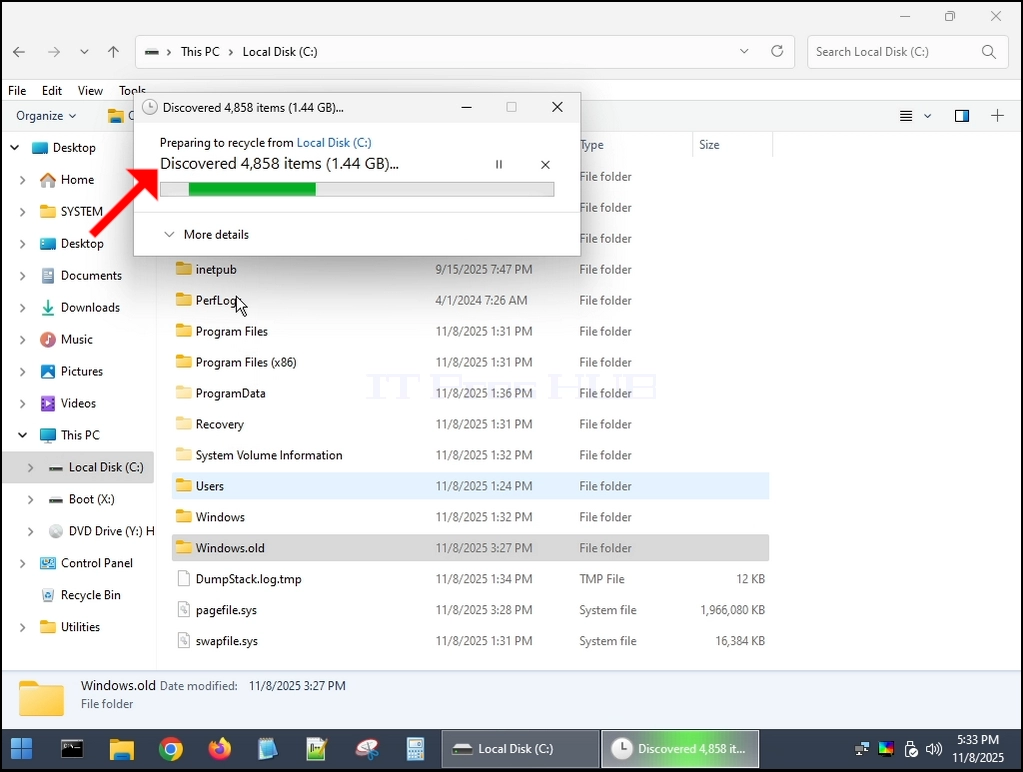
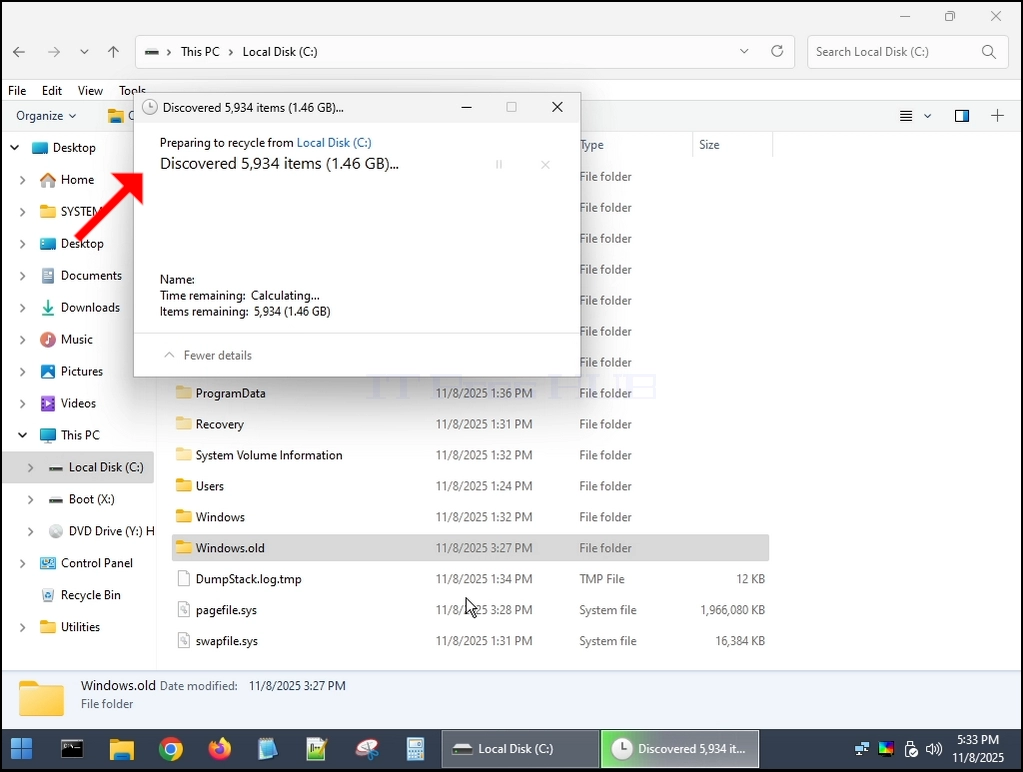
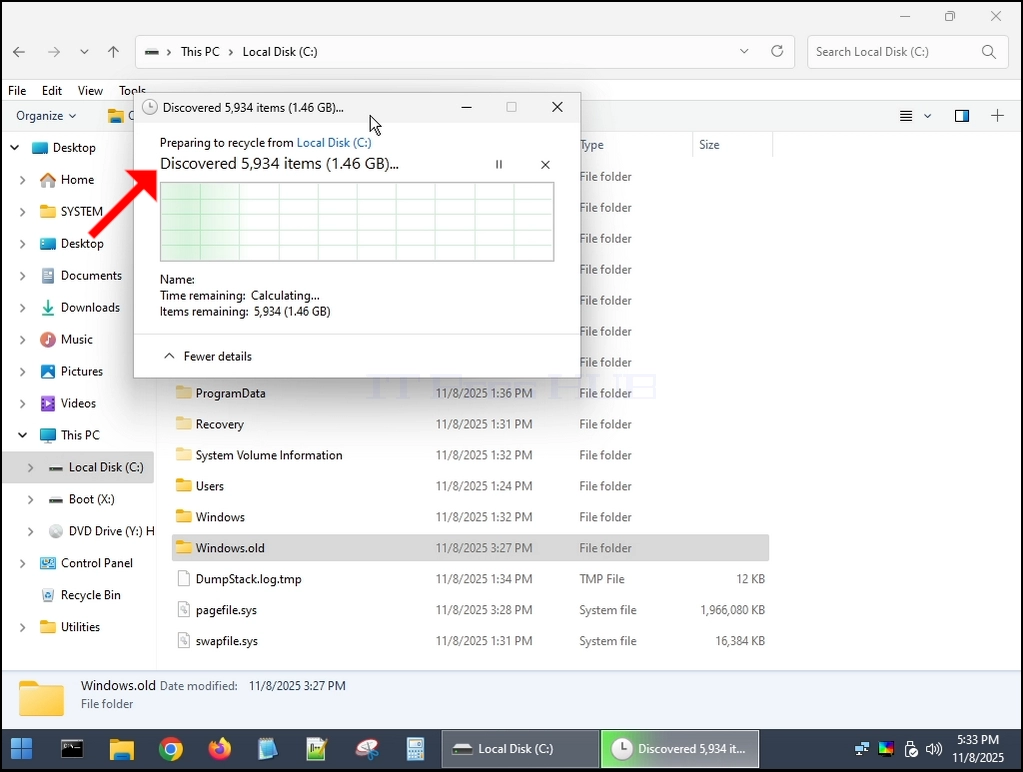

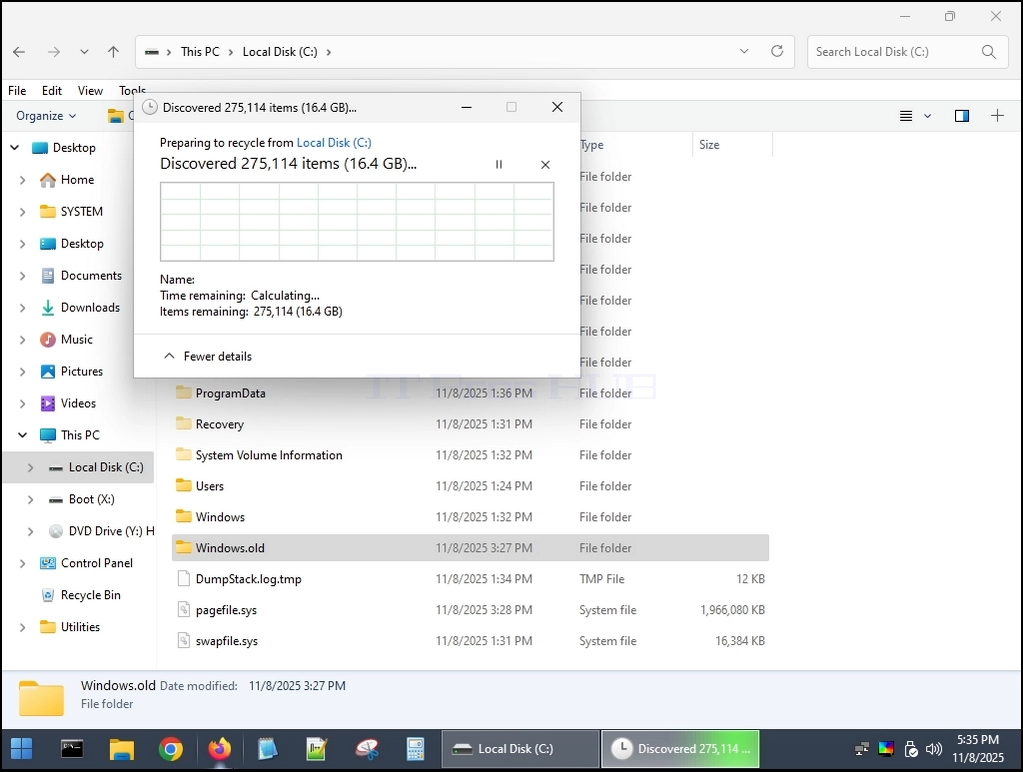
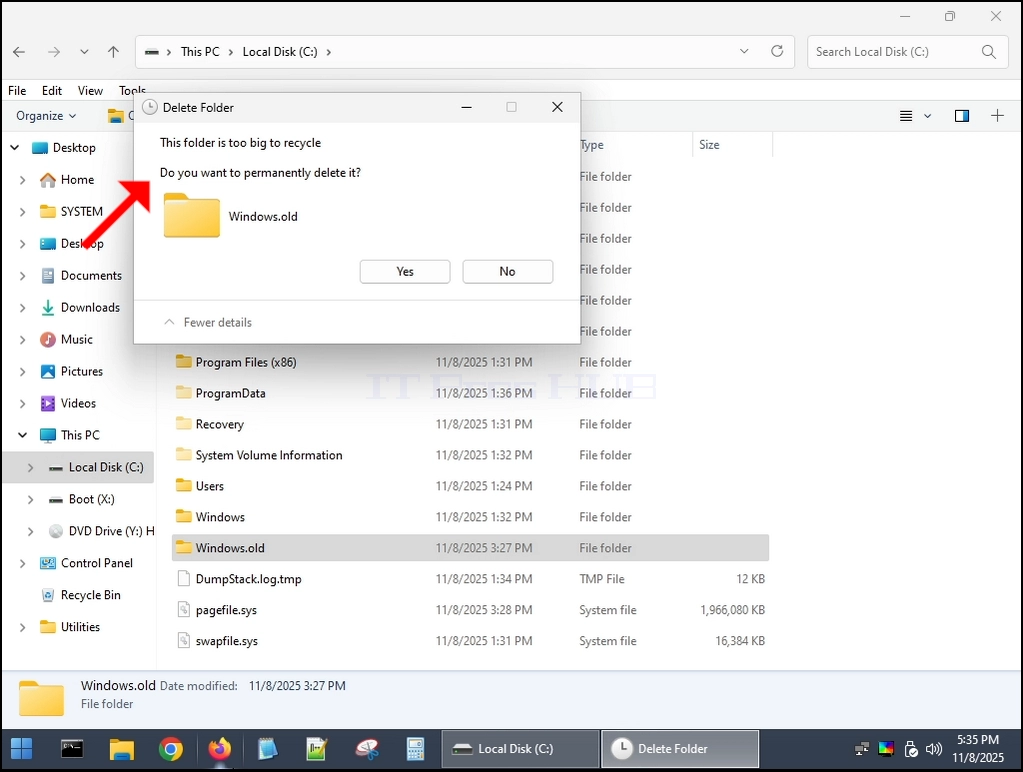
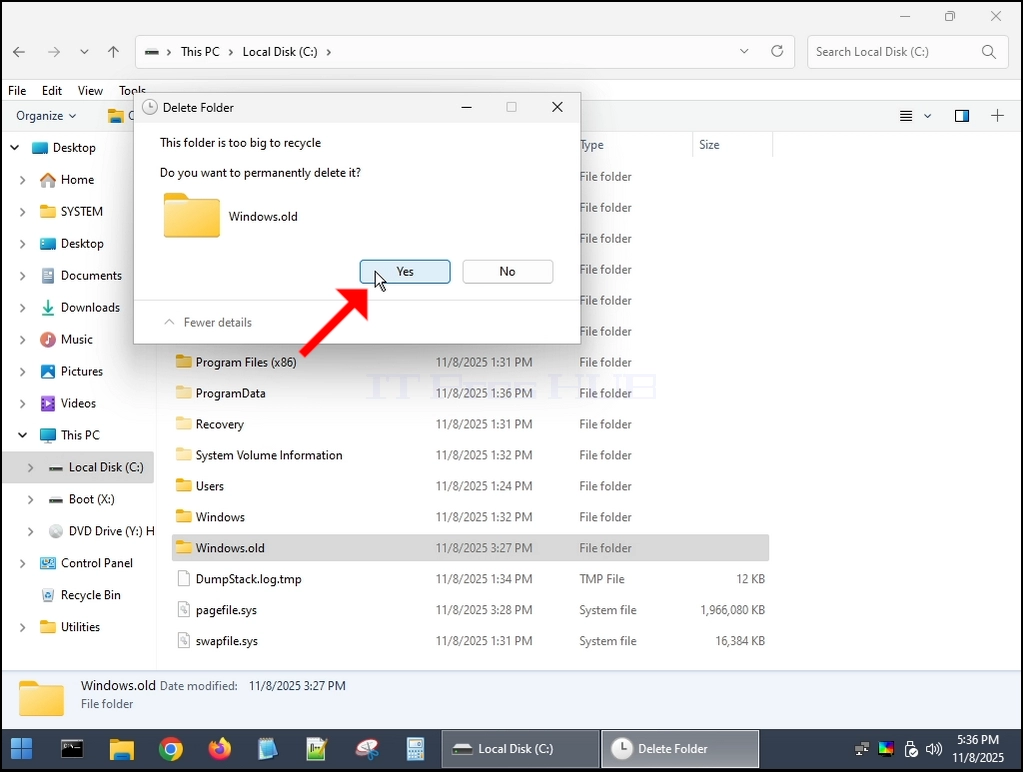
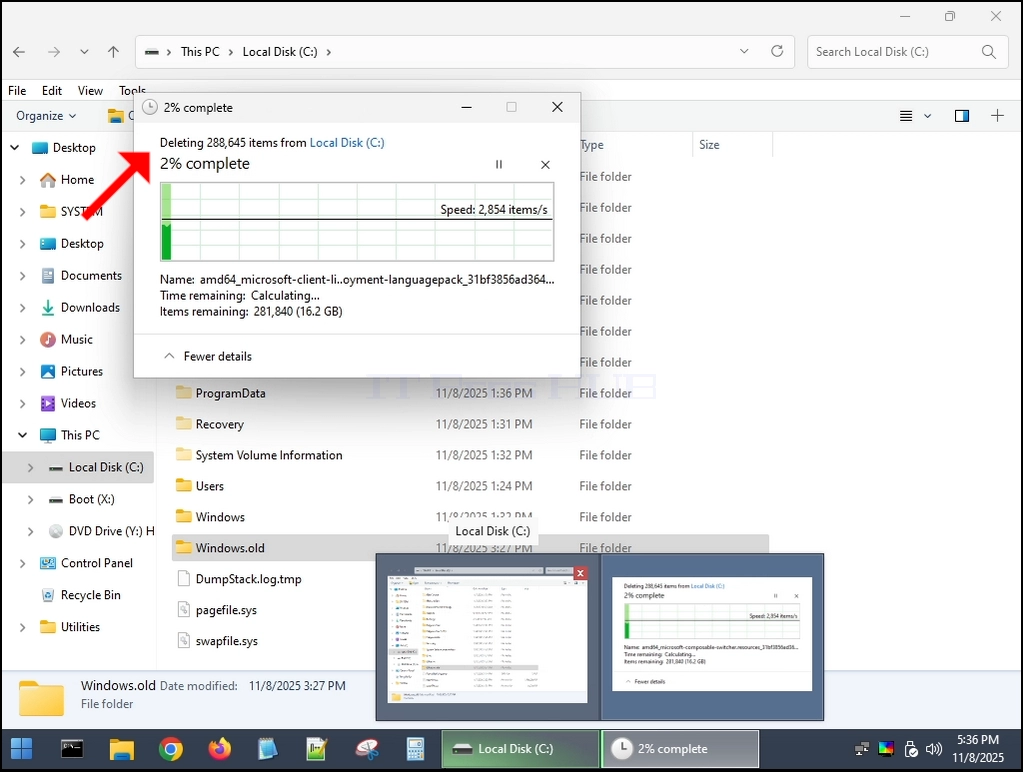
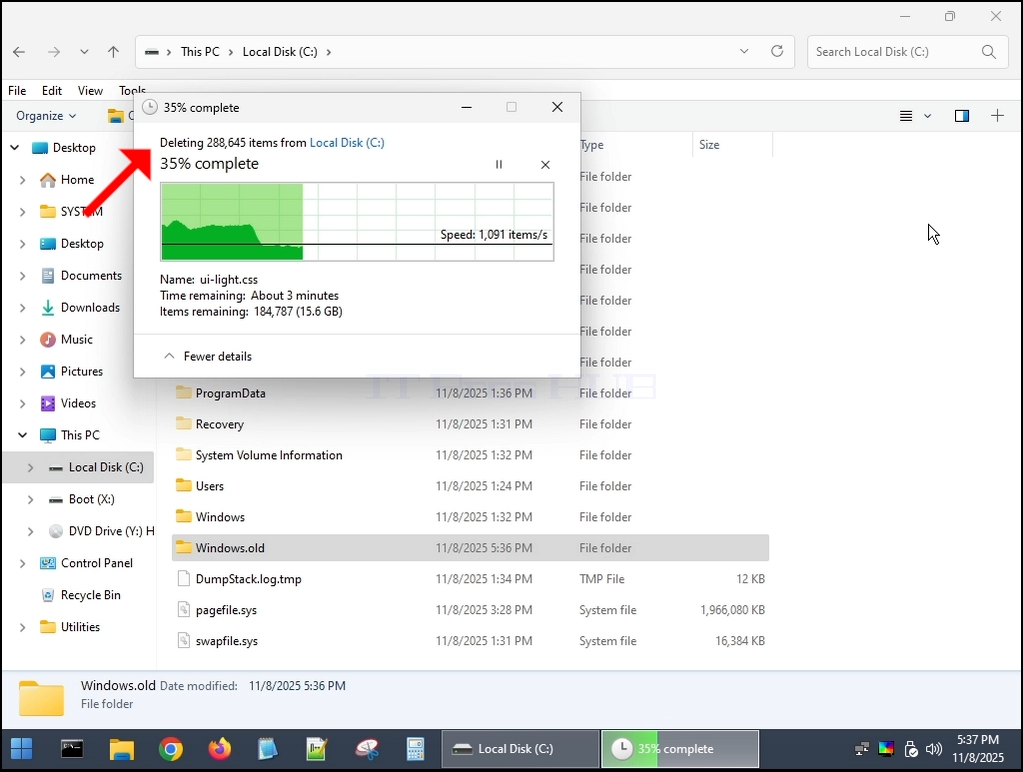
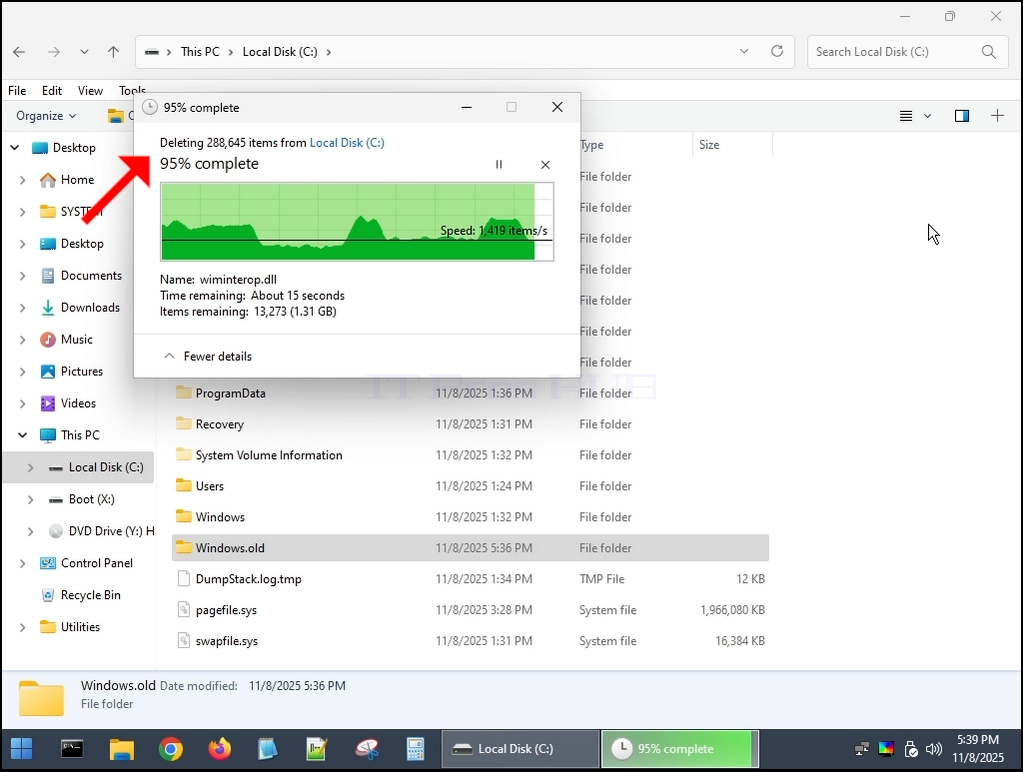
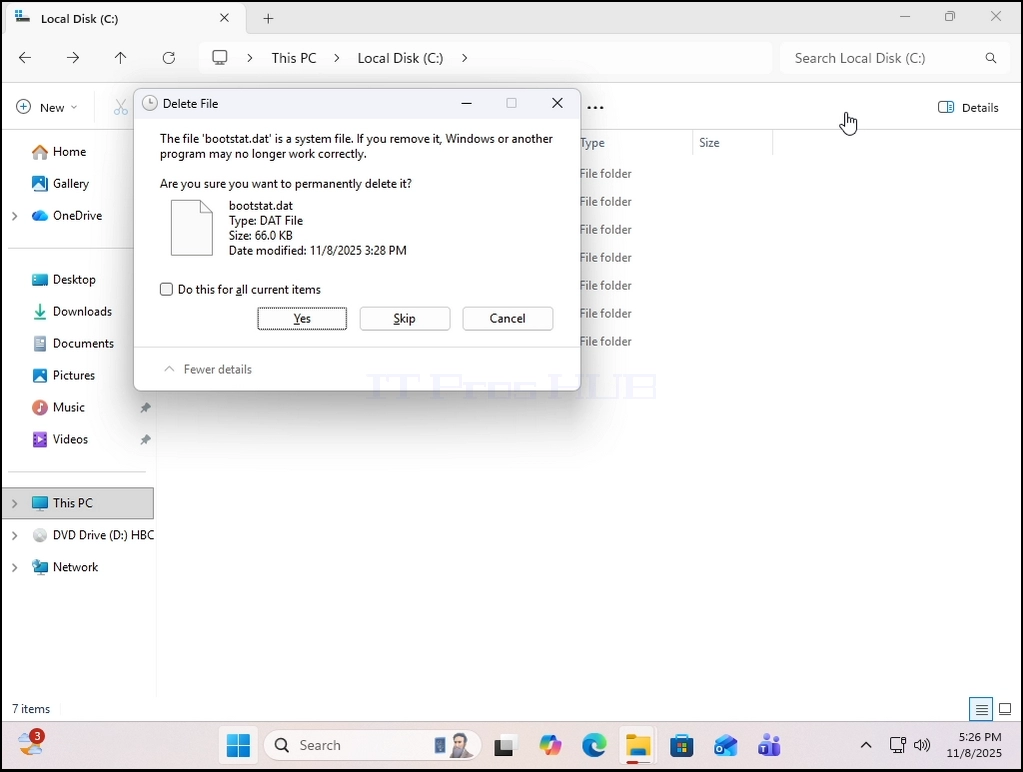
7. Als er dialogen ontstaan - Markeer ze als "Doe dit voor alle huidige items" en klik op Ja.
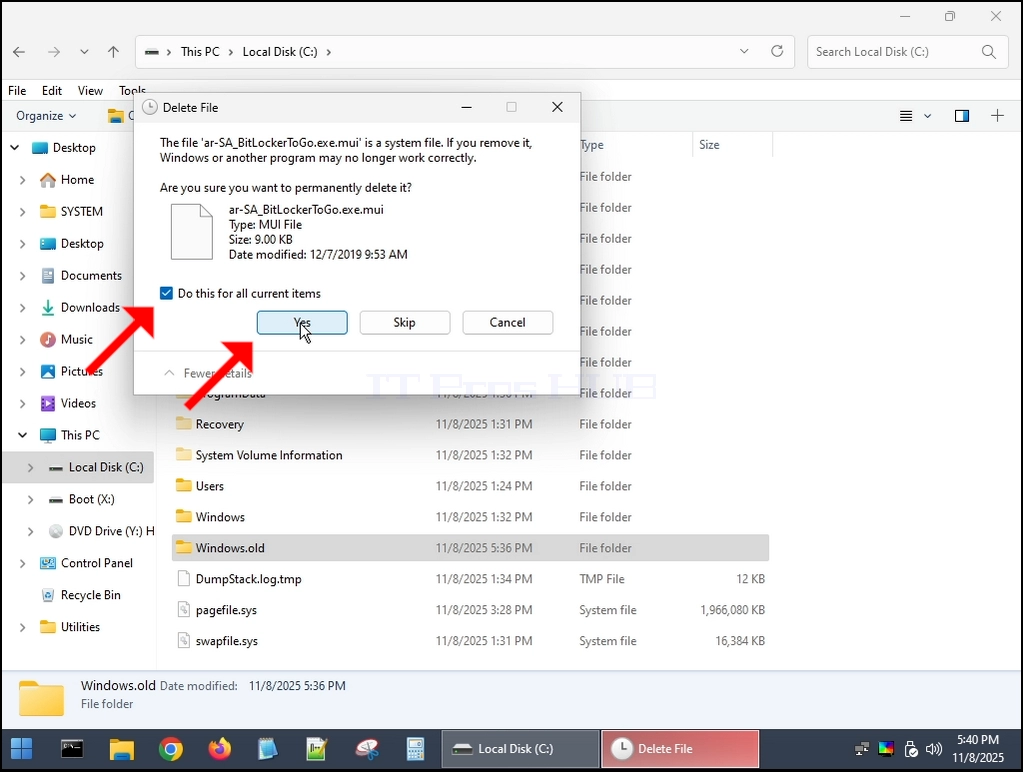
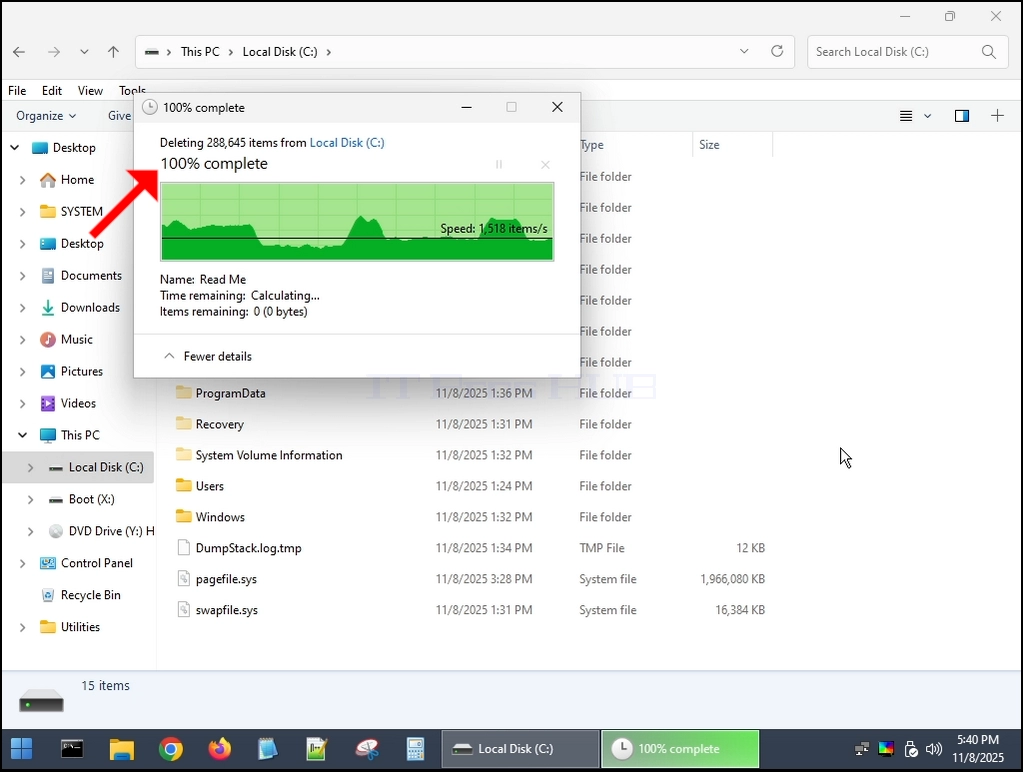
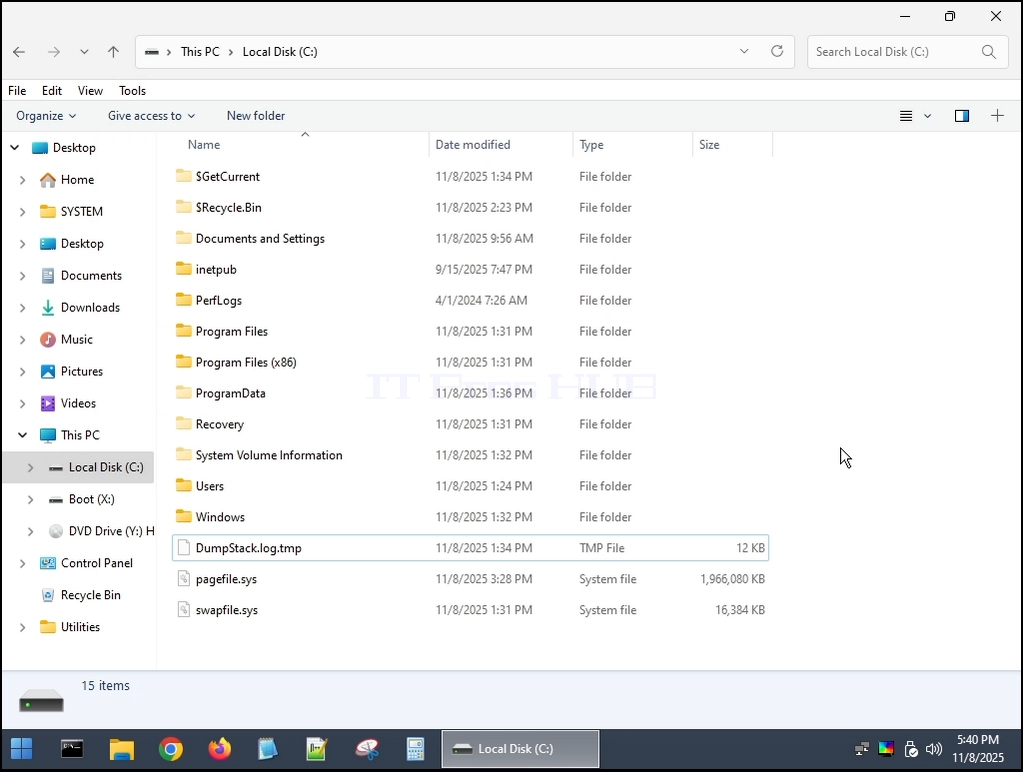
8. Windows.old map is nu volledig verwijderd:
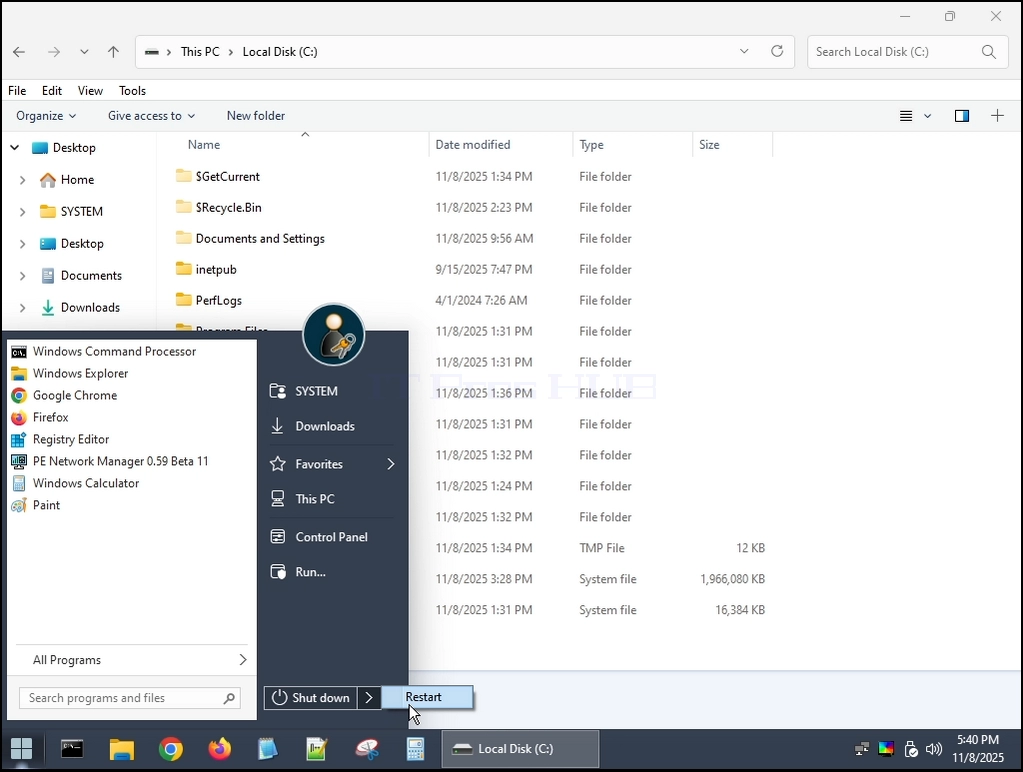
9. Terugstarten naar Windows 11:
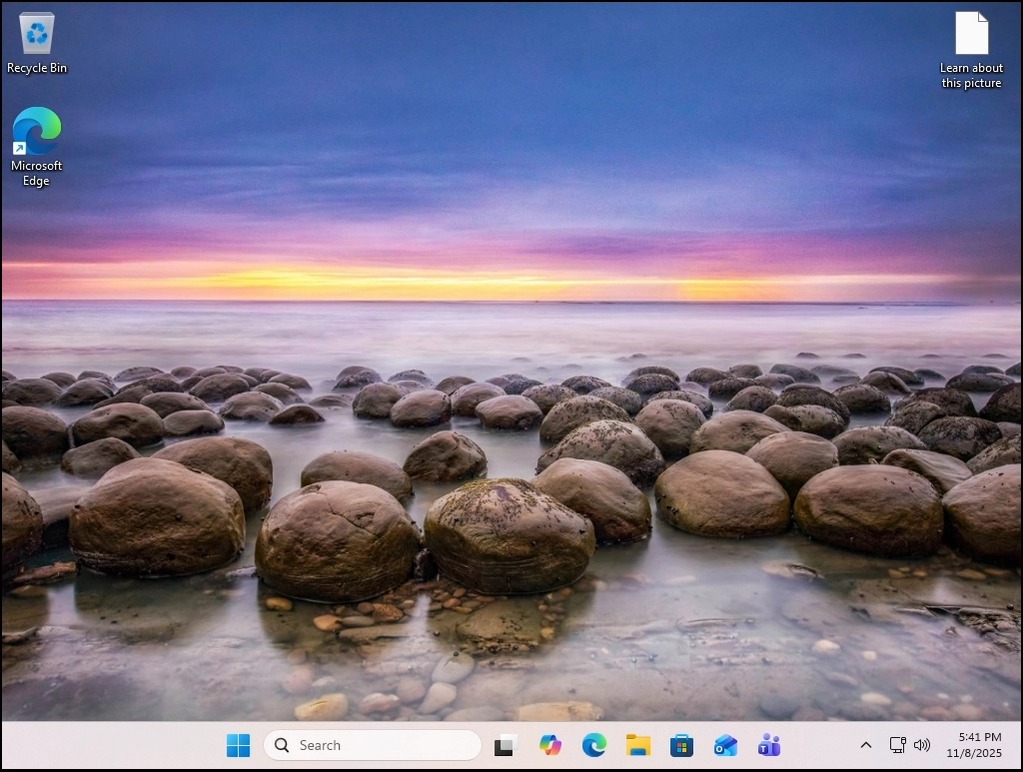
10. Windows 11 is succesvol opgestart.
11. Conclusie:
Windows.old map kan worden verwijderd zonder gevolgen met betrekking tot Windows 11's opstarten.
- Details
- Geschreven door IT Pro
- Categorie: Windows
- Hits: 10110
Introduction:
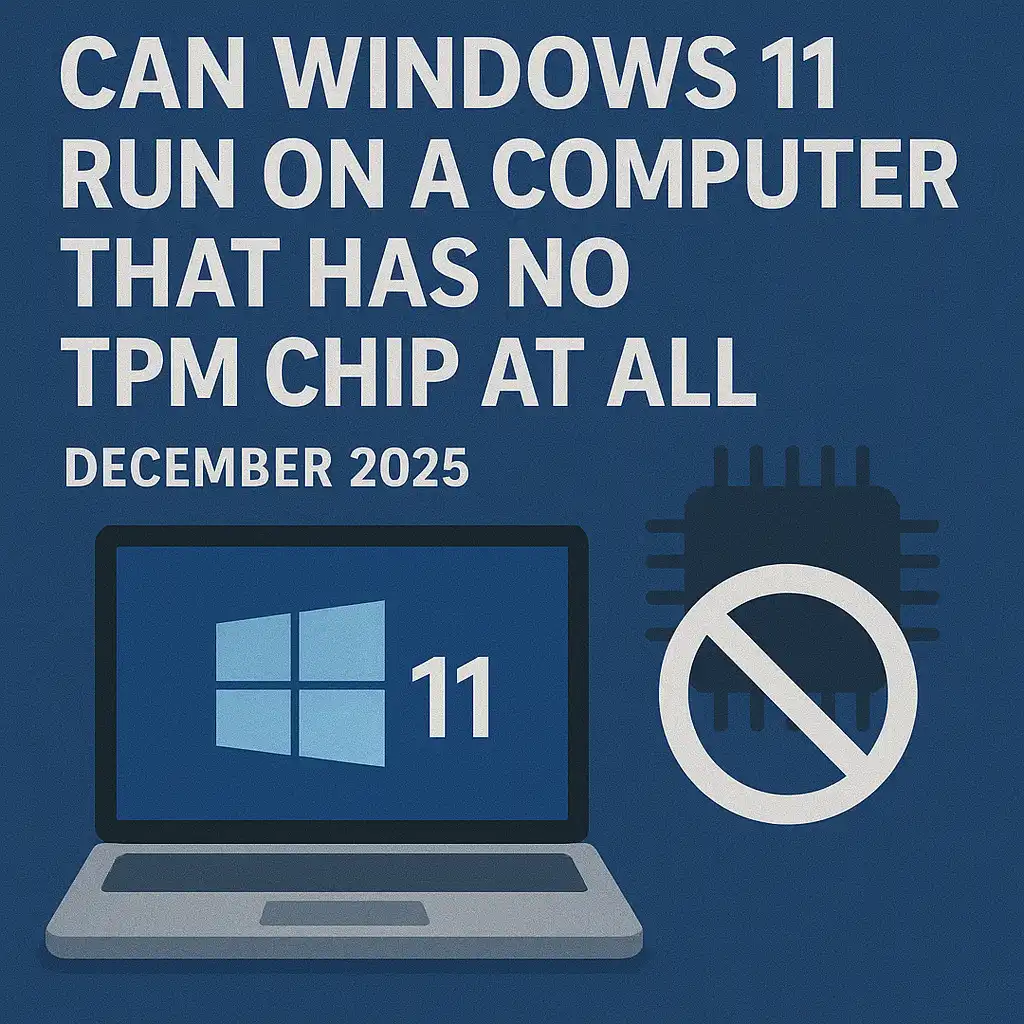
In this article we will answer the title’s very simple question whether Windows 11 could run in a computer that has no TPM chip at all.
Short Answer – Yes.
How? – By not installing it on it at all, but by forcing Windows onto it.
Let us explain with a long answer:
- We have tested Windows 11 24H2 and 25H1 on a VM that has a TPM 2.0 chip. A virtual one of course, but based on a real physical bare metal one
- 24H2 was installed on that VM with the TPM 2.0 chip already there – after the installation was done – we shut down that VM, removed the TPM 2.0 chip from the VMWARE and powered it back up – Windows started up normally.
- Later-on, we updated from 24H2 to 25H1 – same result. Windows worked fine.
- After that we tried installing Windows 11 24H2 on that very same VM, without a TPM – it did not work. Windows refused to be installed on that VM that had no TPM chip.
In the following steps we will demonstrate how we conducted our experiment:
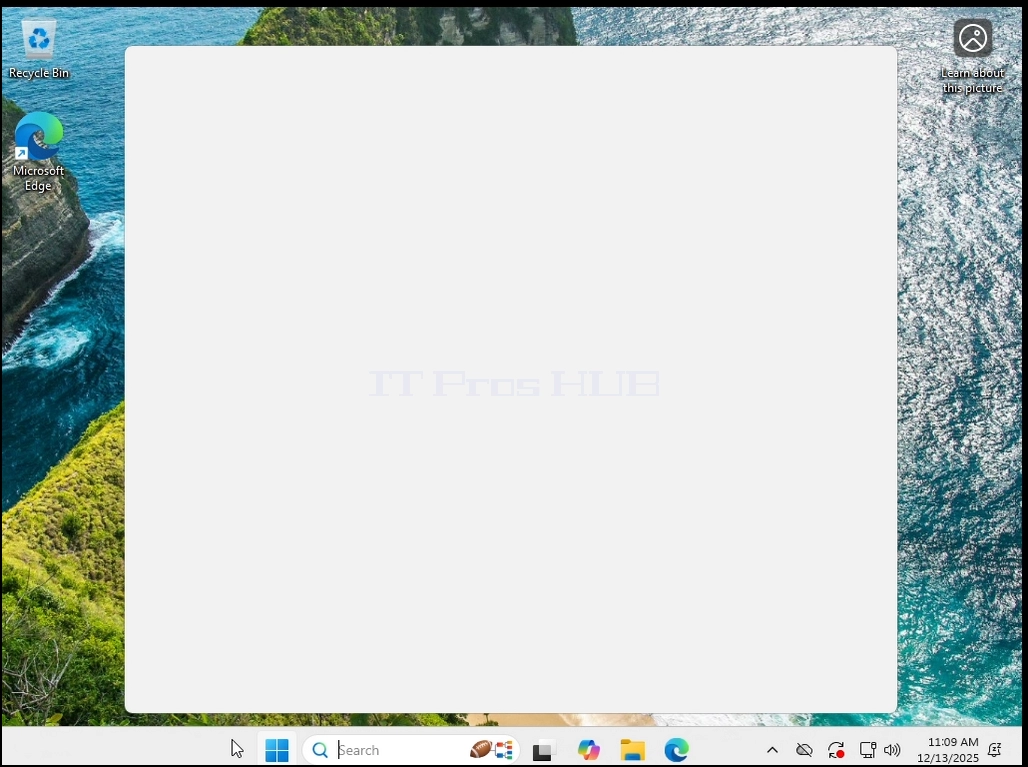
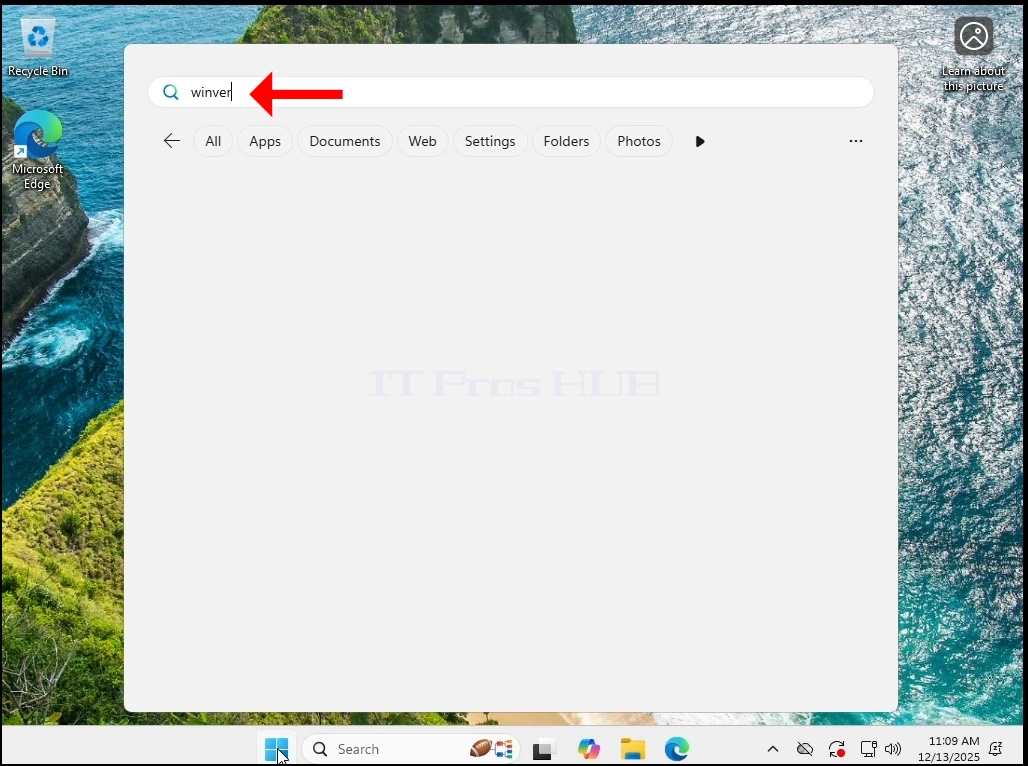
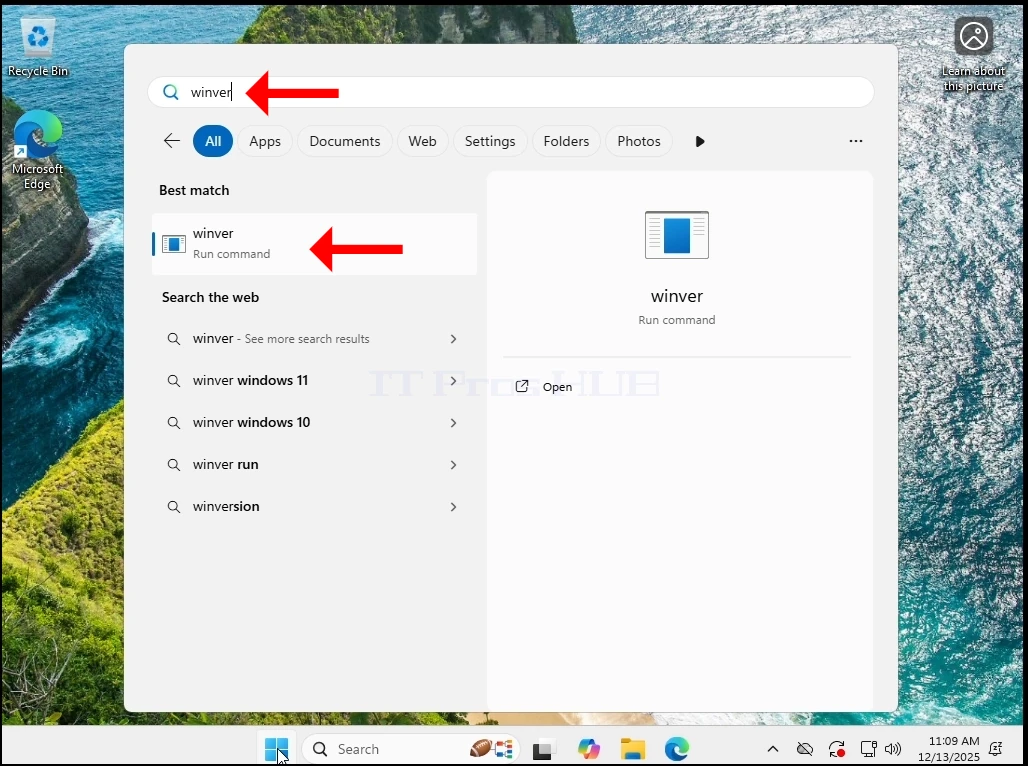
1. First let’s go and check Windows’ version by going to the Start menu and typing winver and hitting the ENTER key.
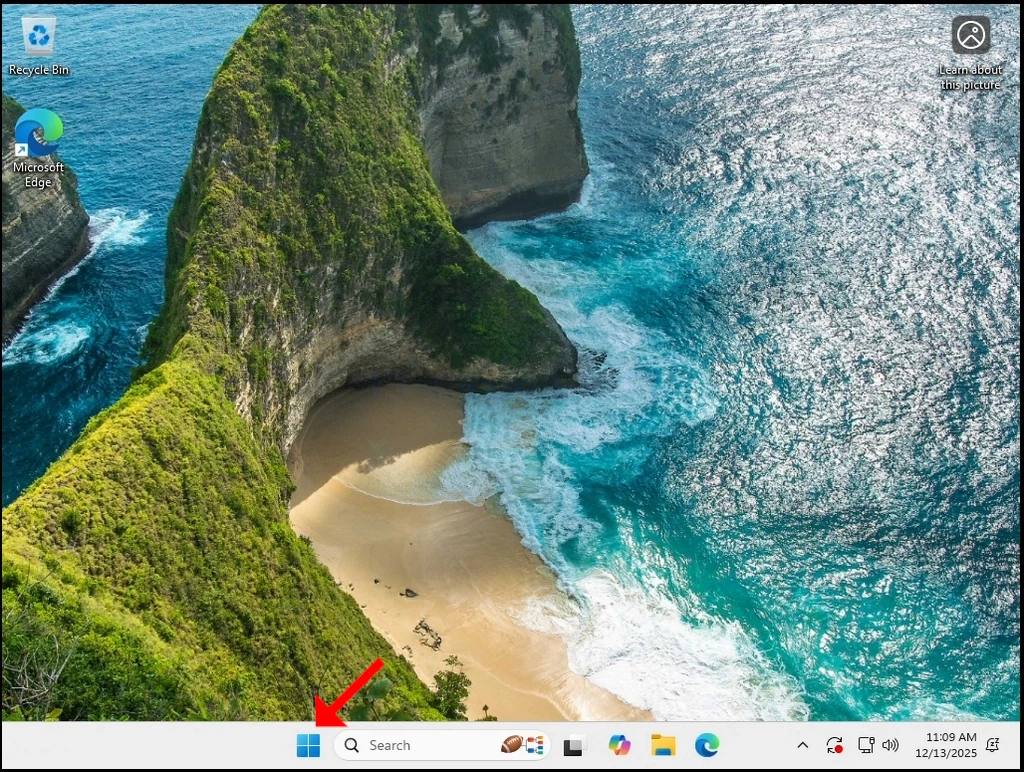
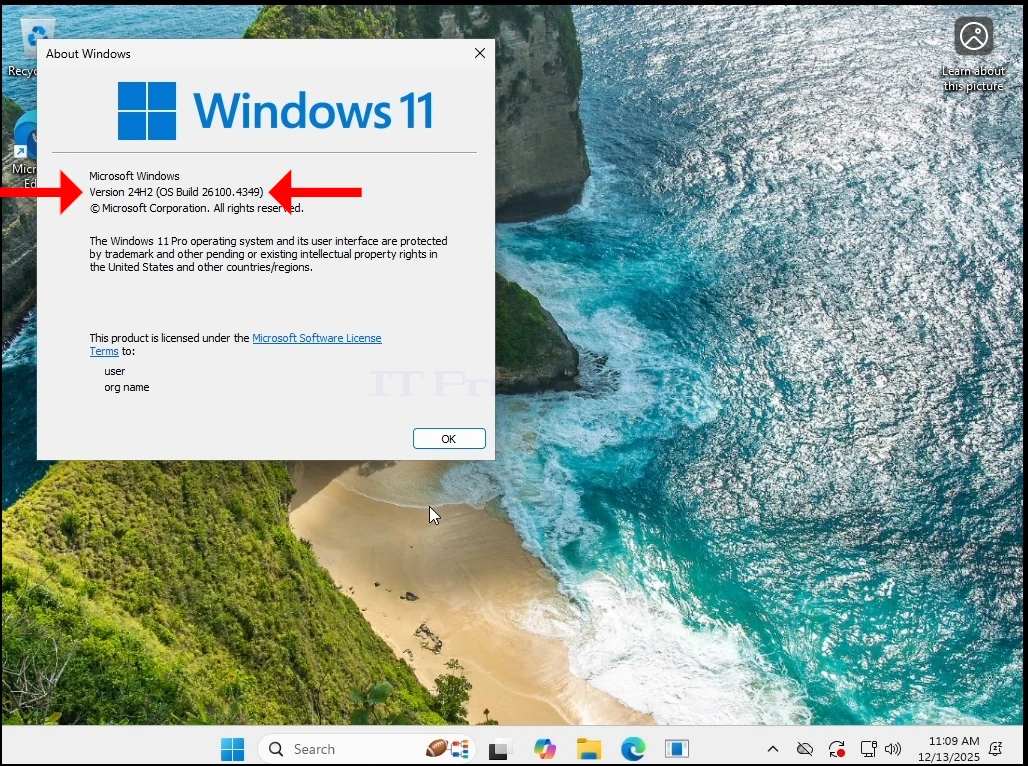
2. As you can see, the current version is 24H2
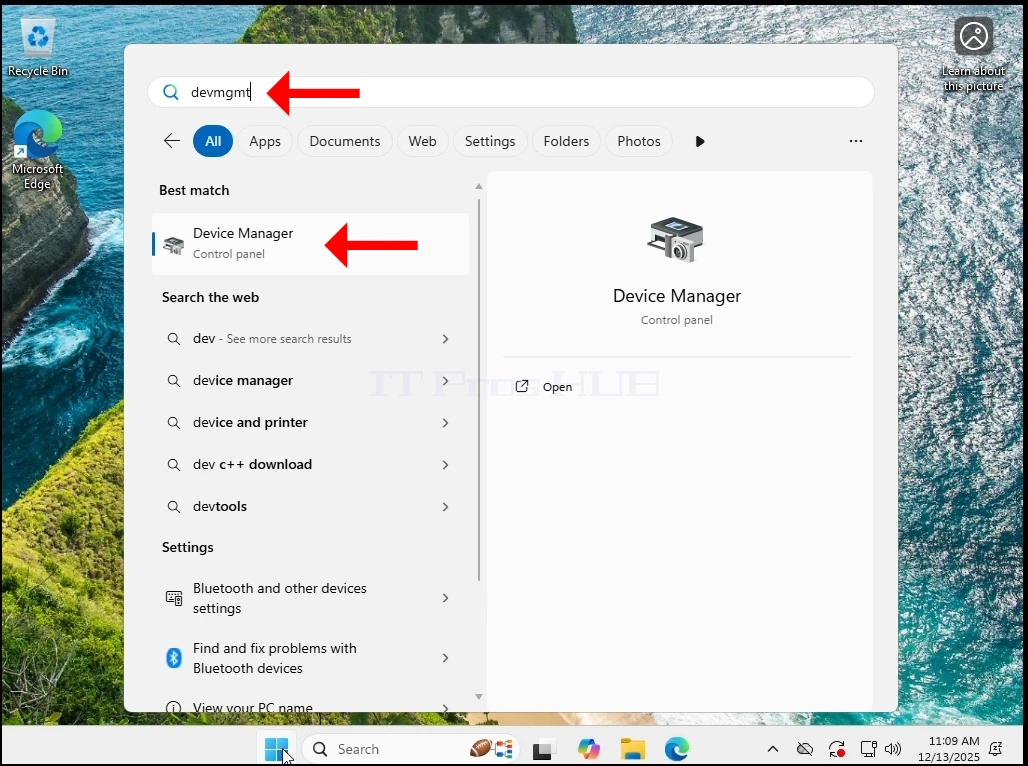
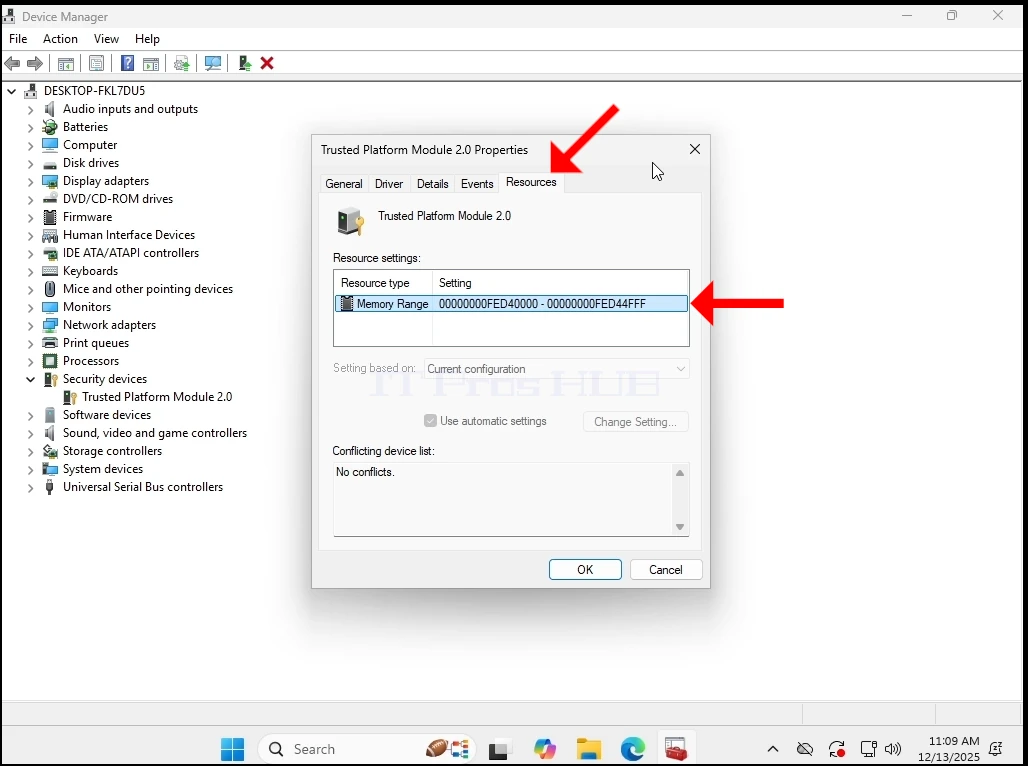
4. In Device Manager, we want to make sure that the TPM 2.0 chip is indeed present and functional.
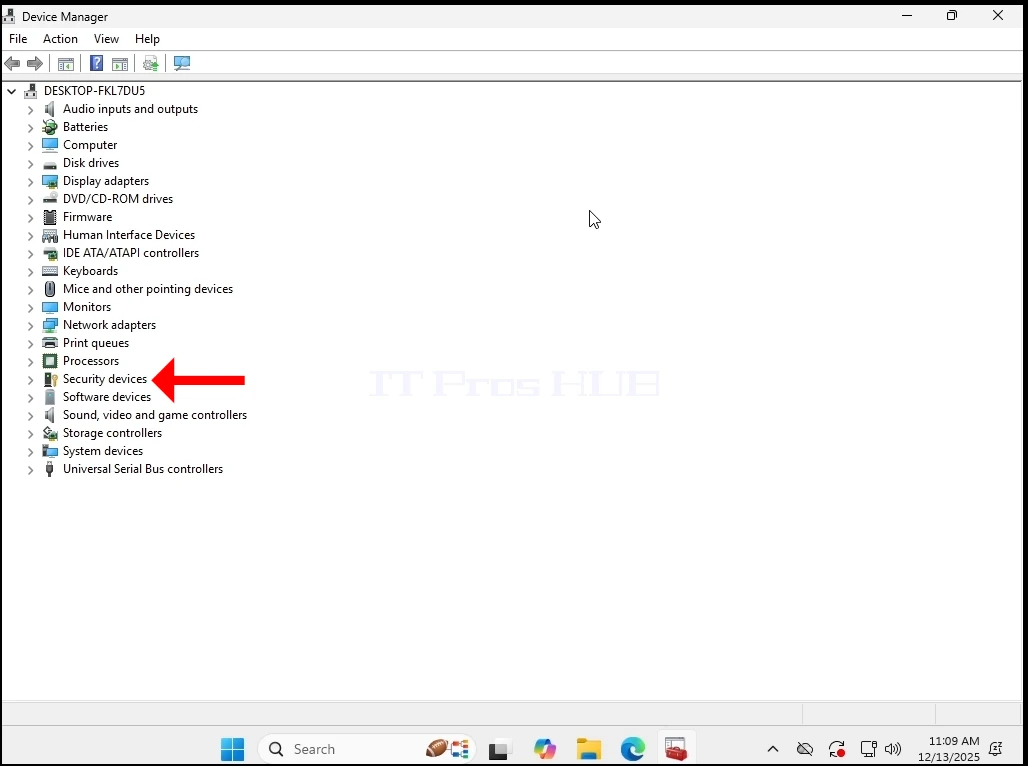
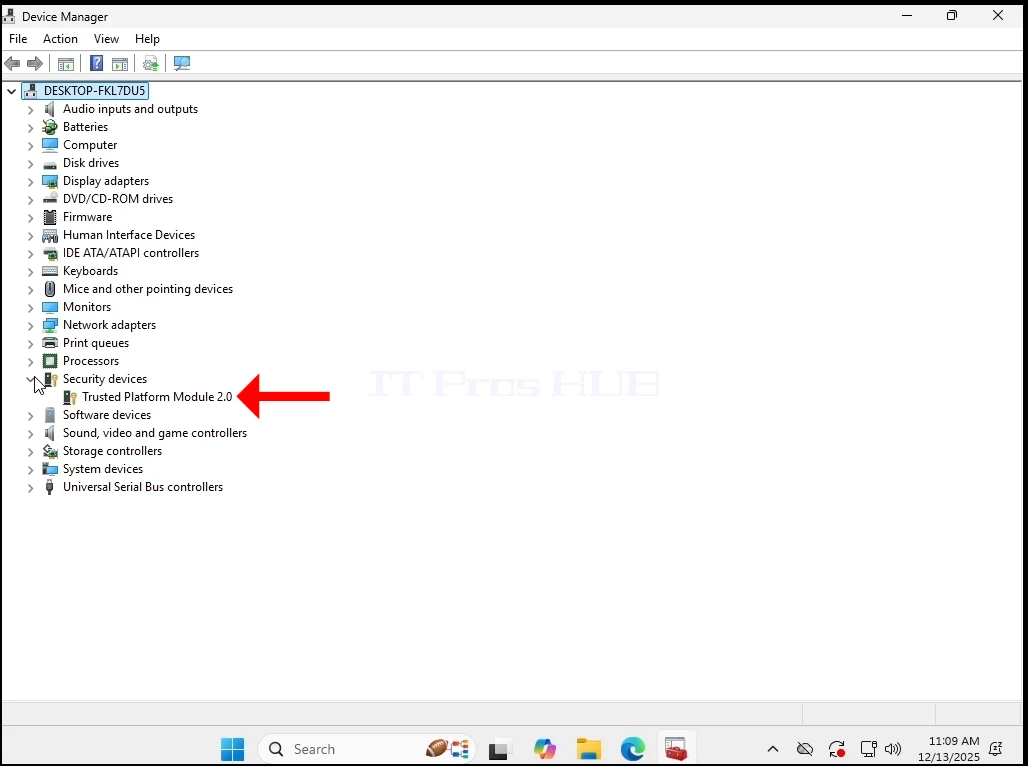
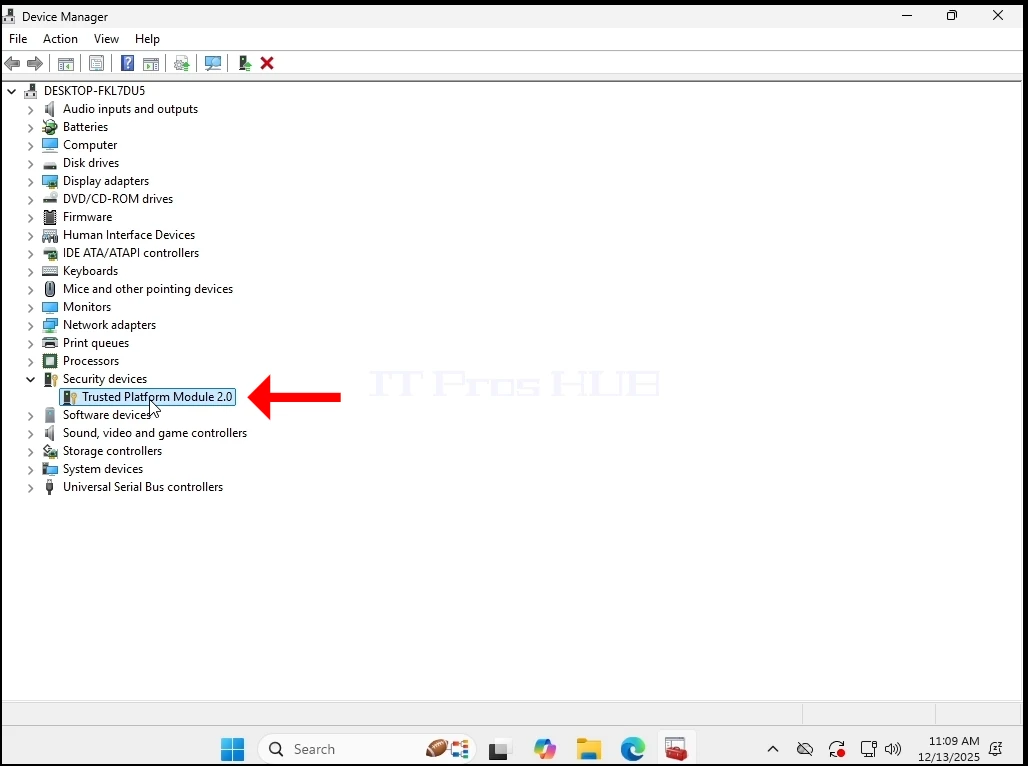
5. We checked the various tabs for any issues
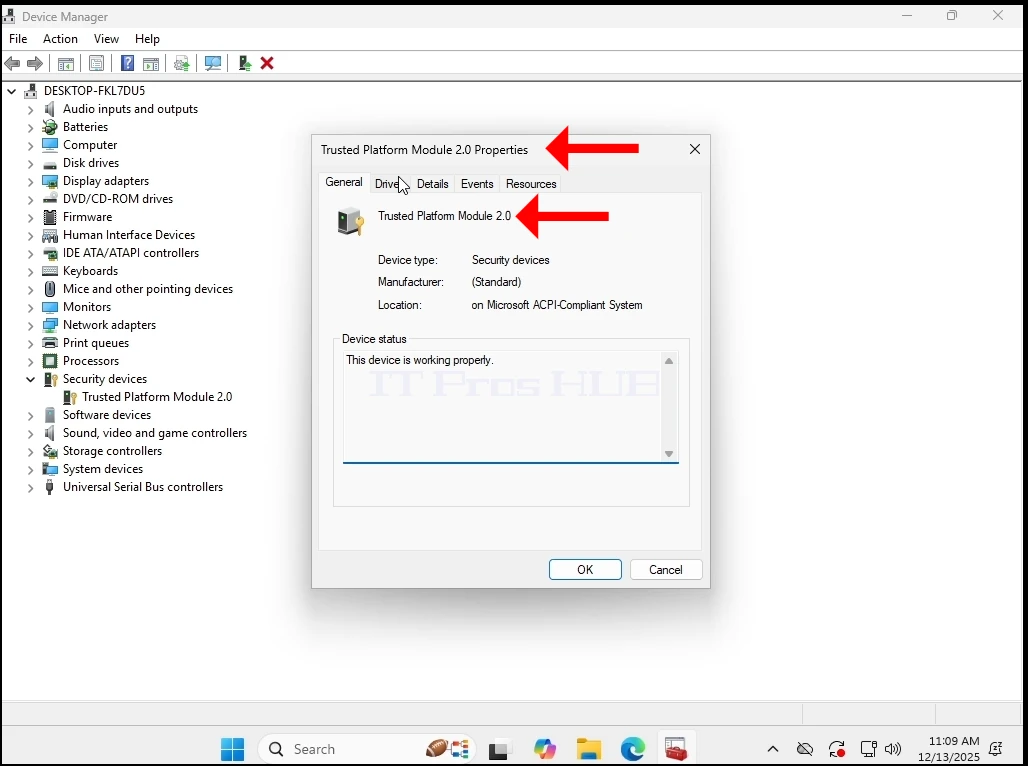
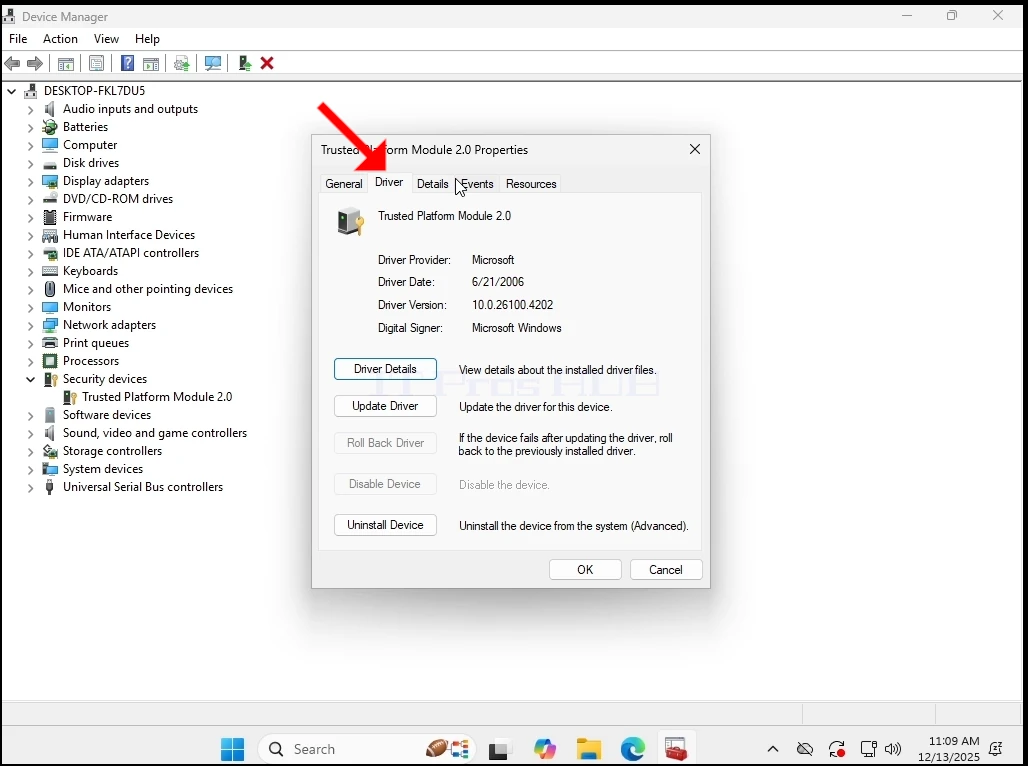
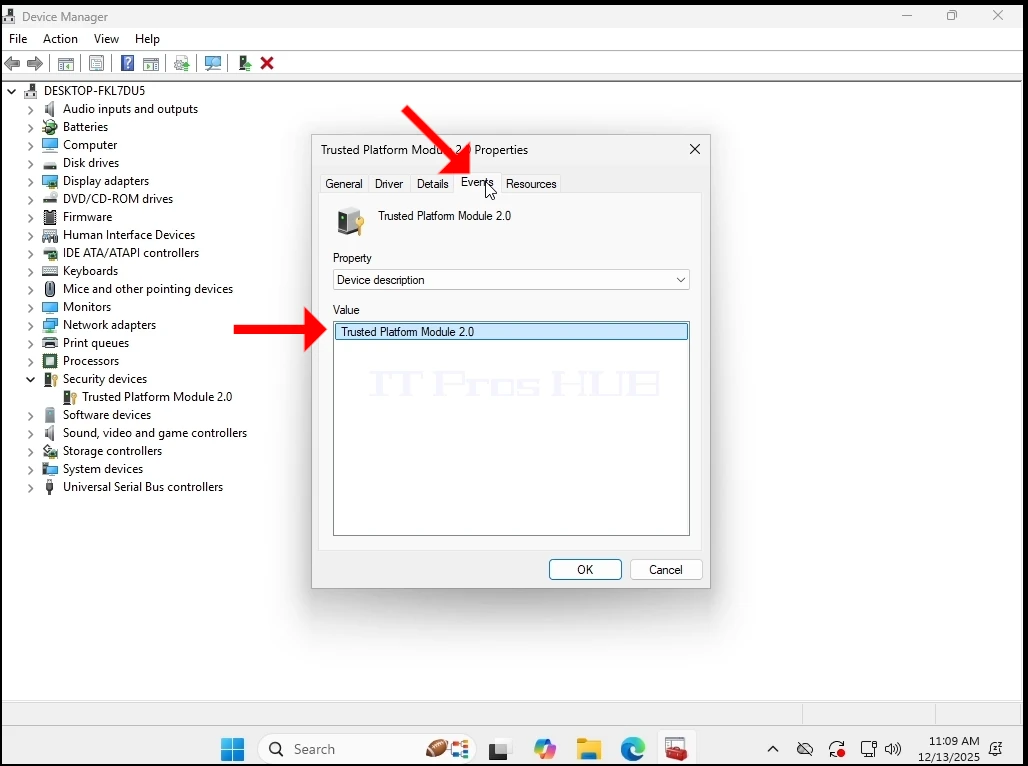
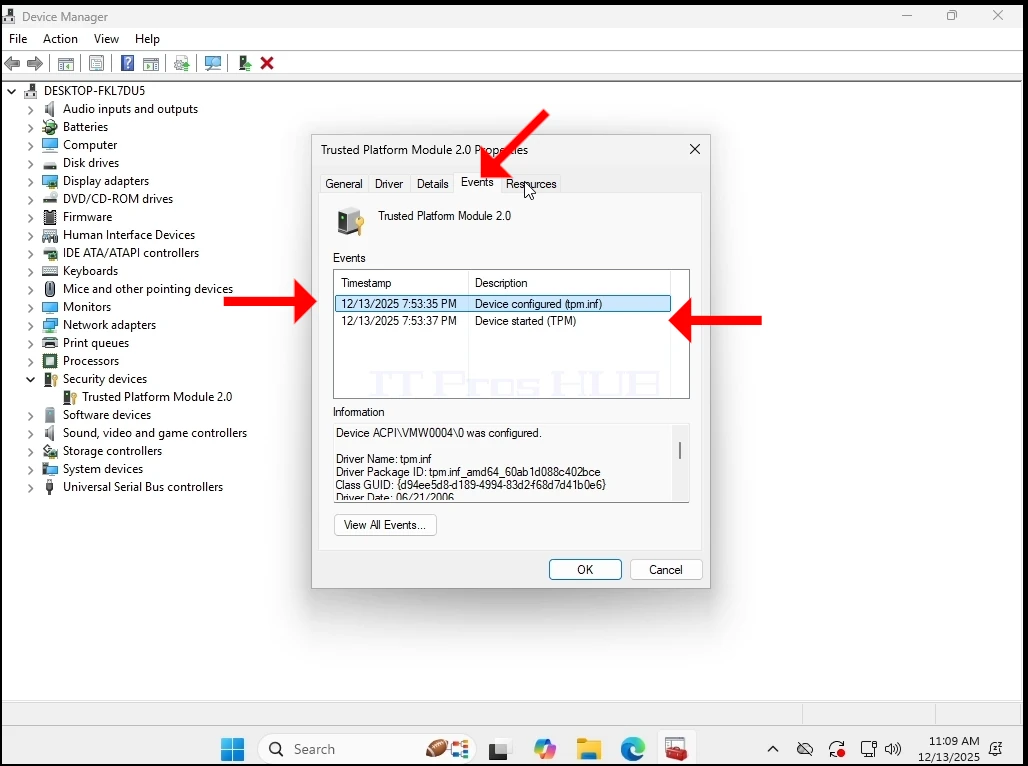
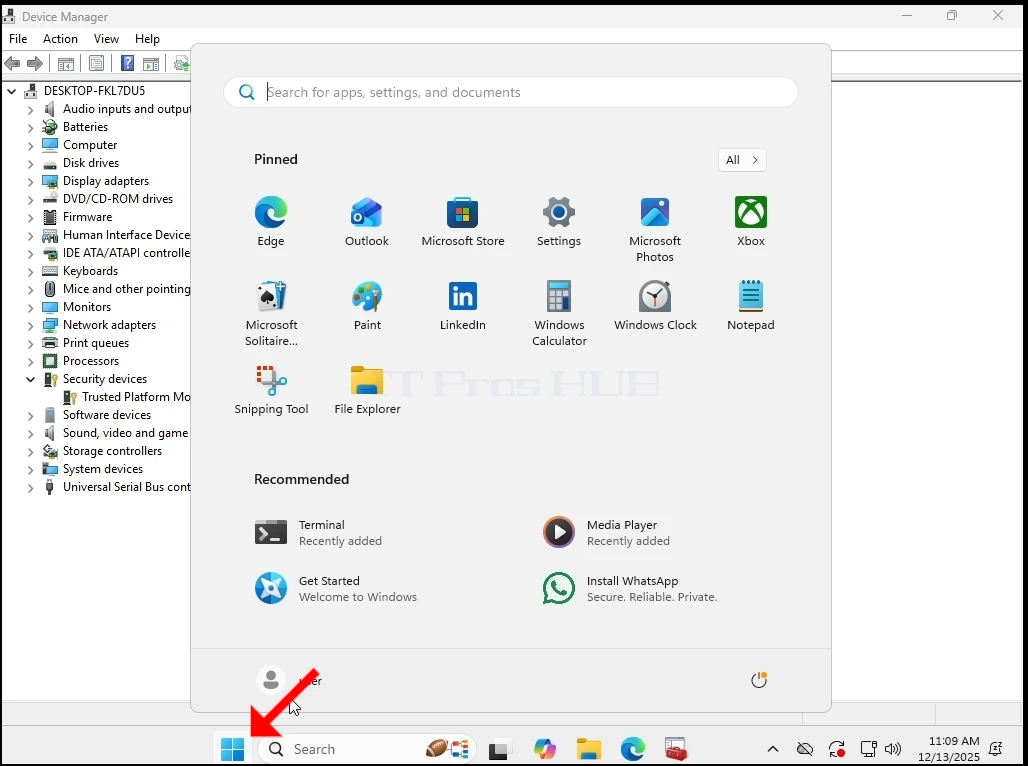
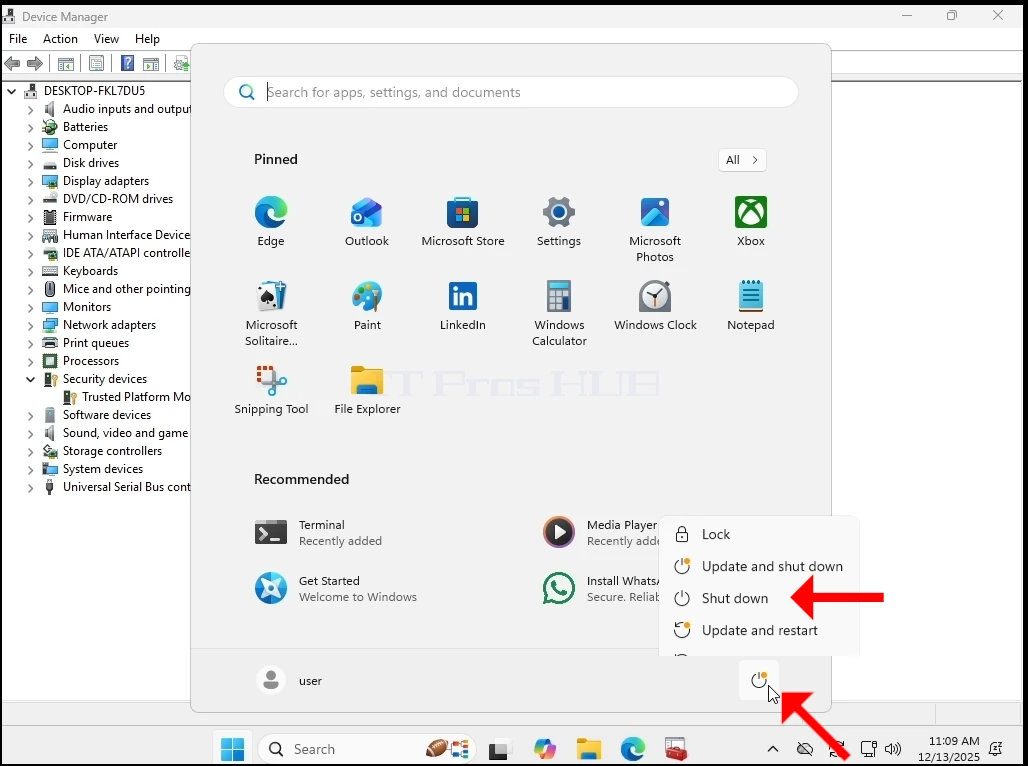
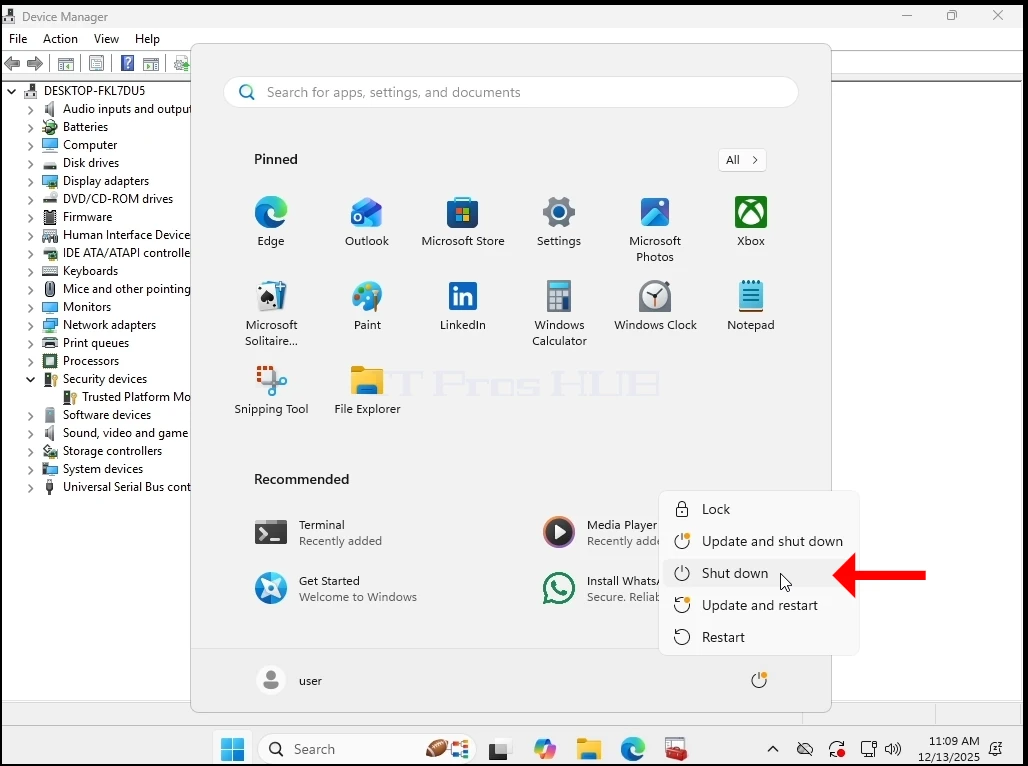
6. Now we shut down Windows in order to power-off the VM
7. We have removed the TPM chip from the VM’s hardware list and powered it again
8. Let’s go again to Device Manager to make sure the TPM chip is not there anymore
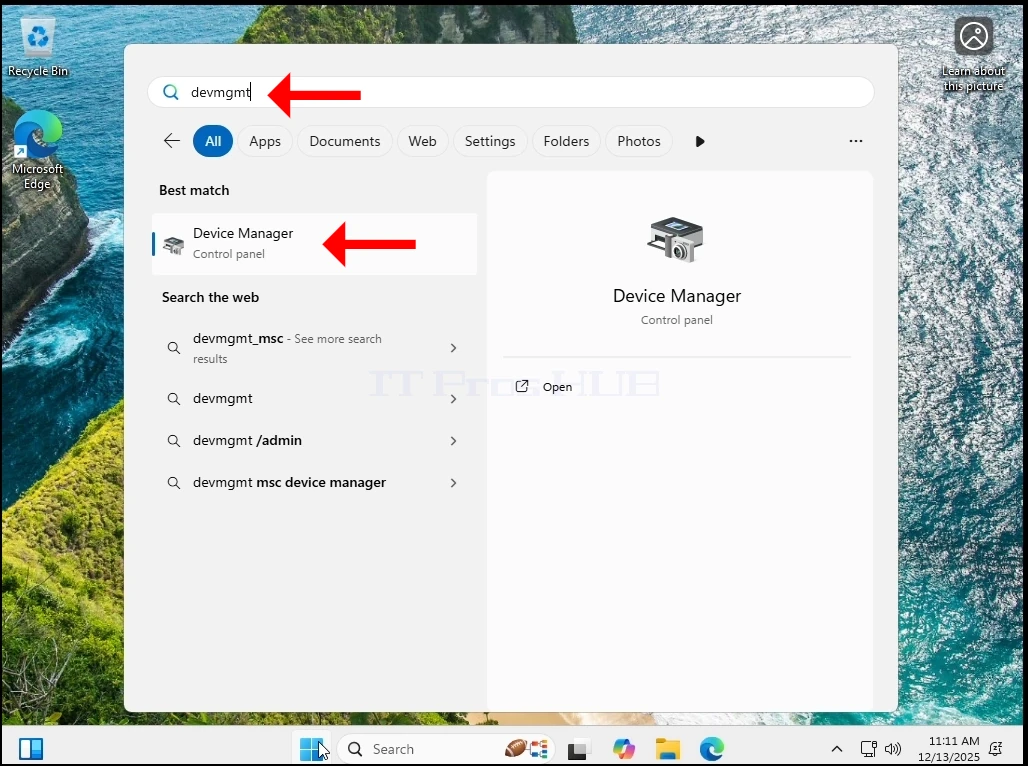
9. As you can see below – the TPM chip is gone a well as the Security Devices category.
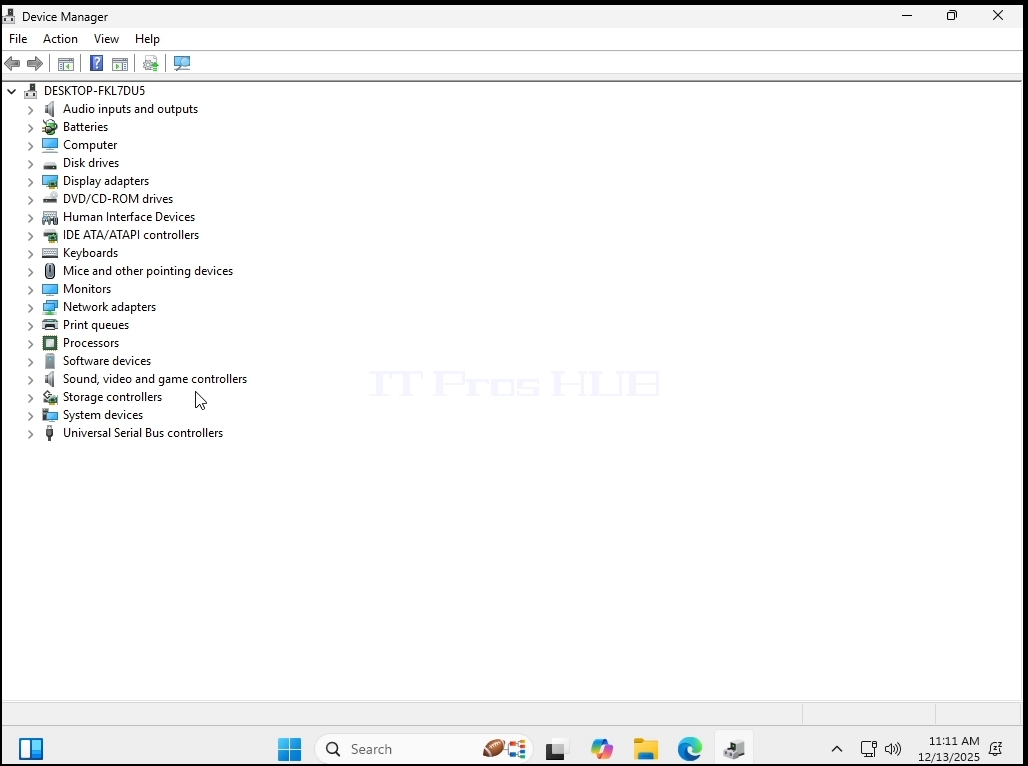
10. To make sure the TPM chip is not present on this VM, let’s go to Bitlocker and try tampering with it.
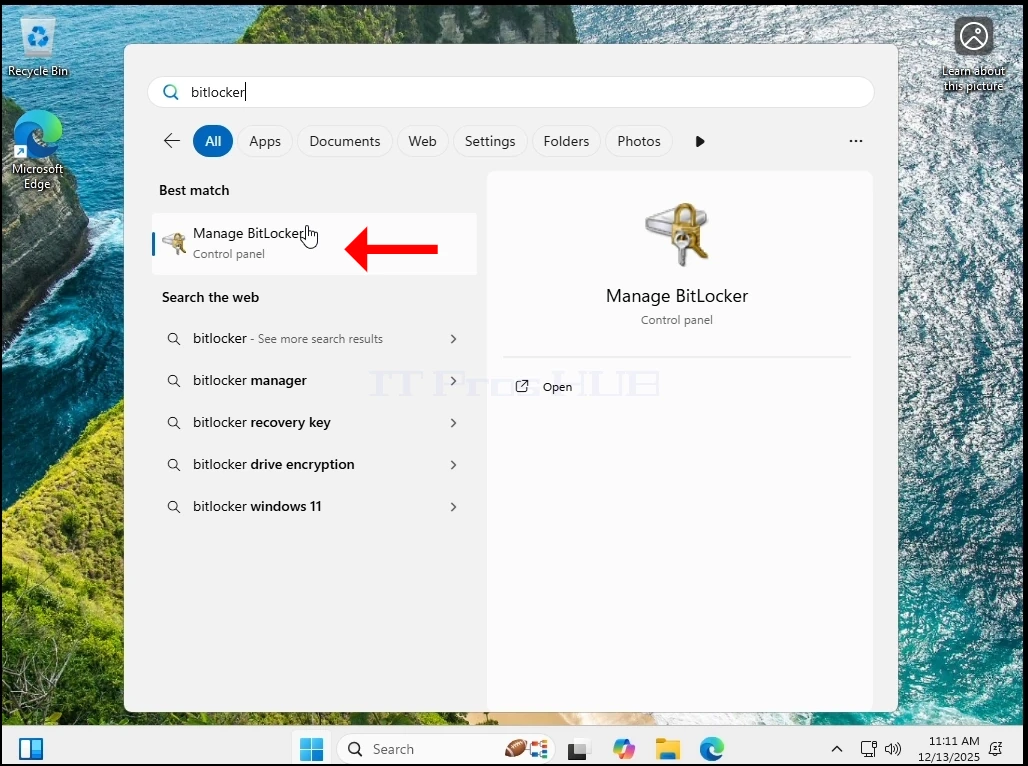
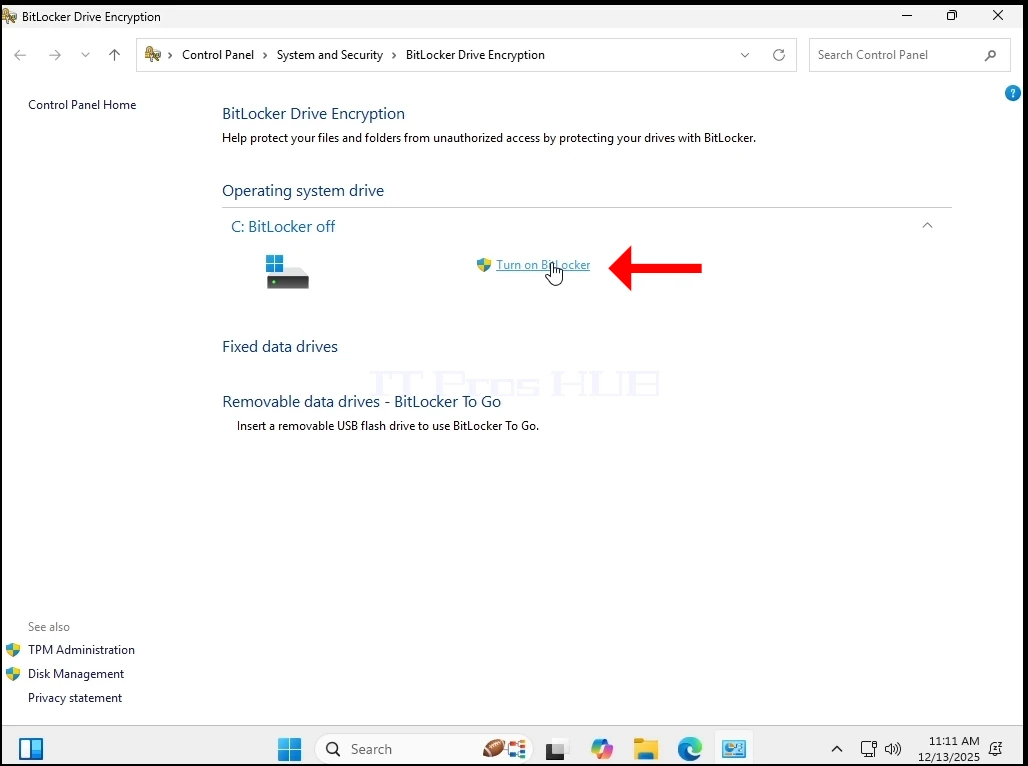
11. As you can see below, we are unable to turn Bitlocker on due to the absence of a TPM chip.
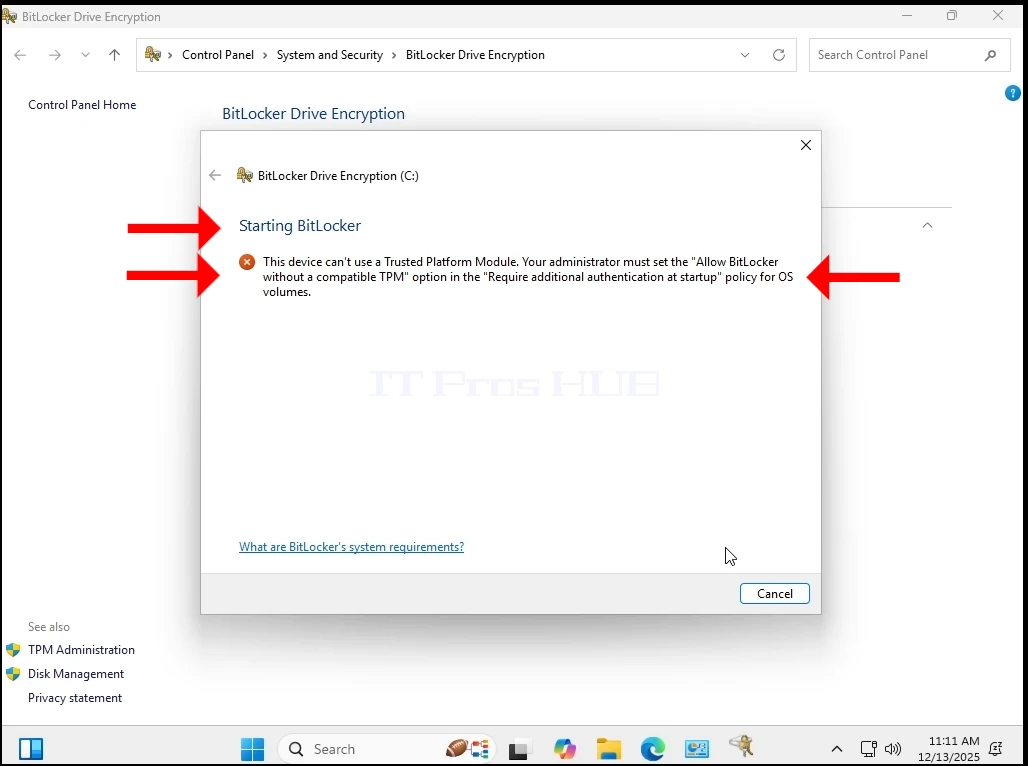
12. As you can still see, Windows 11 has been working normally this entire time. No BSODs, no errors, no prompts, no warnings.
- Now let’s update it from 24H2 to 25H2.
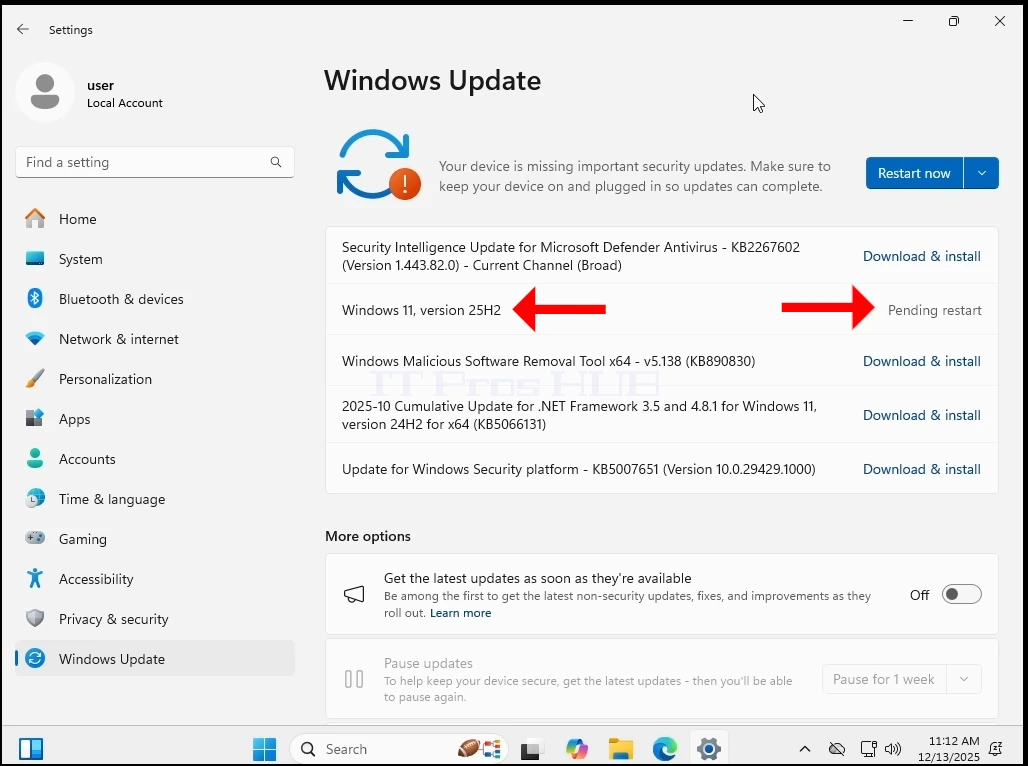
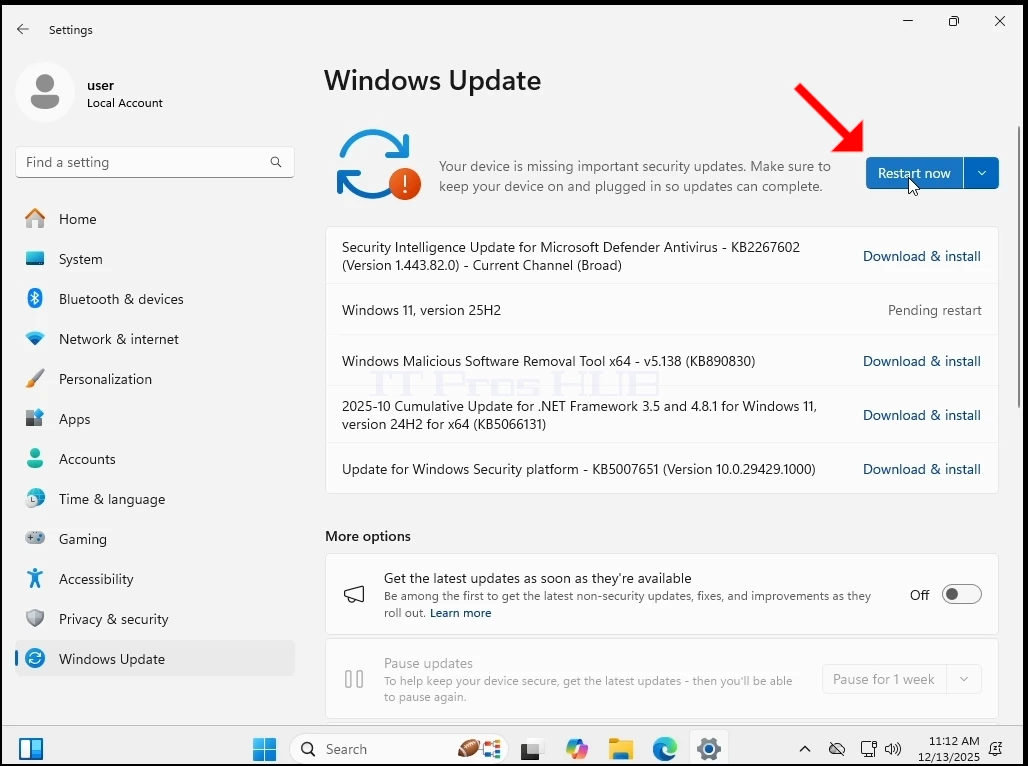
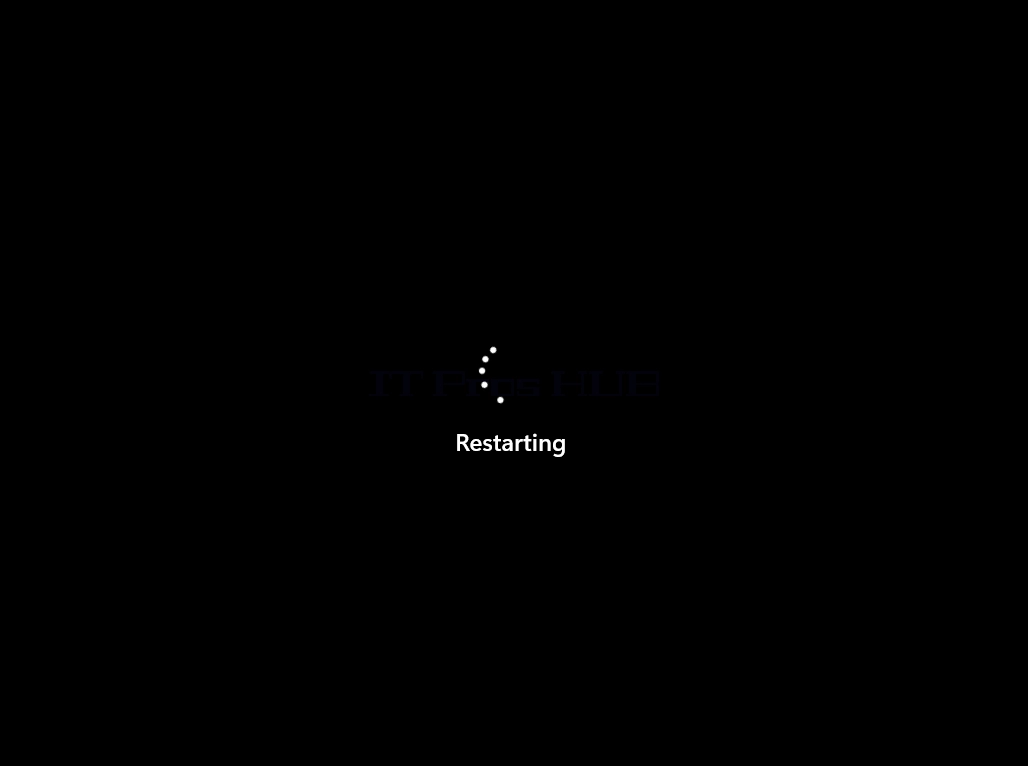
14. Windows has been upgraded to 25H2
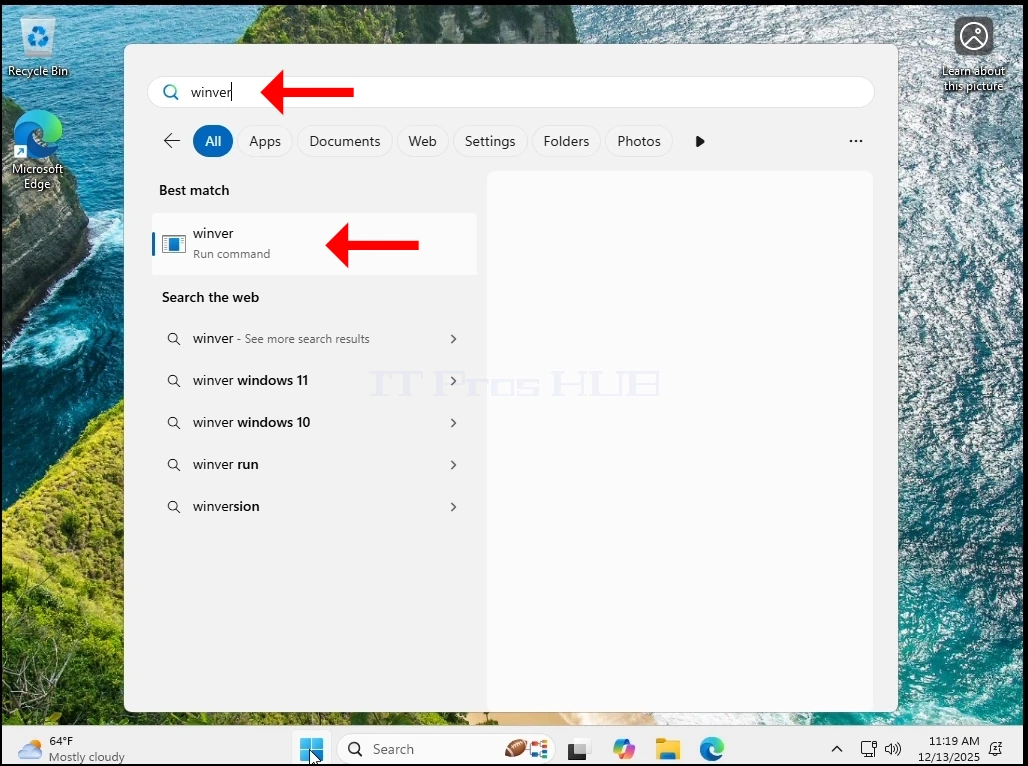
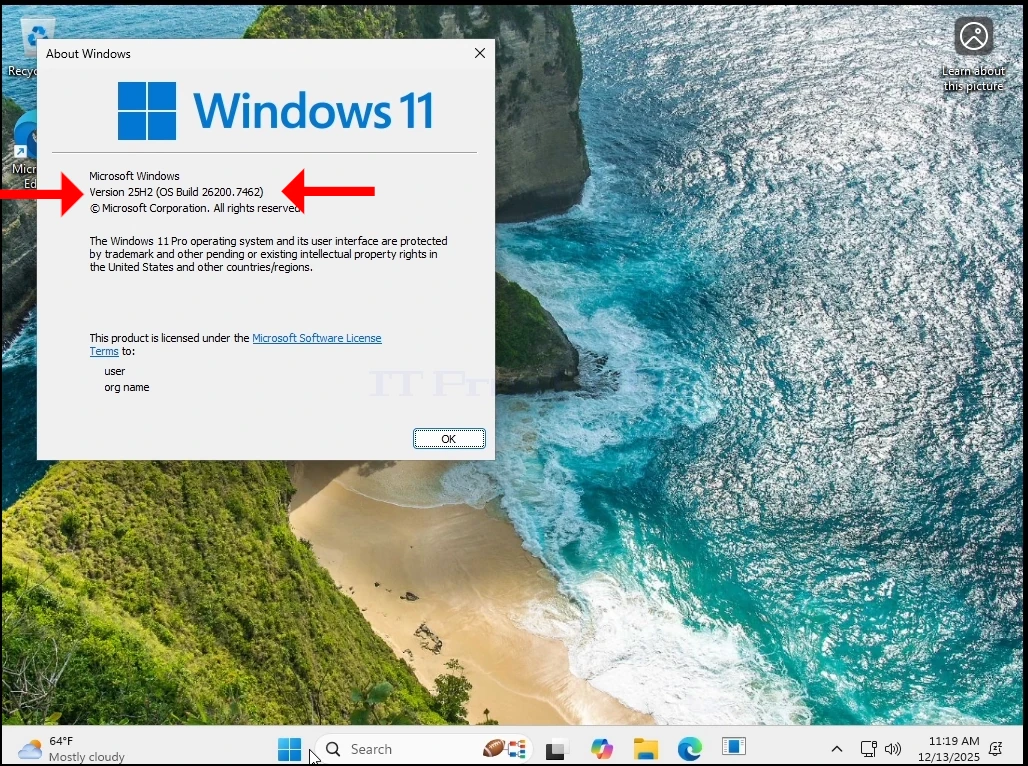
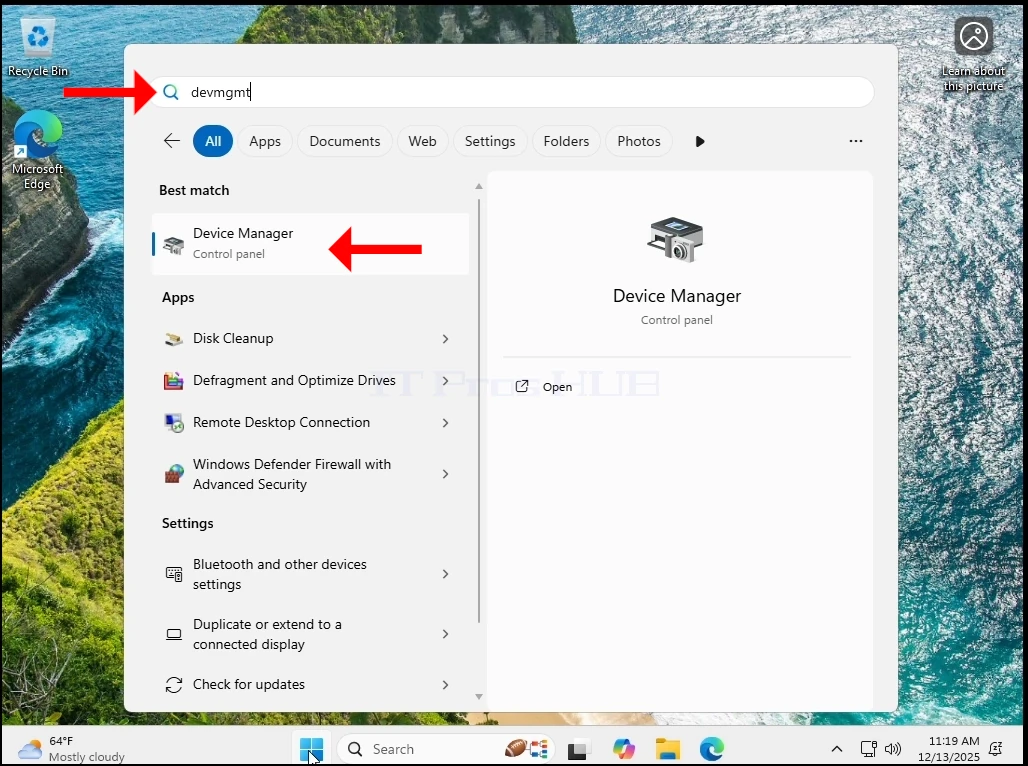
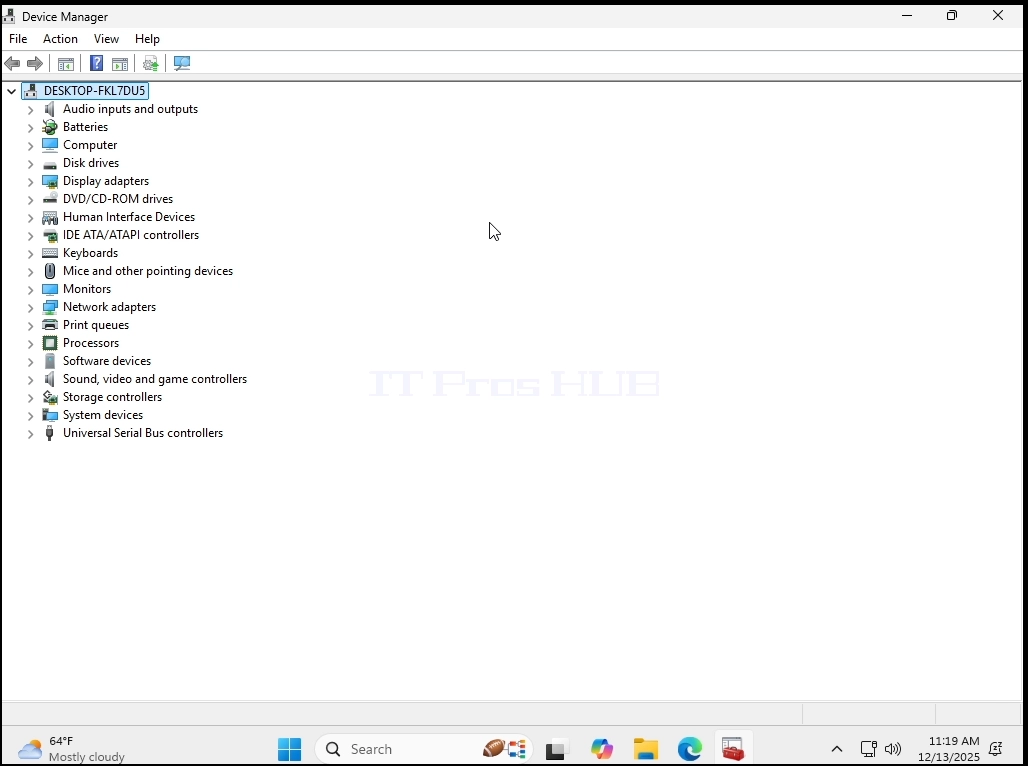
15. Still, Windows 11 has been working normally this entire time. No BSODs, no errors, no prompts, no warnings. And as you can see, no TPM chip is present in the system.
Conclusion:
We were very surprised at first to see Windows starts up at all. There has been such a big fuss about this TPM requirement that we have become under the notion that running Windows without a TPM was impossible.
Yet, the bigger issue still exists – Windows 11 cannot be INSTALLED on a system without a TPM chip, specifically TPM version 2.0. it is like that by design. What we did here was very simple – we installed Windows 11 on a system, in this case, a virtual system, with a TPM and then just removed it. Windows kept running normally.
What would it mean in the real world?
It would mean that if you have a computer/computers that have a TPM chip older than version 2.0 or no TPM at all then the only ways to install Windows 11 onto these machines would be to:
1. Deploy an image of Windows 11 onto those computers
2. Clone a Windows 11 disk/partitions onto those computers
3. In terms of upgrade from Windows 10 to 11 you could:
a. Take the hard drive with Windows 10 out of the computer, install it on a placeholder computer with a TPM 2.0 chip - perform the upgrade to Windows 11 and then return the hard drive to the old computer
b. Do the same thing described in Stage A, but use a P2V solution and then use a V2P back to the old computer
In any case, it’s a head ache to perform on one computer let alone an array of computers, but it is not impossible. The ROI would be worth it for those would cannot afford or would not want to invest in new IT equipment (ie – computers with a TPM 2.0 chip).
IT might be worth for IT professionals and/or companies who maintain an array of computers with incompatible TPM chips to just buy a single new computer that has a TPM 2.0 chip that will be used as a placeholder and perform these upgrades one by one instead of investing in an array of new computers.
- Details
- Geschreven door IT Pro
- Categorie: Windows
- Hits: 8974
Introduction:
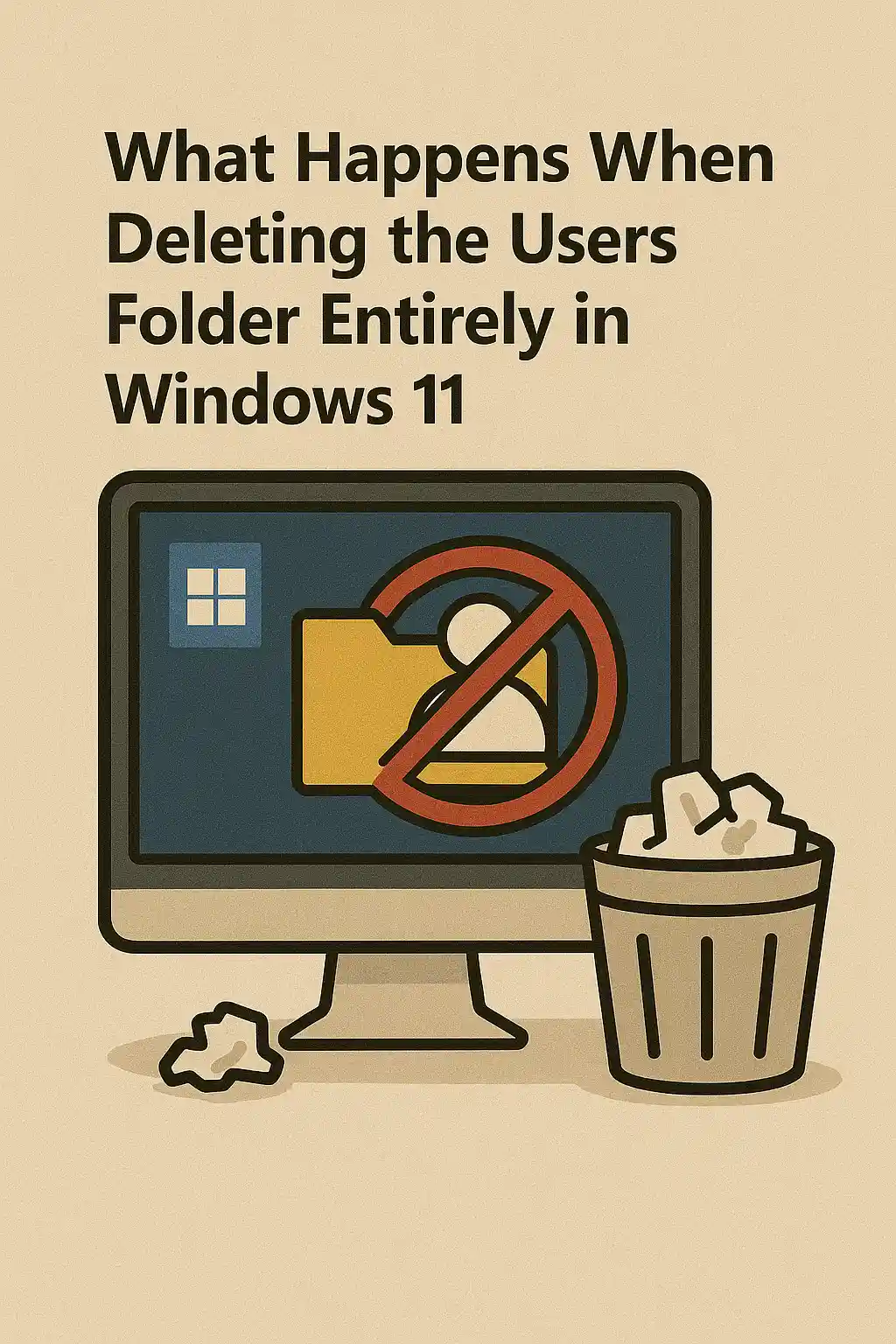
In this article we will demonstrate what happens when the entire Users folder is deleted from Windows 11.
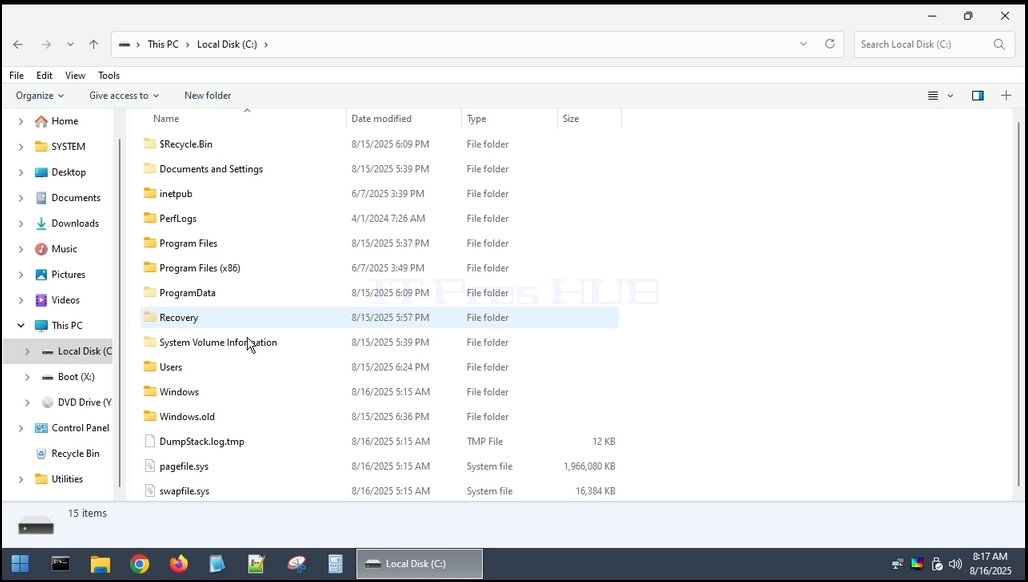
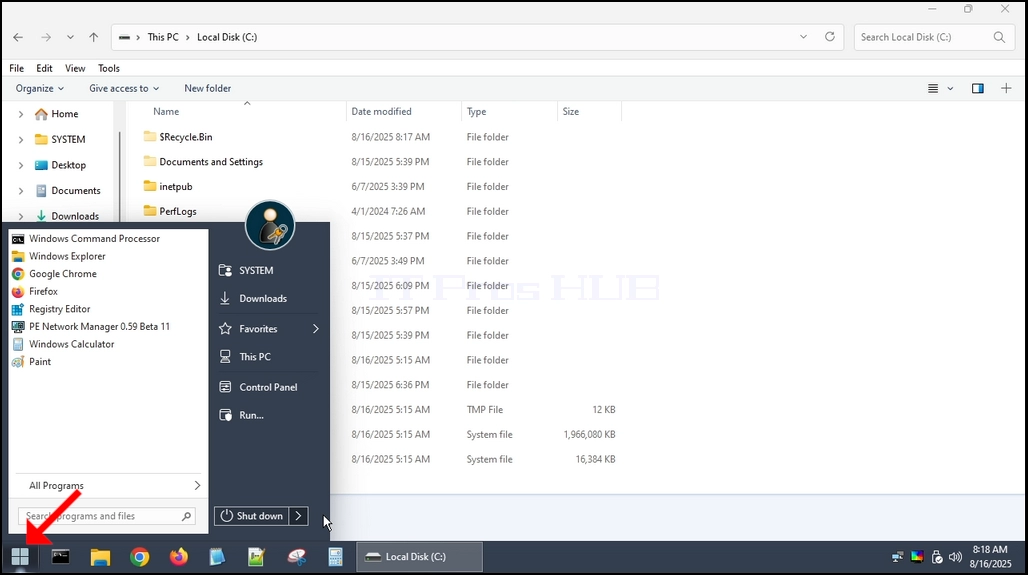
1. The Users folder resides in the root of where Windows was installed. In most cases it would be the C: drive as can be seen below:
2. Like a lot of other system folders and files, the Users folder cannot be deleted entirely from within Windows itself. We would need to use another operating system for that. In this article we will use the Hiren Boot CE WINPE (HBCD) OS.
3. Deleting the Users folder from within HBCD
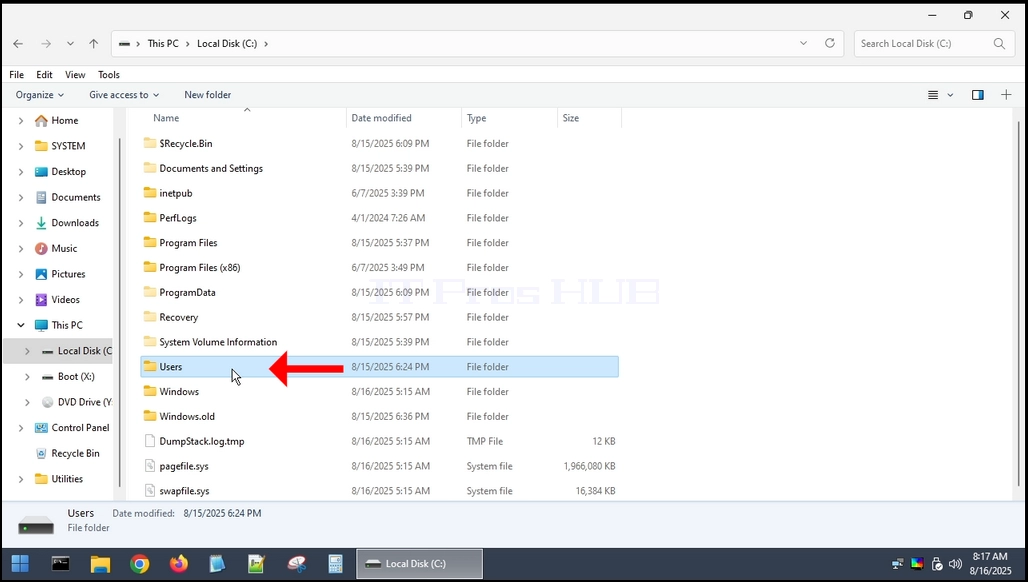
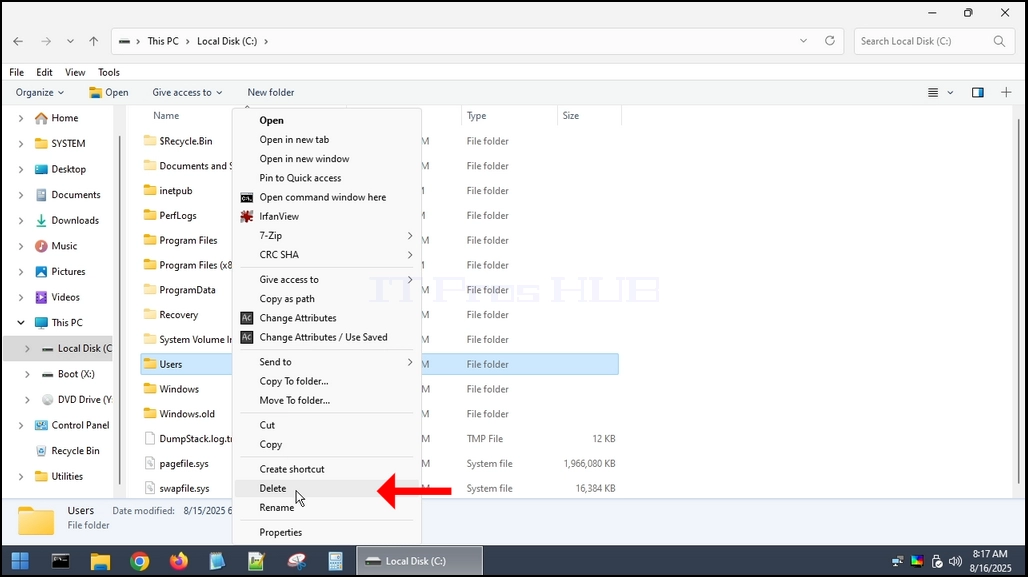
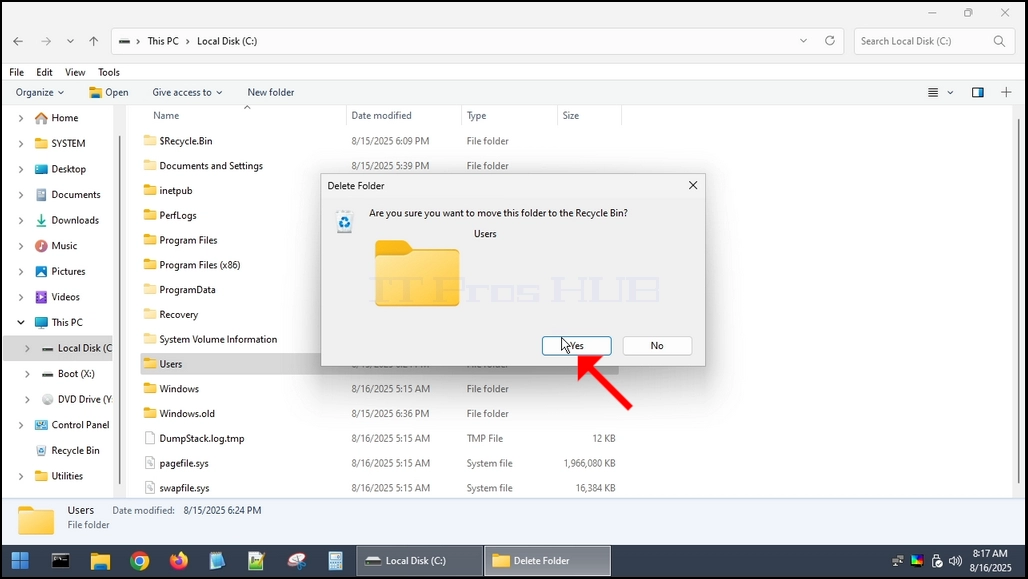
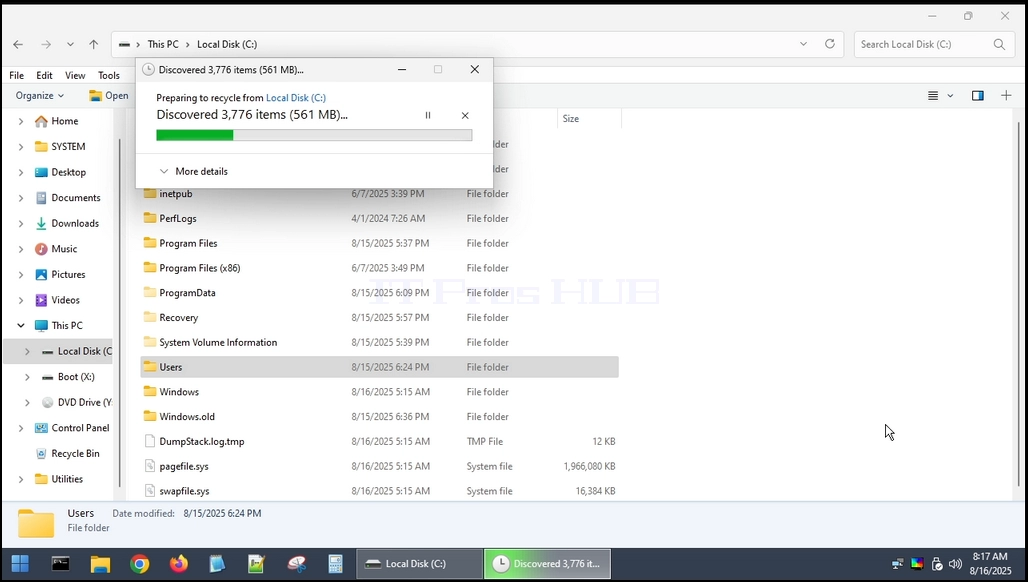
4. The Users folder is deleted.
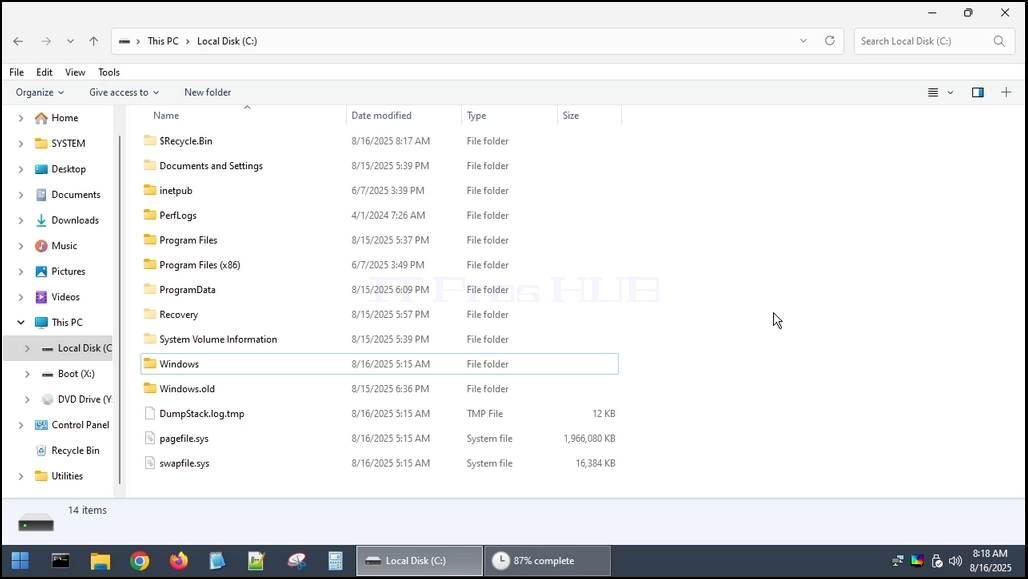
5. Restarting the computer and booting back into Windows.
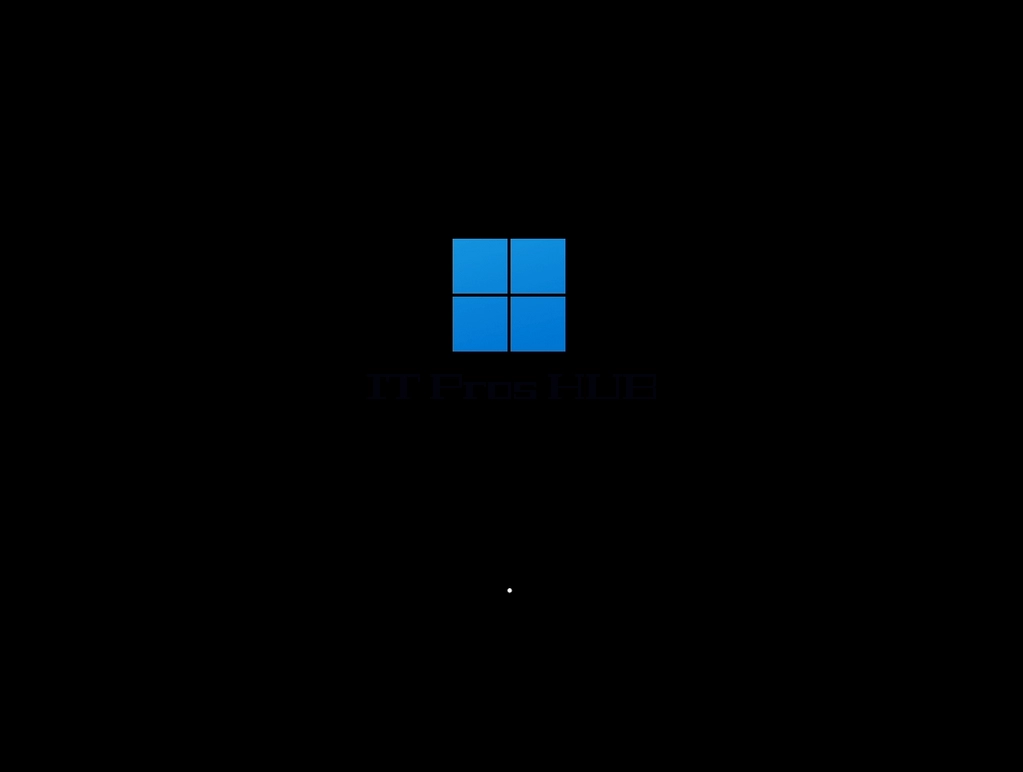
6. As you can see, Windows is able to boot up but NOT TO START UP.
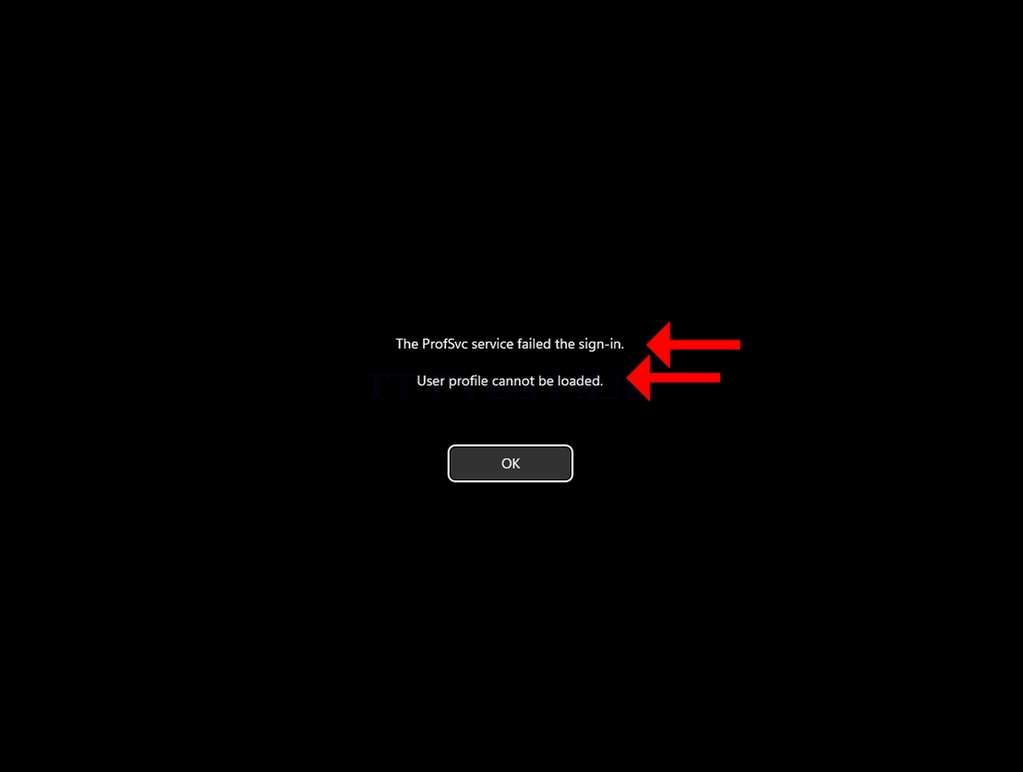
7. We can see the following error:
a. The ProSvc service failed the sign-in
b. User profile cannot be loaded.
8. Those two lines are usually one single Windows logon error — the service is actually ProfSvc (User Profile Service), and it typically fails when the user profile is corrupted or Windows logged you into a temporary profile and can’t stitch the real one back.
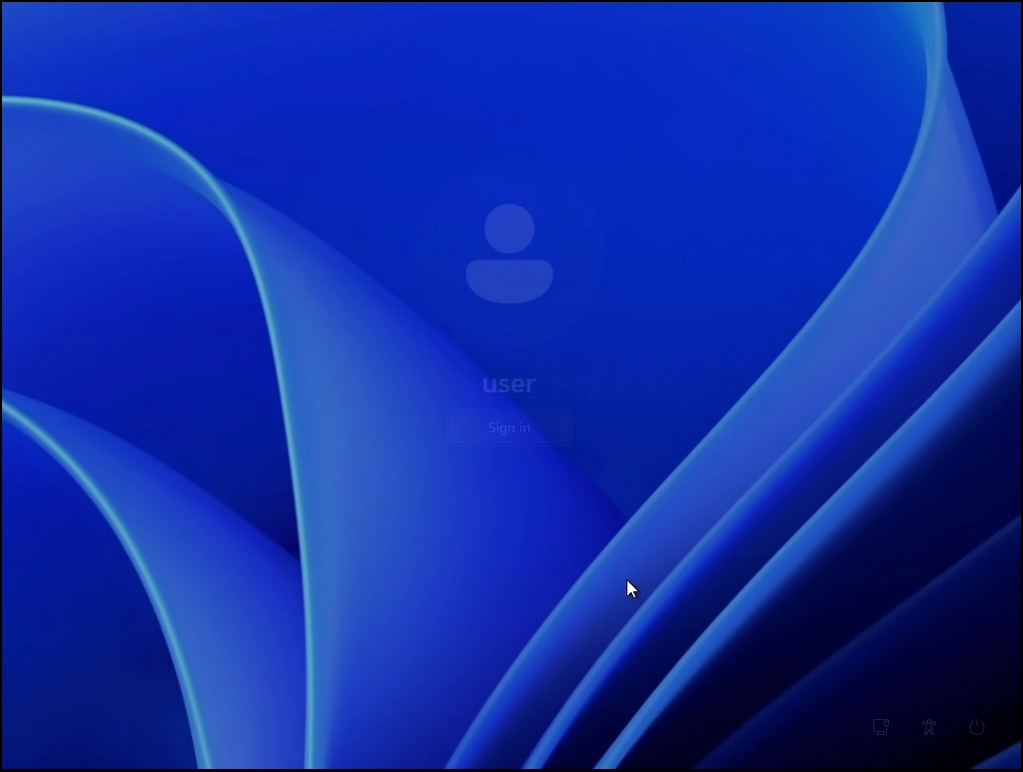
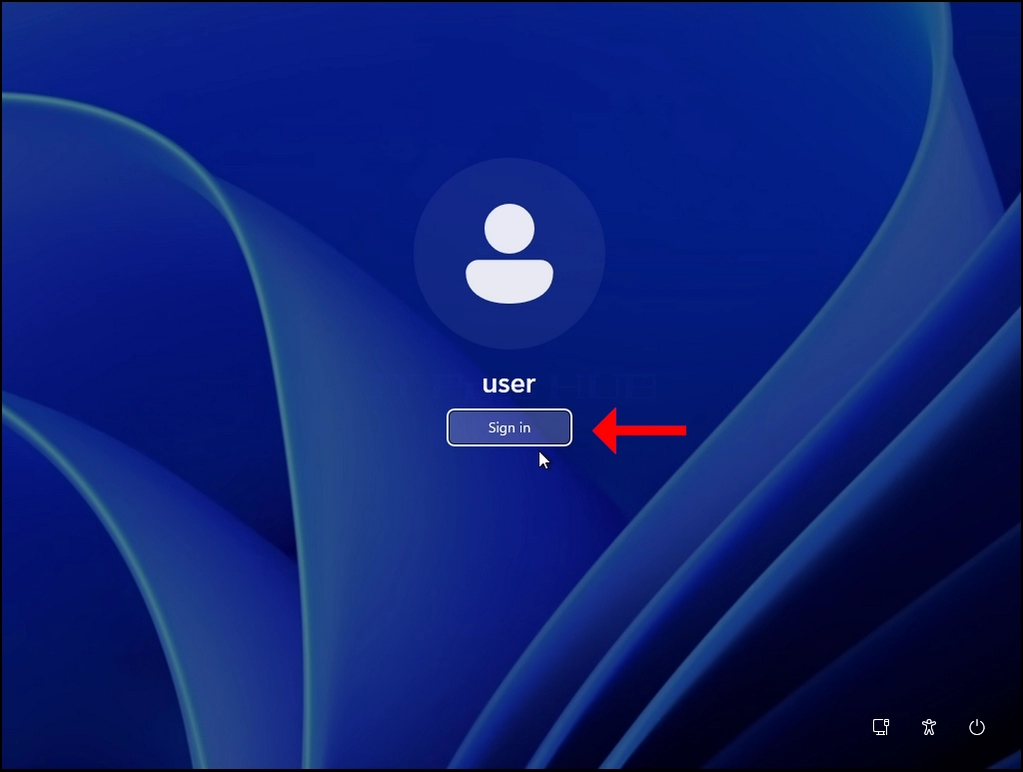

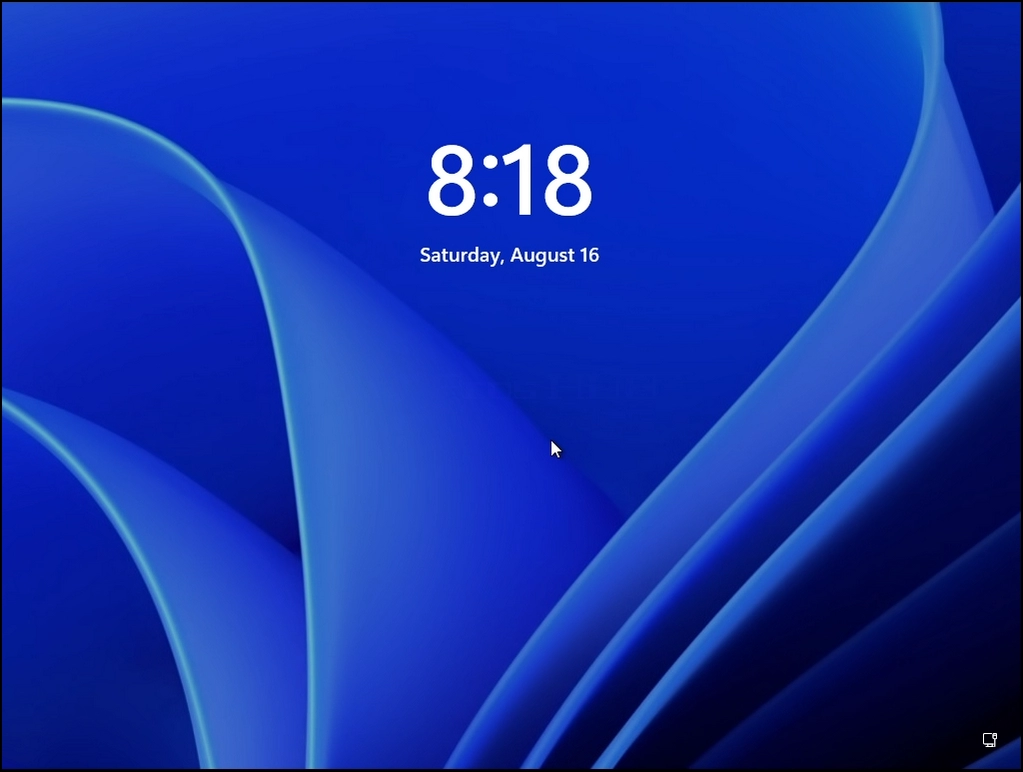
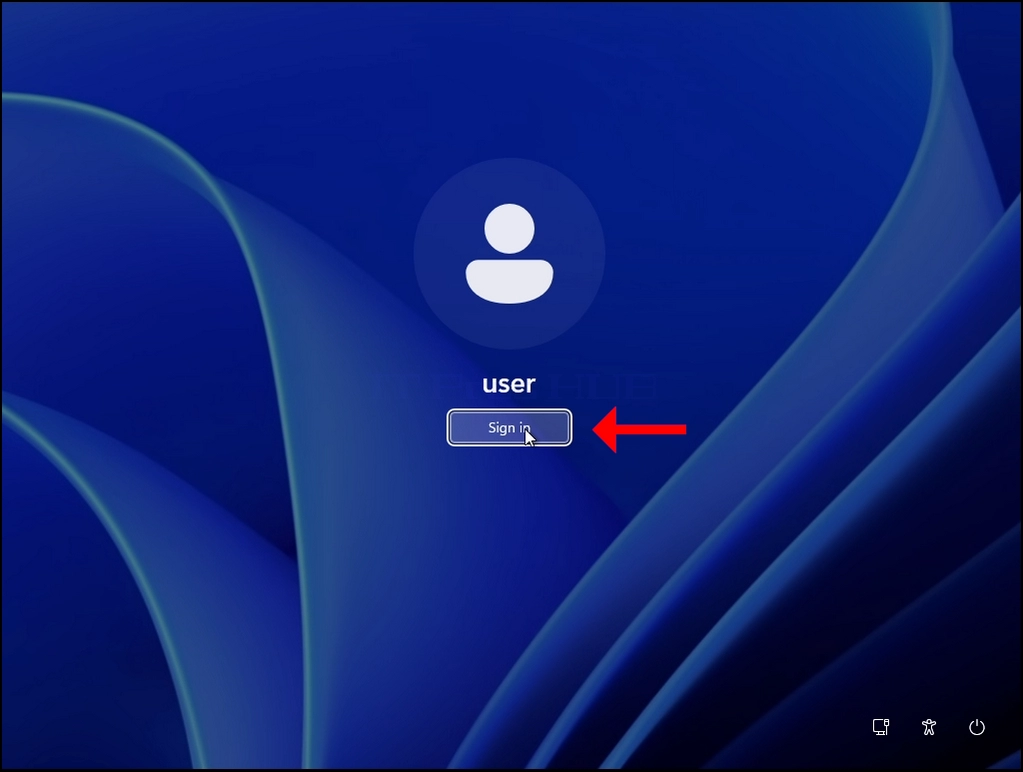


9. As you can see, after we click OK on the error, Windows goes back to the logon screen and no matter how many times we try to sign in, the result is the same.